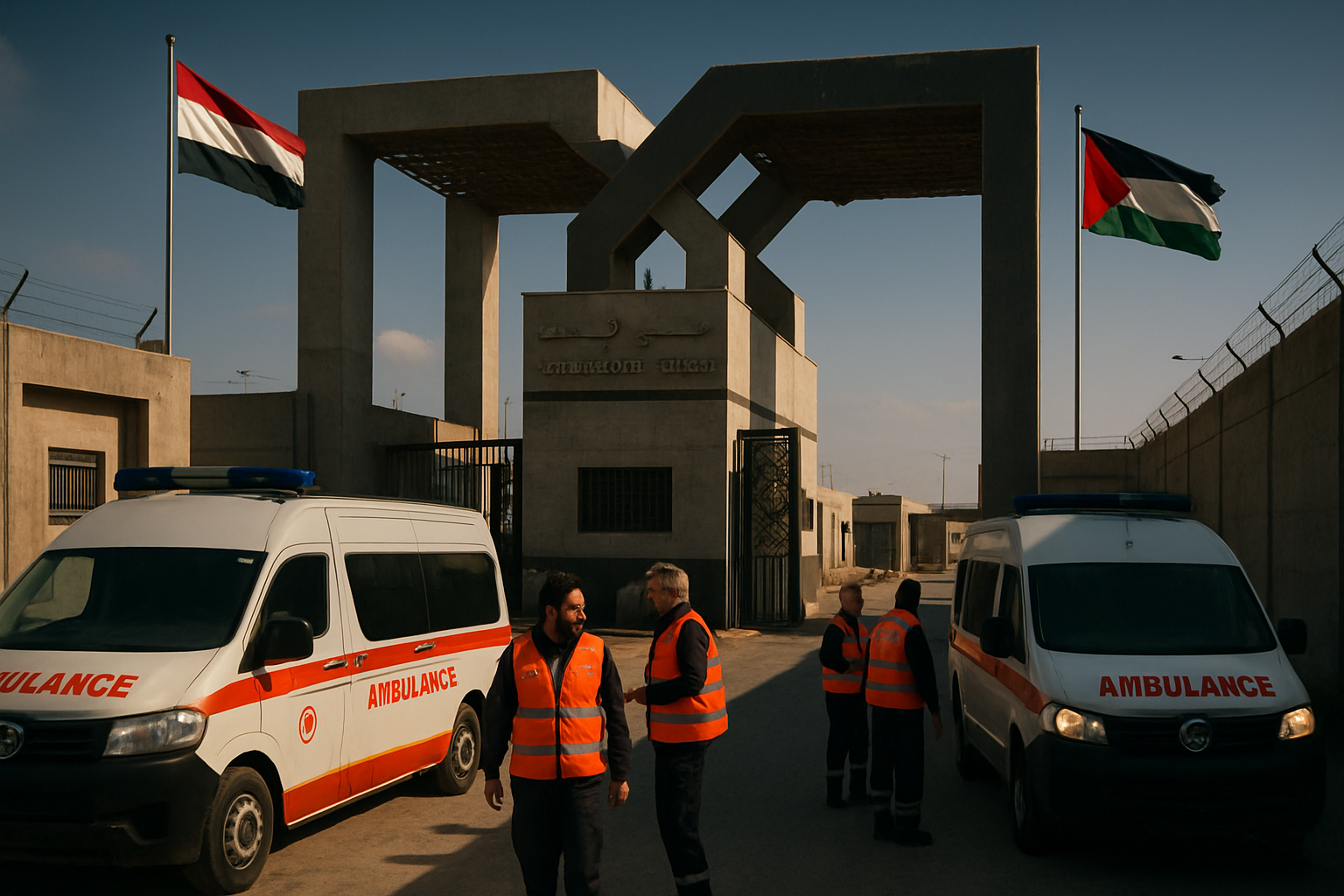
The Rafah border crossing between Gaza and Egypt has officially reopened after nearly two years of closure, but severe operational restrictions and lengthy delays are significantly hampering relief efforts for the territory's 2.3 million residents.
Over the first four days of operations, just 36 Palestinians requiring medical care were allowed to leave for Egypt, plus 62 companions, according to United Nations data. This represents only a fraction of the approximately 20,000 Palestinians awaiting medical evacuation, highlighting the gap between expectations and reality.
Limited Reopening Under Strict Protocols
The crossing, which has been Gaza's main gateway to the outside world not controlled by Israel, reopened on February 2, 2026, under strict Israeli-Egyptian security protocols. Daily quotas allow only 150 people to exit Gaza and 50 to enter during six-hour operational windows, with movement restricted to pedestrian traffic only.
Palestinian women have reported being subjected to handcuffs, blindfolds, and prolonged interrogations by Israeli troops during the crossing process. Hamas officials have condemned what they describe as "systematic harassment" of returnees, with Israeli security forces denying passage to 38 of 50 planned Palestinian returnees in recent days.
The crossing was proclaimed as a "window of hope" by Palestinian officials after two years of war, as part of the fragile ceasefire agreement currently in effect. However, that hope has been diminished by disagreements over who should be permitted to pass and significant processing delays.
Humanitarian Crisis Deepens
Egypt has mobilized a massive healthcare response in preparation for the crossing's reopening, placing 150 hospitals on high alert and deploying 300 ambulances to the border region. Egyptian Health Minister Khaled Abdel Ghaffar has coordinated the response from the New Administrative Capital.
Despite these preparations, the severe restrictions have limited the humanitarian impact. On the crossing's opening day, only 27 Palestinians managed to cross in both directions, far below the established quota of 200 daily. The first group of medical evacuees included just five patients transported by Egyptian ambulances.
"The restrictions negotiated by Israeli, Egyptian, Palestinian and international officials significantly limit our ability to address the humanitarian crisis effectively."
— UN Official speaking on condition of anonymity
Gaza's Civil Defense has been forced to shut down operations due to fuel shortages, further hampering emergency response capabilities in the territory. The dire situation is compounded by reports of continued Israeli operations despite the supposed ceasefire, with over 1,520 violations documented since October 2025.
Weekend Closure Reports
Adding to the complications, the Egypt-Gaza border was reportedly closed over the weekend, just days after its reopening. The temporary closure underscores the fragile nature of the crossing's operations and the multiple factors that can disrupt even limited humanitarian access.
The crossing operates under a complex arrangement involving Palestinian staff, European Union monitoring teams, and Israeli security coordination. The EU's role in overseeing operations represents an attempt to provide international oversight, though the fundamental control remains with Israeli and Egyptian authorities.
Historical Context and Significance
The Rafah crossing has been under Israeli military control since May 2024, when Israeli forces seized it during military operations. The last major Palestinian evacuations through the crossing occurred in February 2025, leaving thousands of patients and others in desperate need of passage with no viable options for nearly a year.
The crossing's reopening is part of the broader Israel-Hamas ceasefire implementation, though critics note that Israeli strikes have continued, resulting in 556 Palestinian deaths during the supposed truce period. Eight Arab nations, including Saudi Arabia, Jordan, Egypt, and the UAE, have condemned these continued violations.
Regional and International Response
Jordan has continued to operate a separate medical corridor, evacuating its 23rd batch of sick children - 18 children and 38 companions - through an alternative route. This parallel effort highlights the critical need for multiple evacuation pathways given the limitations at Rafah.
International observers have welcomed the crossing's reopening as a symbolic milestone but express significant concerns about the severe operational restrictions. The limitations effectively prevent meaningful humanitarian access despite the technical reopening of Gaza's primary border crossing with the outside world.
The situation at Rafah represents a test case for the broader implementation of the ceasefire agreement. Success in expanding operations could lead to improved humanitarian access, while continued restrictions may undermine confidence in the peace process.
Looking Forward
The crossing is expected to operate under current restrictions for the foreseeable future, with operations potentially expanding gradually if deemed successful by all parties involved. However, the gap between the massive humanitarian need and the severely limited capacity remains a critical challenge.
For Gaza's 2.3 million residents, the crossing represents both hope and frustration - a lifeline to the outside world that remains largely inaccessible due to complex political and security arrangements. The coming weeks will be crucial in determining whether the crossing can evolve from a symbolic gesture to a genuine humanitarian corridor capable of addressing the territory's desperate needs.