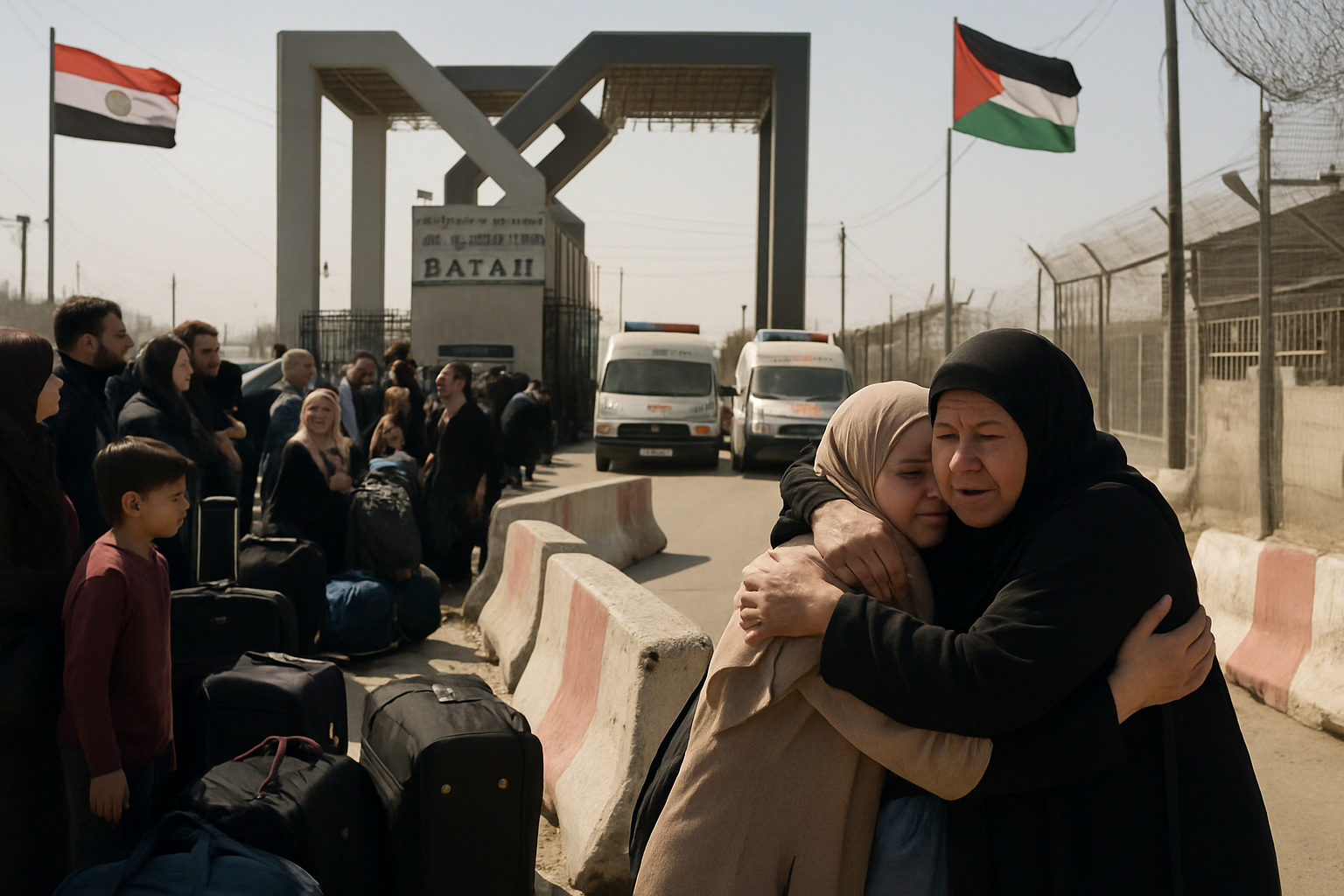
Gaza's vital Rafah border crossing with Egypt has reopened for the first time in nearly two years, allowing a handful of Palestinians to reunite with loved ones and critically ill patients to seek medical treatment abroad, though severe restrictions continue to limit meaningful access for the territory's 2.3 million residents.
The crossing, which had been closed since May 2024 following Israeli military operations, began limited operations on Monday with just 12 Palestinians allowed to enter Gaza and only five medical evacuees permitted to leave for treatment in Egypt. The modest numbers fell far short of expectations and the overwhelming humanitarian need, leaving thousands of patients still waiting for urgent medical evacuation.
According to French media reports, while the reopening is seen as a key step in the broader ceasefire process, the reality on the ground reveals the continuing challenges facing Gaza's population. Egypt has prepared its hospitals to receive more Gazans, with officials indicating that numbers will be gradually increased as operations stabilize.
First Crossings Mark Emotional Milestone
The first group of Palestinians returning from Egypt arrived at the Rafah crossing on Monday morning, completing months-long separations from family members. Al Jazeera reported that these reunions brought scenes of joy and relief, with families embracing after extended periods apart due to the border closure.
By Tuesday, a second group of Palestinians who had previously traveled to Egypt for medical treatment arrived at the crossing to complete entry procedures before returning to Gaza. According to Saudi media sources, these returnees had finalized administrative formalities earlier in the day.
Israeli media indicated that approximately 50 Palestinians would be allowed to enter Gaza on Tuesday, while roughly 150 patients and their companions were scheduled to leave the enclave for treatment in Egypt. However, actual numbers remained significantly lower than these projections.
Egyptian Healthcare Response
Egypt has mobilized a comprehensive healthcare response to support the limited medical evacuations. According to previous reports, 150 hospitals have been placed on high alert, with 300 ambulances deployed to facilitate patient transport from the border crossing.
Egyptian parliamentary members have emphasized their country's commitment to supporting Palestinian civilians. As reported in Egyptian media, lawmakers described the crossing's reopening as representing Egypt's steadfast approach to helping Palestinians during their humanitarian crisis.
The Gaza Health Ministry estimates that approximately 20,000 Palestinians are currently waiting for medical evacuation abroad, highlighting the massive scale of unmet medical needs in the territory.
Operational Constraints and Security Protocols
The crossing operates under strict Israeli-Egyptian security protocols, with comprehensive vetting procedures for all crossers. Movement is limited to pedestrian traffic only during six-hour operational windows, with no provisions yet for goods transport or humanitarian aid deliveries.
Current daily quotas allow up to 150 people to exit Gaza and 50 to enter, though actual crossings have remained well below these limits. The crossing remains under full Israeli control on the Palestinian side, with EU monitoring teams overseeing operations.
These restrictions reflect the complex security arrangements that have governed the crossing since it fell under Israeli military control in May 2024. The limited scope of operations has drawn international attention to the ongoing challenges facing Gaza's population.
Humanitarian Context
The Rafah crossing serves as Gaza's primary gateway to the outside world for its 2.3 million residents. The nearly two-year closure had effectively sealed the territory, preventing most medical evacuations and family reunifications.
The last major Palestinian medical evacuations through Rafah occurred in February 2025, leaving thousands of patients without access to specialized care unavailable in Gaza's damaged healthcare system. The current death toll in Gaza has reached approximately 71,800, according to health ministry figures.
International observers have welcomed the crossing's reopening as a symbolic milestone in ceasefire implementation, while expressing concerns about the severe operational restrictions that limit its humanitarian impact.
Regional Diplomatic Responses
Egyptian officials have characterized the crossing's reopening as reflecting their country's commitment to protecting Palestinian civilians. Parliamentary statements emphasized that the restoration of cross-border movement represents a significant turning point in crisis management.
The reopening comes amid broader diplomatic efforts to maintain the fragile ceasefire between Israel and Hamas. Eight Arab and Muslim nations, including Saudi Arabia, Jordan, Egypt, UAE, and Qatar, have previously issued joint condemnations of alleged ceasefire violations, highlighting the international scrutiny surrounding Gaza operations.
Looking Forward
While the current numbers remain limited, Egyptian and international officials have indicated that crossing operations are expected to expand gradually if initial phases prove successful. The focus remains on medical evacuations and family reunifications, though the timeline for increased capacity remains unclear.
Jordan continues to operate a separate medical corridor for Gaza patients, having recently completed its 23rd evacuation batch of sick children and their companions. This parallel initiative demonstrates the ongoing international effort to address Gaza's healthcare crisis through multiple channels.
The Rafah crossing's limited reopening represents both hope and frustration for Gaza's population—offering a glimpse of renewed connection to the outside world while highlighting the extensive restrictions that continue to constrain Palestinian movement and access to essential services.