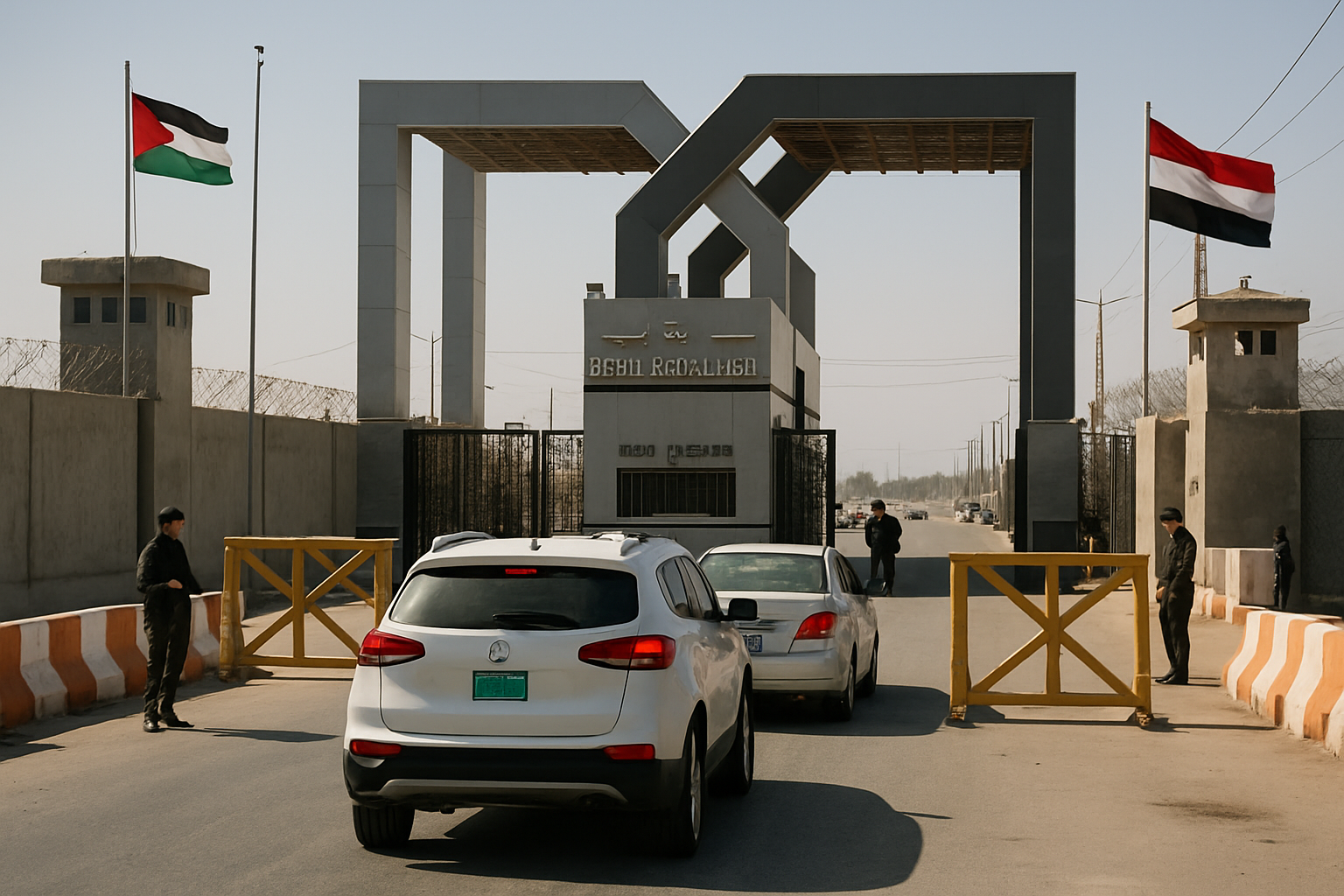
The Rafah border crossing between Gaza and Egypt has partially reopened on Sunday, February 1, 2026, marking the first time in nearly two years that Palestinians can cross the border, offering a crucial lifeline to the territory's 2.3 million residents who have been effectively trapped since May 2024.
Israel announced on Friday, January 30, that the crossing would reopen under strict limitations and security protocols, with movement expected to begin on Monday, February 2. The reopening comes as part of ongoing ceasefire developments between Israel and Hamas, representing a significant step toward easing Gaza's humanitarian crisis.
Strategic Importance of the Crossing
The Rafah crossing serves as Gaza's primary gateway to the outside world, historically functioning as the territory's only direct exit point for most residents seeking to reach other countries. Before the current conflict, it was also a critical entry point for humanitarian aid and essential supplies.
According to COGAT, the Israeli military unit overseeing humanitarian coordination, the crossing has been under Israeli military control on the Gaza side since May 2024, when Israeli forces took control of the facility during military operations. The last evacuation of wounded Palestinians through Rafah occurred in February 2025, highlighting the crossing's critical role in medical evacuations.
Limited Operations Under Strict Security
The reopening operates under a complex multi-party security arrangement designed to address Israeli security concerns while allowing limited movement. Palestinian staff will manage the crossing under supervision from a European Union monitoring mission, while travelers undergo dual security procedures.
Initial identity checks will be conducted by EU personnel, followed by comprehensive security screenings overseen by Israeli authorities in areas under Israeli military control. The crossing will operate for foot traffic only, with vehicle crossings remaining prohibited under current restrictions.
"Today, a pilot is underway to test and assess the operation of the crossing. The movement of residents in both directions, entry and exit to and from Gaza, is expected to begin tomorrow,"
— COGAT Statement
International Coordination and Oversight
The reopening involves coordination between multiple parties, including Israel, Egypt, and the European Union. Palestinian security officials have already crossed through the Egyptian section of the border and moved toward the Palestinian side to join the EU mission responsible for monitoring entry and exit procedures.
Emergency services have also passed through the Egyptian section, preparing for potential medical evacuations and humanitarian emergencies. The head of Gaza's new Palestinian administrative committee, which manages daily affairs in the territory, has confirmed readiness to facilitate the crossing's operations.
Humanitarian Impact and Limitations
While the reopening offers hope to Gaza's population, significant restrictions remain in place. The evacuation of sick and injured Palestinians, as well as the delivery of humanitarian aid, continues to face severe limitations despite the partial reopening.
The crossing's closure has had devastating consequences for Gaza's residents, many of whom have been unable to seek medical treatment abroad, reunite with family members, or access educational opportunities outside the territory. The reopening, though limited, provides the first opportunity for such movement in nearly two years.
Regional Context and Ceasefire Developments
The reopening occurs against the backdrop of ongoing ceasefire negotiations and what sources describe as continued Israeli military operations in Gaza. French media reports indicate that Israeli strikes killed 32 people in Gaza on Saturday, highlighting the fragile nature of current arrangements.
Multiple international sources confirm that Israeli ceasefire violations continue despite the progress on border reopening, suggesting that while the Rafah crossing represents a positive development, broader conflict resolution remains elusive.
Looking Forward: Challenges and Opportunities
The limited nature of the reopening reflects the complex security and political challenges surrounding Gaza's borders. While the crossing provides essential access for Palestinian residents, the strict restrictions and multi-party oversight demonstrate the ongoing tensions that have characterized the region.
International observers view the reopening as a test case for broader arrangements that could eventually facilitate more substantial humanitarian access and economic activity. However, the success of current operations will likely determine the scope of future expansions.
For Gaza's residents, the reopening offers the first glimpse of hope for movement and connection with the outside world after years of near-complete isolation. While restrictions remain significant, the ability to cross the border represents a crucial step toward alleviating the humanitarian crisis that has gripped the territory since the conflict's escalation.