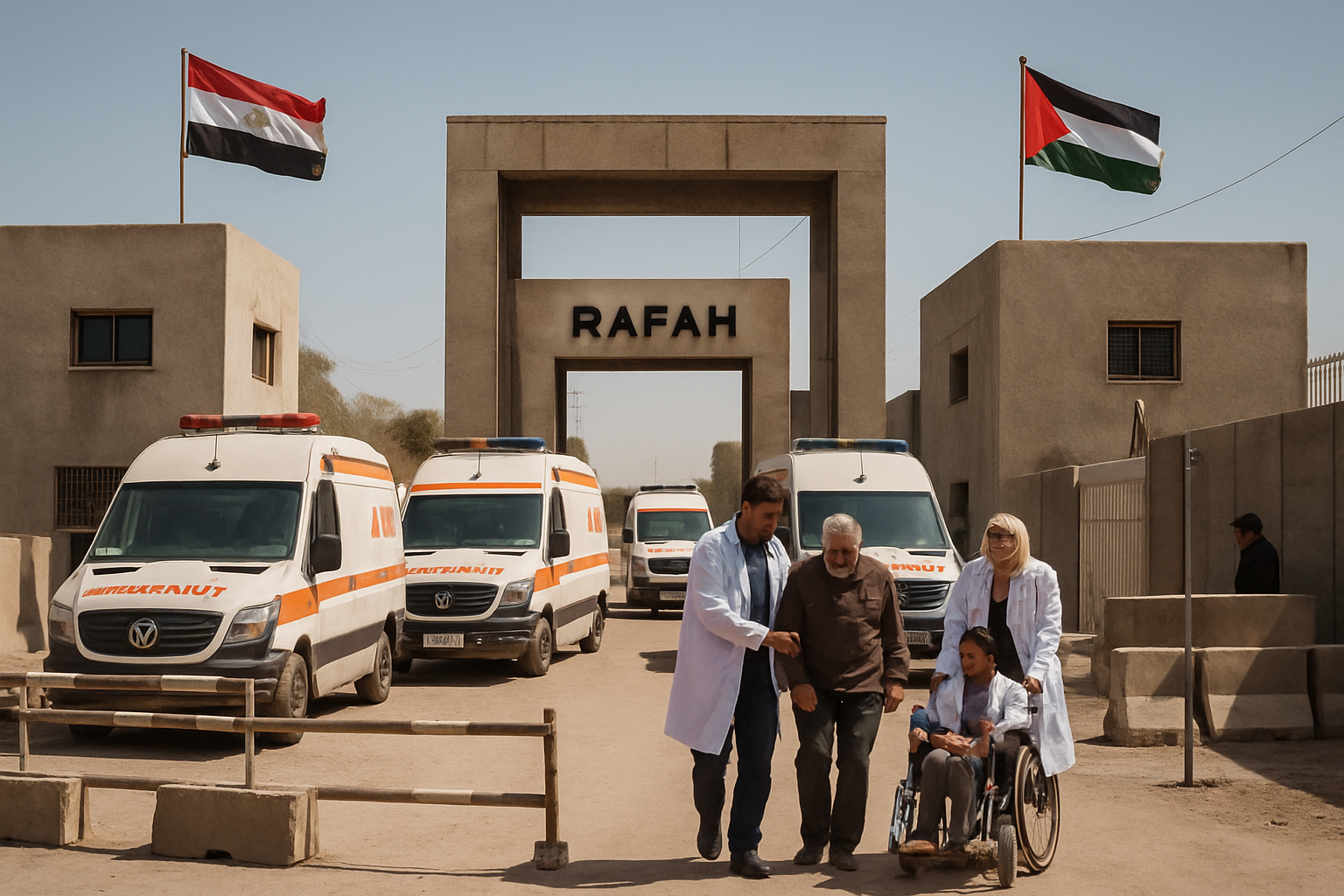
The Rafah border crossing between Gaza and Egypt reopened on Monday, February 2, 2026, marking the first time in nearly two years that Palestinian patients have been able to cross into Egypt for life-saving medical treatment.
The historic reopening saw the first Palestinian medical evacuees arrive in Egypt via ambulance Monday afternoon, as Egyptian authorities had placed 150 hospitals nationwide on high alert and mobilized up to 300 fully equipped ambulances to receive wounded and ill patients from the war-torn Gaza Strip.
According to multiple international sources, the crossing became operational as part of a US-brokered ceasefire agreement, though operations remain severely limited with strict Israeli security protocols governing all movement.
Massive Medical Crisis Awaits Resolution
Gaza's Health Ministry reports that approximately 20,000 Palestinians urgently require medical evacuation for treatment unavailable within the besieged territory. However, initial operations on Monday permitted only a handful of the most critical cases to cross.
Russian news sources, citing Gaza hospital officials, reported that despite the symbolic reopening, Israeli authorities allowed only five out of 22,000 patients requiring medical care to pass through on the first day of operations. This has prompted criticism from medical professionals within Gaza.
"Israel is practicing a collective punishment that threatens thousands of prisoners with murder."
— Mohamed Abou Salmiah, Gaza Hospital Director
The dire medical situation has been compounded by Gaza's healthcare infrastructure being severely damaged during nearly 16 months of conflict, with Gaza's Health Ministry reporting the death toll has reached 71,800 as of Monday.
Egypt's Massive Healthcare Mobilization
In preparation for the crossing's reopening, Egyptian Health Minister Khaled Abdel Ghaffar chaired a high-level coordination meeting at the Ministry's headquarters in the New Administrative Capital. The meeting included Minister of Youth and Sports Ashraf Sobhy, Minister of Social Solidarity Maya Morsy, and representatives from the Egyptian Red Crescent.
Egypt's healthcare system has been placed on maximum alert, with 150 hospitals across the country prepared to receive patients and up to 300 ambulances standing ready for immediate deployment. Ministry spokesperson Hossam Abdel Ghaffar confirmed that discussions focused on activating Egypt's national emergency health services plan.
The first Palestinian patients who crossed Monday were immediately examined by Egyptian medical personnel to determine appropriate hospital placement, according to Egyptian health officials.
Strict Operating Protocols and Limitations
The Rafah crossing, which serves as Gaza's main gateway for its 2.3 million residents, operates under severely restrictive conditions. Current protocols allow only pedestrian traffic—no goods or humanitarian aid are permitted through the crossing.
International reporting indicates the crossing operates with: - Daily quotas limiting movement to 150 people exiting Gaza and 50 entering - Six-hour operating windows - Full Israeli security control on the Palestinian side - Vetting procedures involving Palestinian staff, EU monitoring, and Israeli security coordination - Priority given to medical evacuations and urgent humanitarian cases
The last significant Palestinian medical evacuations through Rafah occurred in February 2025, making Monday's reopening particularly significant for families who have been waiting over a year for medical treatment abroad.
Regional and International Context
The crossing's reopening comes amid broader regional diplomatic developments. The facility had been largely closed since May 2024 when Israeli forces gained control of the Gaza side of the border during military operations in Rafah.
Meanwhile, Jordan has separately continued evacuating sick Palestinian children through its own medical corridor initiative, having completed its 23rd batch of evacuations involving 18 children and 38 companions around the same time as Rafah's reopening.
The reopening also occurs against a backdrop of ongoing international diplomatic pressure. Eight Arab and Muslim nations, including Saudi Arabia, Jordan, Egypt, UAE, Qatar, Indonesia, Pakistan, and Turkey, issued a joint condemnation on February 1 of alleged Israeli ceasefire violations in Gaza, warning that continued violations threaten the second phase of the peace plan.
Humanitarian Significance and Future Prospects
International observers have welcomed the symbolic importance of the crossing's reopening while expressing concerns about the severe restrictions that limit meaningful access for Gaza's population. The facility represents more than just a border crossing—it serves as Gaza's primary connection to the outside world and a lifeline for its trapped population.
The reopening is expected to be gradually expanded if initial operations prove successful, according to Egyptian and Palestinian sources. However, the current restrictions mean that the vast majority of Palestinians requiring medical treatment will continue to wait indefinitely.
As the first ambulances crossed into Egypt Monday afternoon, the moment marked both a milestone in humanitarian access and a stark reminder of the immense medical crisis facing Gaza's population after more than a year of conflict and isolation.
The success of the limited reopening will likely determine whether broader humanitarian access can be restored to one of the world's most densely populated territories, where international organizations estimate that tens of thousands of people require urgent medical care that cannot be provided locally due to the destruction of Gaza's healthcare infrastructure.