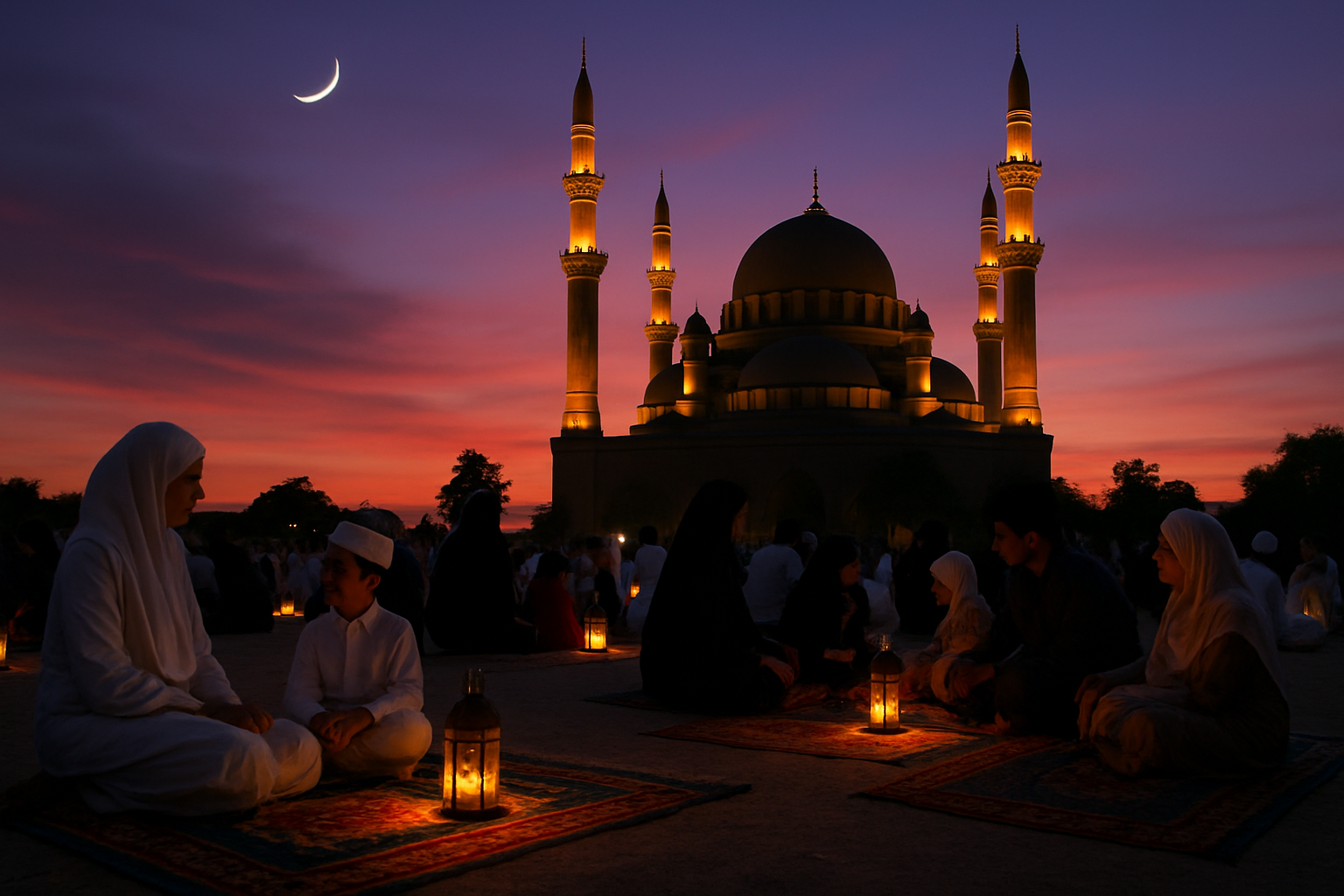
Nearly 2 billion Muslims worldwide began observing Ramadan 1447 AH on February 19, 2026, following successful crescent moon sighting confirmations Tuesday evening, marking the commencement of Islam's holiest month with unprecedented global coordination and comprehensive government support.
The sacred month began with varying start dates across different regions - most Islamic nations including Saudi Arabia, Pakistan, and Malaysia confirmed Wednesday February 18 as the first day, while others such as Egypt and Jordan began Thursday February 19 due to unsuccessful local moon sightings, reflecting traditional differences in lunar calendar determination while maintaining spiritual unity among the global Muslim community.
Global Coordination and Government Support
This year's Ramadan observance demonstrates the most sophisticated international religious coordination in Islamic history. Building on extensive preparations, Saudi Arabia's unprecedented religious diplomacy program distributed 2.2 million Quran copies to 120 countries, delivered 1,000 tons of dates, and deployed 91 imams to 49 countries to support global Muslim communities.
Governments worldwide implemented comprehensive accommodations to facilitate religious observance. Pakistan's federal government modified working hours to 9 AM-3 PM Monday through Thursday and 9 AM-12:30 PM on Fridays. The Punjab Department of Specialized Healthcare and Medical Education announced revised schedules for medical universities, colleges, and teaching hospitals, with office hours from 8 AM to 1 PM and Outpatient Department operations adjusted accordingly.
"These changes are being implemented immediately to ensure better services for the public during the holy month of Ramadan."
— Punjab Health Department Statement
Infrastructure and Logistical Adaptations
In Oman, Muscat Municipality extended operating hours for public parks and gardens, with facilities open from 4:00 PM to midnight on weekdays and until 1:00 AM on weekends to accommodate the unique evening rhythms of the fasting month. The Royal Oman Police implemented truck movement restrictions during peak hours to mitigate traffic congestion, with prohibitions from 7:00 AM to 9:30 AM and 12:00 PM to 4:00 PM on weekdays.
Kuwait experienced a "Ramadan rush" in livestock markets, with sheep prices surging sharply due to suspended imports from Iran and seasonal demand spikes. Naeemi sheep prices rose to 120-150 dinars, with traders expecting prices to reach 170 dinars during Ramadan, demonstrating the economic impact of the holy month on traditional markets.
Religious Guidance and Community Support
Islamic scholars provided comprehensive guidance for proper observance, with Pakistani religious authorities clarifying that using miswak (traditional tooth-cleaning stick) while fasting is permissible based on authentic prophetic traditions. Scholars emphasized that Hazrat Aamir bin Rabiah narrated witnessing Prophet Muhammad using miswak numerous times while fasting, establishing the practice's legitimacy.
The Benazir Income Support Program in Pakistan announced a significant increase in quarterly payments for eligible women beneficiaries, raising the installment from Rs13,500 to Rs14,500 to provide additional financial relief during the holy month. Educational allowances under the Benazir Nashonuma Programme also received Rs500 increases.
International Recognition and Interfaith Outreach
Political leaders worldwide extended greetings to Muslim communities. Ghana's governing National Democratic Congress described Ramadan as a time of "fasting, prayer, reflection, sacrifice and renewed devotion to Allah," emphasizing values critical to national development. Guyana's President Dr. Mohamed Irfaan Ali urged citizens to make compassion a national value, ensuring the country's growing prosperity benefits all citizens.
In Nigeria, Governor Peter Mbah of Enugu State noted the unique convergence of Ramadan with the Christian Lenten season, calling it "a divine call to embrace values that promote unity, love, service and peaceful co-existence." This rare alignment of the two major religious observances affects over 4.5 billion believers worldwide.
"This is a time of fasting, prayer, reflection, sacrifice and renewed devotion to Allah, embodying values that are critical to national development."
— Ghana's National Democratic Congress
Economic and Social Impact
The beginning of Ramadan triggers significant economic and social changes across Muslim-majority nations. Educational institutions implemented modified schedules with classes beginning at 9-10 AM instead of earlier hours to accommodate fasting demands. Egypt extended business hours for shops, restaurants, and cafes until 2:00 AM, recognizing the altered consumption patterns and evening social activities that follow iftar (breaking of fast).
Kazakhstan's Spiritual Administration confirmed the February 19 start date with the first tarawih prayers held Tuesday evening, while Malaysia's National Mosque with its 15,000 capacity filled with worshippers despite rainy weather, demonstrating the unwavering commitment to religious observance.
Technology and Tradition Integration
Modern technology played a crucial role in facilitating global observance. Saudi Arabia's Supreme Court confirmed crescent moon sightings at Hawtat Sudair and Tumair observatories using AI-enhanced detection while maintaining traditional visual confirmation methods. Mobile applications for prayer times, Quranic recitation, and charitable giving platforms enabled diaspora participation across different time zones.
This synthesis of traditional spiritual practices with contemporary technological capabilities demonstrates Islam's capacity for adaptation while preserving essential religious character.
Cultural Diversity Within Unity
The commencement of Ramadan 2026 showcased the beautiful diversity within Islamic unity. From Albania's emphasis on sacrifice, prayer, and solidarity to Kazakhstan's traditional approaches, the holy month reflects varied cultural expressions of shared spiritual values.
Despite regional variations in start dates due to local lunar determination methods, the unified beginning across most Islamic nations reinforced global Muslim ummah unity while respecting traditional practices and geographical differences in moon visibility.
Looking Ahead
Ramadan 2026 will continue through March 19, concluding with the celebration of Eid al-Fitr. The month emphasizes spiritual purification, increased charitable giving (zakat), enhanced community bonds, tarawih prayers, altered consumption patterns, and strengthened social solidarity.
The sophisticated international cooperation demonstrated in facilitating this year's Ramadan observance serves as a template for coordinated spiritual observance, showing how ancient traditions can find meaningful contemporary global expression through modern organizational capabilities and international coordination.
As nearly 2 billion Muslims worldwide enter this sacred period of fasting, reflection, and community service, Ramadan 2026 stands as a testament to the enduring relevance of spiritual practices in building individual growth and collective solidarity across diverse global communities.