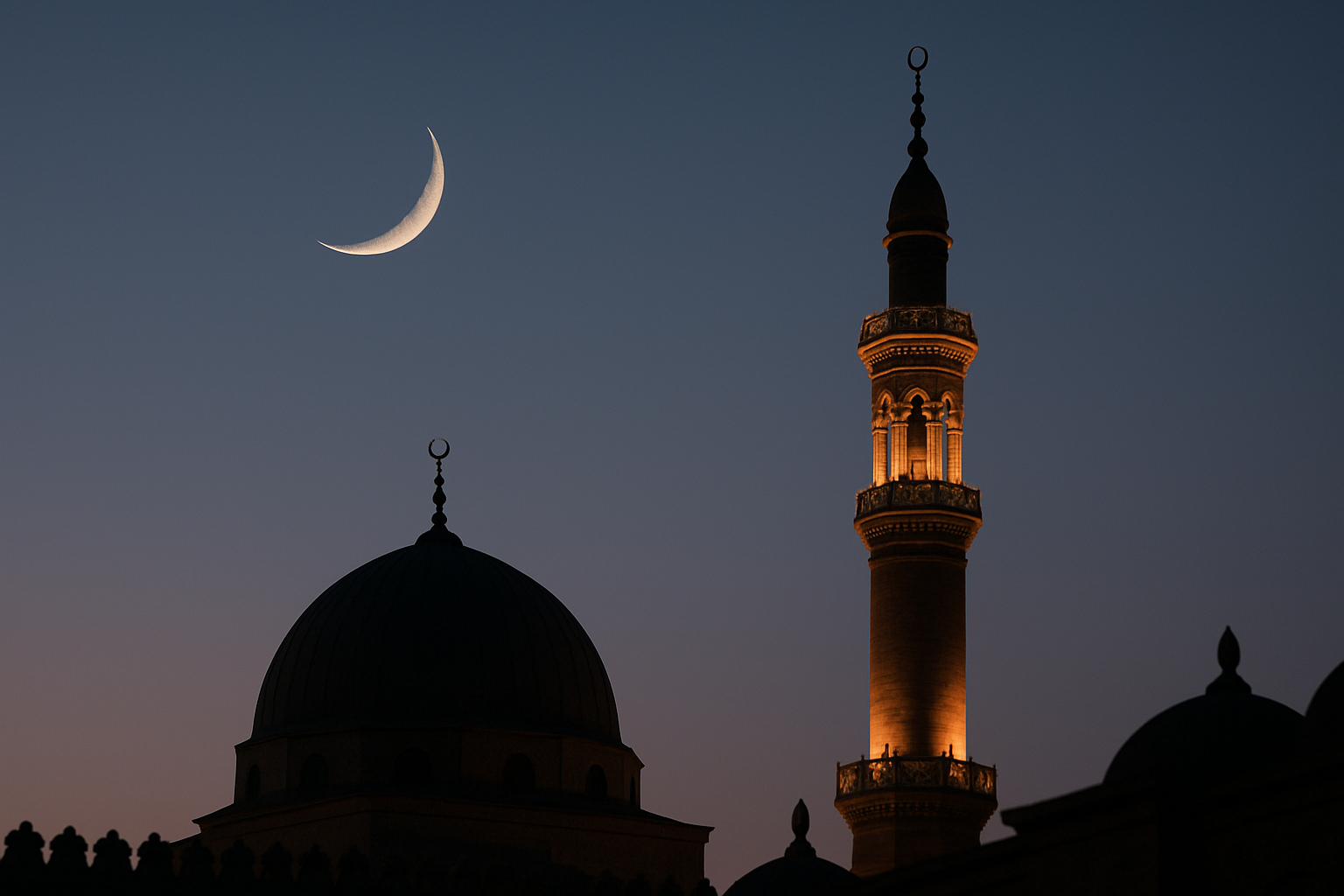
The holy month of Ramadan 1447 AH has officially begun across most of the Muslim world following successful crescent moon sightings on Tuesday evening, with Saudi Arabia, UAE, Qatar, Kuwait, Algeria, Iraq, Egypt, and numerous other Islamic nations announcing Wednesday, February 18, 2026 as the first day of fasting.
The announcement came after religious authorities across multiple countries confirmed the sighting of the Ramadan crescent moon on Tuesday, marking the end of the month of Sha'ban and the beginning of Islam's holiest month. Nearly two billion Muslims worldwide will commence the month-long period of dawn-to-sunset fasting, increased prayer, and spiritual reflection.
Saudi Arabia Leads Global Announcement
Saudi Arabia's Supreme Court made the official declaration Tuesday evening after receiving reports from authorized moon sighting committees across the Kingdom. The Royal Court announced that the crescent moon had been successfully sighted at observatories in Hawtat Sudair and Tumair in Al-Majma'ah Governorate, two locations traditionally used for lunar observations.
The announcement followed reports from multiple observation points across Saudi Arabia, with authorities utilizing both traditional naked-eye sighting methods and advanced astronomical support from AlMajmaah University. Notably, Saudi television reported the use of artificial intelligence technology at the Sudair Observatory to enhance the accuracy of crescent moon detection.
"The Supreme Court has confirmed the sighting of the Ramadan crescent moon, and therefore Wednesday will be the first day of the holy month of Ramadan,"
— Saudi Royal Court Statement
Regional Consensus Emerges
Following Saudi Arabia's announcement, a cascade of confirmations emerged from Islamic nations across the Middle East and beyond. The UAE's official news agency WAM reported that the Presidential Court had declared Wednesday as the first day of Ramadan after successful moon sighting confirmations.
Qatar's Ministry of Religious Affairs and Islamic Affairs committee announced that Tuesday served as the completing day of Sha'ban, with Wednesday marking the beginning of Ramadan. The committee, led by Sheikh Dr. Yahya Buti Al-Nuaimi, issued a formal statement following their evening meeting at the Ministry headquarters.
Kuwait's religious authorities similarly confirmed Wednesday as the first day of Ramadan following the established sighting of the crescent moon, while Iraq's declaration was reported through multiple news channels confirming the Tuesday evening observation.
North African Nations Join Consensus
Across North Africa, Algeria's religious authorities participated in the coordinated moon sighting efforts. Egyptian sources confirmed the country's alignment with the broader Islamic world's determination, marking Wednesday as the beginning of the holy month.
The coordination represents the culmination of extensive preparation efforts documented throughout the region. Algeria's National Committee for Crescents and Sharia Times had announced February 17, 2026, as the designated night for Ramadan crescent observation, corresponding to the 29th of Sha'ban 1447 AH.
Divergent Schedules in Some Regions
While most Islamic countries aligned with Wednesday's start date, several nations announced Thursday, February 19, as their first day of Ramadan due to unsuccessful moon sighting attempts. Jordan's Grand Mufti Ahmed Al-Hasanat announced that Wednesday would serve as the completing day of Sha'ban, with Ramadan commencing Thursday after consultation with the Council of Islamic Research and Studies.
Oman's Main Committee for Lunar Month Observation officially declared Thursday as the first day of Ramadan, citing the astronomical impossibility of sighting the crescent on Tuesday evening. The committee's statement noted that Wednesday would complete the month of Sha'ban for 1447 AH.
Japan's Islamic authorities also announced Thursday as their Ramadan commencement date, reflecting regional variations in moon sighting conditions and religious jurisprudence interpretations.
Technological Integration with Tradition
The 2026 Ramadan moon sighting incorporated advanced technology while maintaining traditional Islamic practices. Saudi Arabia's use of AI-enhanced observation at the Sudair Observatory represents the modern evolution of centuries-old lunar calendar determination methods.
Despite technological assistance, the definitive determination remained based on visual confirmation by authorized religious committees, maintaining the spiritual and communal aspects of Islamic lunar calendar observance. The integration demonstrates how contemporary Muslim societies blend technological advancement with religious tradition.
Global Preparation and Coordination
The Ramadan commencement follows months of preparation across the Islamic world. Saudi Arabia had announced unprecedented international outreach programs, including the distribution of 2.2 million Qur'an copies and translations to 120 countries, along with 1,000 tons of dates and the deployment of 91 imams to 49 countries for religious guidance during the holy month.
Educational institutions across multiple countries had already implemented modified schedules to accommodate fasting requirements. Saudi Arabia's education departments approved revised Ramadan timetables, with classes beginning at 9-10 AM rather than earlier hours, while maintaining educational objectives throughout the month.
The coordination extends to business and government operations, with various countries announcing adjusted working hours and commercial activities to align with the rhythm of Ramadan observance. Egypt had previously announced extended business hours for shops, restaurants, and cafes to accommodate the altered consumption patterns during the holy month.
Spiritual and Social Significance
Ramadan represents far more than dietary restrictions for practicing Muslims. The month emphasizes spiritual purification, increased charitable giving (zakat), enhanced community bonds, and intensified worship through additional prayers including nightly Taraweeh sessions at mosques worldwide.
The simultaneous beginning of Ramadan across most Islamic nations reinforces the global unity of the Muslim ummah (community), despite geographical, cultural, and political differences. The shared experience of fasting, reflection, and spiritual renewal creates a powerful sense of collective identity spanning continents.
Religious leaders across the Arab world had emphasized Ramadan as an opportunity for self-discipline development, empathy building through experiencing hunger, and spiritual connection enhancement beyond mere daylight abstention from food and drink.
Economic and Social Adaptations
The beginning of Ramadan triggers significant economic and social adaptations across Muslim-majority societies. Altered consumption patterns typically result in increased evening economic activity following iftar (sunset meal), while morning productivity adjusts to accommodate fasting requirements.
Countries had prepared comprehensive support systems for the month, including enhanced medical services, food distribution programs for disadvantaged communities, and coordination with international organizations to ensure humanitarian needs are met during the period of increased charitable giving.
The month traditionally sees strengthened social bonds as families and communities gather for shared iftar meals, creating opportunities for conflict resolution, social solidarity, and cultural exchange that extend beyond immediate religious observance.
Historical Context and International Cooperation
The coordinated Ramadan announcement demonstrates the sophisticated international cooperation that has evolved around Islamic lunar calendar determination. Unlike solar calendar systems, the Islamic lunar calendar requires regular observation and communication between religious authorities across different time zones and geographical regions.
This year's coordination reflects months of preparation involving governmental religious departments, international Islamic organizations, astronomical institutions, and community leaders working together to facilitate smooth observance for nearly two billion Muslims worldwide.
The success of this coordination system provides a model for international cooperation on cultural and religious matters, demonstrating how traditional practices can be maintained and enhanced through modern communication and organizational technologies.
As Muslims worldwide begin this sacred month, the unified beginning date across most Islamic nations underscores both the enduring importance of lunar observation in Islamic practice and the remarkable coordination capabilities of modern Muslim societies in preserving and facilitating ancient religious traditions.