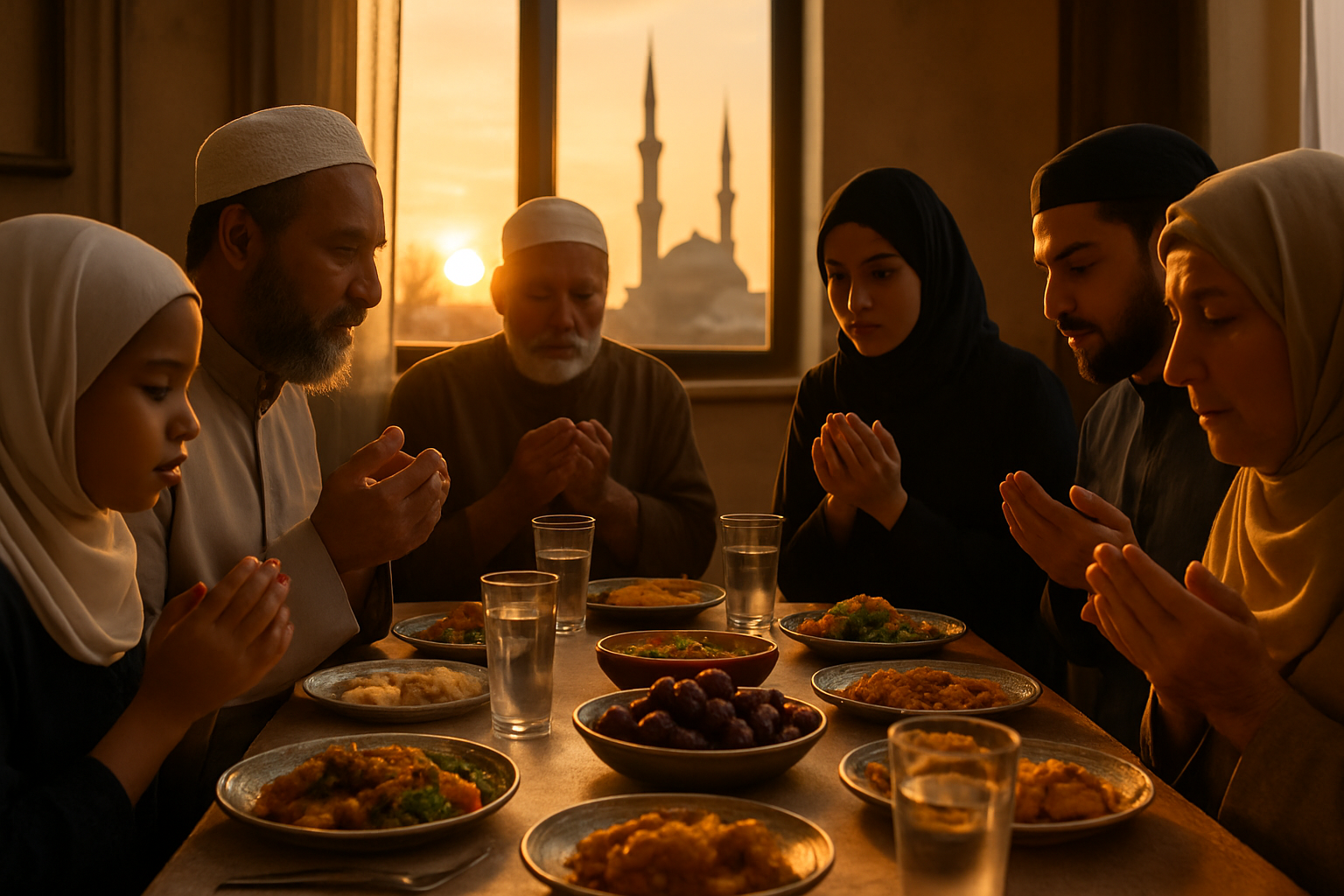
Nearly two billion Muslims worldwide have begun observing Ramadan 2026, marking the start of Islam's holiest month following crescent moon sighting confirmations across multiple countries on Tuesday evening, February 17, 2026.
The sacred month commenced with varying start dates - Wednesday, February 18 in some nations and Thursday, February 19 in others - reflecting traditional differences in lunar calendar determination methods and geographical moon visibility conditions.
Global Moon Sighting Confirmations
Saudi Arabia's Supreme Court confirmed successful crescent moon sightings at observatories in Hawtat Sudair and Tumair in Al-Majma'ah Governorate, establishing Wednesday as the first day of Ramadan 1447 AH. The kingdom's announcement typically influences neighboring Gulf states and many Muslim communities worldwide.
Egypt's Dar al-Ifta announced that visual confirmation attempts were unsuccessful Tuesday evening, declaring Thursday, February 19, as the first day of Ramadan after completing the month of Sha'ban with 30 days. This decision aligned with similar announcements from Jordan and Oman.
Nigeria's Sultanate Council of Sokoto confirmed crescent moon sighting, declaring Wednesday as the commencement of fasting for Africa's most populous nation. The announcement came through Sultan Alhaji Muhammadu Sa'ad Abubakar III, spiritual leader for Nigerian Muslims.
Regional Coordination and Traditions
Algeria's National Committee for Crescents and Sharia Times, meeting at the Imam House in Algiers, officially announced Thursday as Ramadan's beginning following traditional observation protocols. The committee's decision reflects the country's methodical approach combining astronomical calculations with physical moon sighting verification.
Trinidad and Tobago's ASJA Hilal Committee determined Thursday as the start date, with Imam Yacoob Ali explaining that the new moon would be 34 hours and 18 minutes old by Wednesday sunset, making it visible from India westward but requiring an additional day for local observance.
Uganda's Muslim Supreme Council announced Wednesday as the first day after confirming crescent moon sighting, with the announcement made by Director of Sharia Dr. Sheikh Ziyad Swaleh Lubanga at the organization's Old Kampala headquarters.
International Preparations and Accommodations
The commencement of Ramadan follows extensive international preparations documented throughout February 2026. Saudi Arabia launched unprecedented global programs distributing 2.2 million Quran copies and translations across 120 countries, along with 1,000 tons of dates and deploying 91 imams to 49 countries for religious guidance.
"This is a historic moment for the entire Muslim community worldwide, as we begin a month of spiritual purification, increased devotion, and community solidarity."
— Islamic Scholar
Educational institutions across multiple countries implemented modified schedules accommodating fasting requirements, with class times adjusted to 9-10 AM starts rather than earlier hours. Egypt extended business operating hours, allowing shops, restaurants, and cafes to remain open until 2:00 AM throughout the month.
Technology and Modern Observance
This year's Ramadan observance demonstrates sophisticated integration of traditional practices with modern technology. Saudi Arabia's Sudair Observatory employed AI-enhanced crescent detection systems while maintaining traditional visual confirmation by authorized religious committees, representing an evolution of centuries-old lunar calendar determination methods.
Mobile applications for prayer times, Quran recitation, and charitable giving are facilitating observance across diverse time zones and cultural contexts, enabling global diaspora communities to participate fully in religious practices.
Diplomatic and Cultural Significance
The beginning of Ramadan carries notable diplomatic dimensions, with Afghanistan's Islamic Emirate releasing three Pakistani soldiers "to mark the month of Ramadan," demonstrating the holy month's role in regional reconciliation efforts. The prisoners, captured in October 2025 during border clashes, were handed over to a Saudi delegation in Kabul.
France's Paris Mosque announced Wednesday as the start date for French Muslims, emphasizing unity and harmony among the nation's diverse Muslim population. The decision reflects careful coordination with both astronomical calculations and community needs in European contexts.
Government Accommodations
Kuwait announced reduced working hours for employees with disabilities or their caregivers during Ramadan, implementing two-hour daily reductions with full pay. Such accommodations demonstrate growing recognition of inclusive policies during religious observance periods.
Bosnia and Herzegovina prepared for Muslims to fast between 12-15 hours daily, depending on geographical location, with community leaders emphasizing the month's significance for spiritual purification and strengthening religious devotion beyond mere daylight fasting.
Global Unity Amid Diversity
Despite the Wednesday-Thursday start date variations, the unified beginning across most Islamic nations reinforces global Muslim ummah unity while respecting traditional methods of lunar calendar determination. The month emphasizes spiritual purification, increased charitable giving (zakat), enhanced community bonds, and Taraweeh prayers.
Yemen's Dar al-Ifta in Sanaa announced Wednesday as the first day, while the country's leadership, including Sayyed Abdul-Malik al-Houthi, extended congratulations to the Yemeni people and the broader Islamic nation on the holy month's arrival.
The synchronized beginning triggers altered consumption patterns, evening economic activity increases, family and community iftar gatherings, and strengthened social solidarity across cultures and continents.
Looking Forward
Ramadan 2026 represents a convergence of ancient spiritual traditions with contemporary global coordination capabilities. The month-long observance, concluding with Eid al-Fitr celebrations in mid-March, serves as a period of reflection, community building, and charitable giving for nearly two billion Muslims worldwide.
The successful coordination of Ramadan preparations across more than 120 countries demonstrates sophisticated international cooperation in facilitating religious observance while maintaining social cohesion and economic stability in an interconnected world.