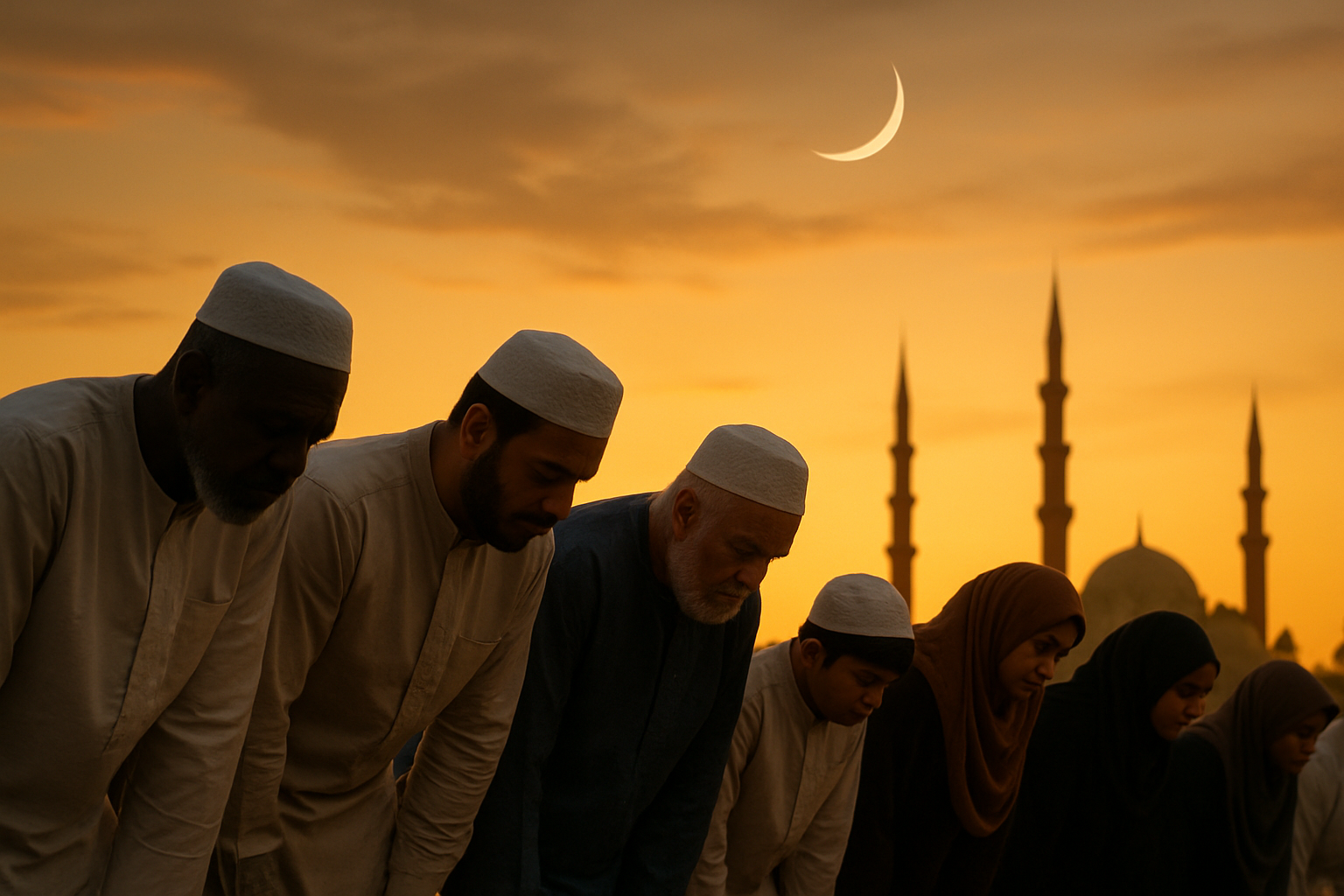
Nearly 2 billion Muslims worldwide have begun observing Ramadan 1447 AH, with most countries confirming February 19 as the first day of the holy month following crescent moon sighting ceremonies on Tuesday evening, February 18, 2026.
The Islamic holy month commenced across diverse nations from Kazakhstan to Kuwait, Malaysia to Germany, marking one of the most coordinated global religious observances in modern history. Despite regional variations in start dates, the overwhelming majority of Muslim communities worldwide began their dawn-to-sunset fasting on Thursday, February 19.
Global Moon Sighting Confirmations
Kazakhstan's Spiritual Administration of Muslims officially announced that Ramadan would begin February 19, with the first tarawih (night prayers during Ramadan) held on the evening of February 18. The announcement followed traditional lunar observation protocols combined with modern astronomical calculations.
Malaysia's announcement came through the Keeper of the Rulers' Seal, Tan Sri Syed Danial Syed Ahmad, who declared the start date by order of His Majesty Sultan Ibrahim, King of Malaysia, after consultation with Islamic authorities across all Malaysian states. Prime Minister Datuk Seri Anwar Ibrahim called on Muslims to "embrace Ramadan by going beyond merely fulfilling the conditions and pillars of fasting," urging deeper understanding of the month's spiritual wisdom.
Jordan's Astronomical Society confirmed that more than 90% of the Islamic world would begin fasting on Thursday, with president Ammar Al-Sakji noting that no authenticated crescent sighting occurred Tuesday evening, making Wednesday the completing day of Sha'ban.
Regional Start Date Variations
While most Islamic nations began Ramadan on February 19, some regional differences emerged based on local moon sighting traditions. Saudi Arabia and several Gulf states confirmed Wednesday, February 18, as their start date following successful crescent observations. Meanwhile, countries including Egypt and some regions that were unable to sight the crescent moon locally opted for the Thursday start.
This variation reflects the Islamic tradition of local lunar calendar determination while maintaining the underlying unity of global Muslim observance. France's religious authorities experienced division over the start date, highlighting the complexity of coordinating lunar observations across different geographical locations.
Unprecedented International Coordination
The 2026 Ramadan observance has been marked by extraordinary international coordination and diplomatic support. Saudi Arabia's religious diplomacy reached new heights with the distribution of 2.2 million Quran copies and translations across 120 countries, alongside 1,000 tons of dates and the deployment of 91 imams to 49 countries to support local Muslim communities.
Government accommodations across Muslim-majority nations demonstrated sophisticated approaches to facilitating religious observance. Pakistan's federal government announced modified working hours of 9:00 AM to 3:00 PM Monday through Thursday, and 9:00 AM to 12:30 PM on Fridays for the five-day work week.
In a gesture of humanitarian diplomacy timed with Ramadan's beginning, Jordan's Interior Minister Mazen Al-Faraya approved the release of 546 administrative detainees, enabling them to spend the holy month with their families.
Spiritual and Cultural Significance
Ramadan, the ninth month of the Islamic lunar calendar, commemorates the first revelation of the Quran to Prophet Muhammad. The month requires adult Muslims to abstain from food, drink, smoking, and marital relations from dawn to sunset, while emphasizing increased prayer, charity (zakat), and spiritual reflection.
Religious leaders across the Arab world emphasized Ramadan as an opportunity for self-discipline development, empathy building, and enhanced spiritual connection beyond mere daylight fasting. The month serves as a time for increased charitable activities, community service, and strengthening social bonds.
"This sacred month provides an opportunity for spiritual purification and community solidarity that transcends national boundaries."
— Religious Affairs Official
European Muslim Communities
European Muslim communities prepared for Ramadan observance with local adaptations and government support. In Germany, celebrations ranged from light displays in Frankfurt to interfaith dinners in Nuremberg and community gatherings in Cologne, demonstrating the integration of Islamic traditions within European societies.
Belgium and the Netherlands experienced some uncertainty over exact start dates due to different methods for determining lunar calendar dates, with Dutch Muslims facing varying fasting start dates based on different astronomical calculation approaches.
Finland continued its innovative accommodation of Muslim students with "fasting parks" – dedicated quiet spaces during lunch periods for students observing Ramadan, representing the fourth year of this inclusive educational initiative.
Gaza Observes Ramadan Amid Ongoing Challenges
Palestinians in Gaza marked the beginning of Ramadan while still experiencing the impacts of ongoing conflict. Despite challenging circumstances, the Islamic holy month provides a time for spiritual reflection and community solidarity, with local religious leaders emphasizing the importance of maintaining faith and hope during difficult times.
African Continental Observance
Across Africa, Muslim communities embraced Ramadan with enthusiasm and preparation. Nigeria's Senate President Godswill Akpabio called on Muslims to use the period to pray for peace in Nigeria and the world, reflecting broader hopes for conflict resolution and national unity.
In Niger, Prime Minister Ali Mahaman Lamine Zeine addressed the population, encouraging increased prayers for peace during the holy month. West African nations coordinated their announcements, with most confirming Thursday as the start date following established astronomical and religious protocols.
Educational and Workplace Adaptations
Educational systems across Muslim-majority countries implemented accommodations for fasting students and staff. Modified school schedules typically began classes between 9:00 and 10:00 AM rather than earlier hours, recognizing the physical demands of fasting while maintaining educational continuity.
Egypt announced extended business hours for shops, restaurants, and cafes, which would remain open until 2:00 AM daily throughout Ramadan, acknowledging the cultural shift toward evening social activities following the daily iftar meal.
Technology Integration and Global Connectivity
Modern technology played an unprecedented role in facilitating global Ramadan observance. Mobile applications provided prayer times, Quranic recitation, and charitable giving platforms, enabling Muslim diaspora communities worldwide to participate meaningfully in religious obligations across diverse time zones and cultural contexts.
The synthesis of traditional spiritual practices with contemporary technological capabilities demonstrated the evolution of Islamic observance in the modern world, maintaining essential religious meaning while adapting to contemporary circumstances.
Economic and Social Impact
Ramadan's beginning triggered significant economic and social changes across Muslim-majority regions. Altered consumption patterns, increased evening food purchases, and enhanced social activities following daily iftar meals create distinct seasonal economic dynamics.
The month traditionally sees increased charitable giving, with many Muslims fulfilling their annual zakat obligations during this spiritually significant period. This surge in charitable activity provides crucial support for vulnerable populations while strengthening community bonds.
Looking Ahead
The 2026 Ramadan observance represents a sophisticated model of international religious coordination, demonstrating how ancient spiritual traditions can maintain contemporary global relevance through international cooperation, technological integration, and inclusive governmental policies.
As the month progresses, Muslim communities worldwide will engage in traditional practices including Taraweeh prayers, community iftar gatherings, increased Quranic study, and enhanced charitable activities, culminating in the celebration of Eid al-Fitr approximately 30 days from the start date.
This year's Ramadan serves as a testament to the enduring power of shared spiritual observance to unite diverse communities across continents, cultures, and circumstances, providing both individual spiritual growth and collective social solidarity in an interconnected world.