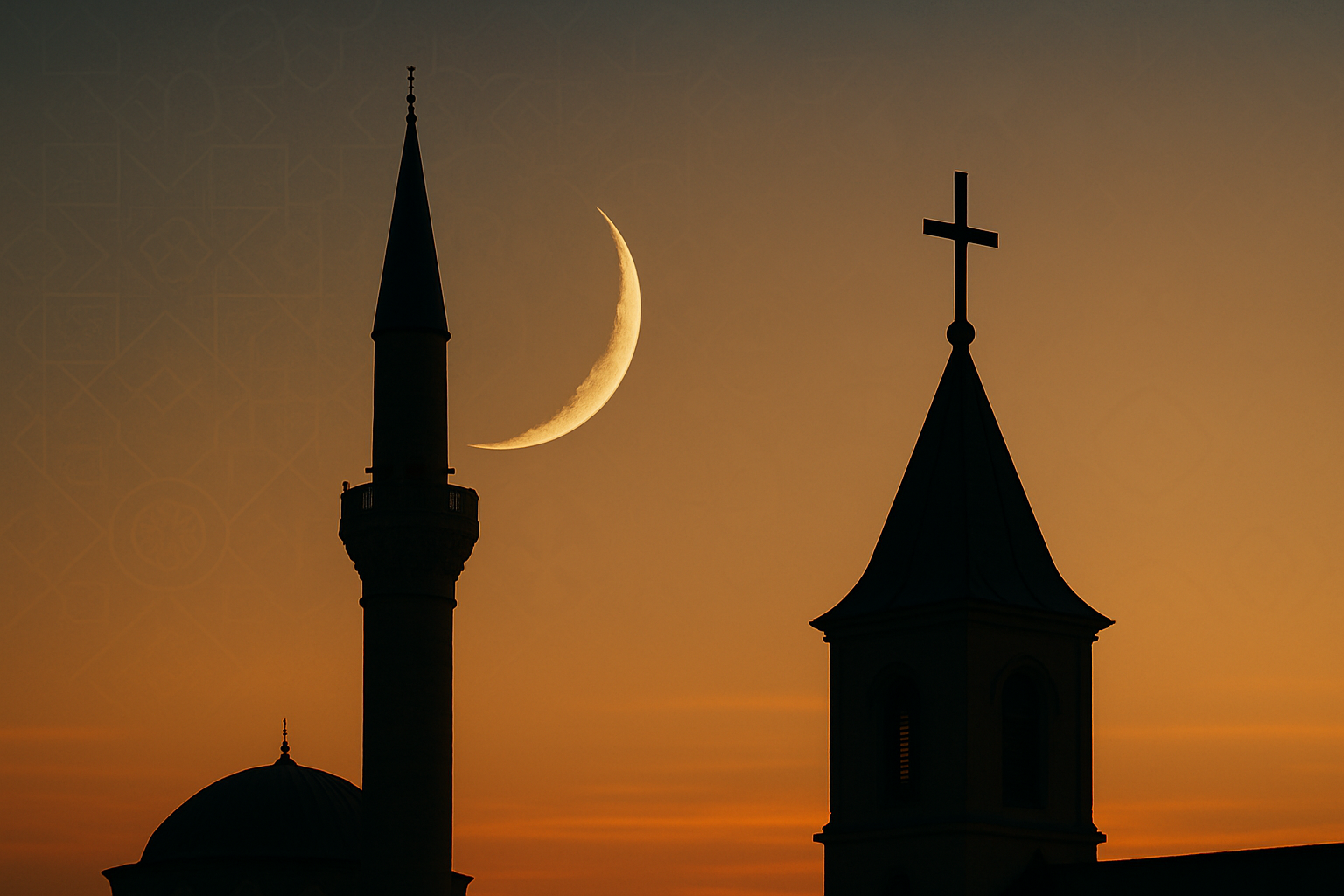
The sacred month of Ramadan and the Christian season of Lent begin simultaneously across the globe on February 18, 2026, creating an unprecedented convergence of two of the world's most significant religious observances affecting over 2.5 billion believers worldwide.
Following successful crescent moon sightings Tuesday evening, Islamic authorities across multiple nations including Saudi Arabia, Nigeria, Malaysia, Kuwait, and Qatar confirmed Wednesday, February 18, as the first day of Ramadan 1447 AH. This timing coincides exactly with Ash Wednesday, the traditional start of the 40-day Lent season for Christians, marking the beginning of preparation for Easter.
Global Confirmation of Ramadan's Commencement
The confirmation came after comprehensive moon sighting ceremonies conducted across the Islamic world. In Cameroon, the National Crescent Moon Commission (Cncl) announced that the lunar crescent was observed at Yagoua in the Mayo-Danay department, with local religious leader the Lamido informing the Sultan of Wandala.
"The National Crescent Moon Commission has the pleasure of informing the Muslim community of Cameroon that the fasting of the month of Ramadan 2026 corresponding to the Hijri year 1447 begins tomorrow," stated the commission in an official communiqué.
Similar confirmations emerged from multiple nations. In Nigeria, the Sultanate Council of Sokoto officially declared Wednesday as the first day of fasting for Muslims across Africa's most populous nation. Malaysian authorities celebrated their moon-sighting practice gaining international recognition, with Minister in the Prime Minister's Department for Religious Affairs Dr. Zulkifli Hassan noting that Malaysia's systematic approach has become a global reference point.
International Recognition and Diplomatic Outreach
The beginning of Ramadan has prompted unprecedented international recognition and diplomatic engagement. Israel's Defense Forces published social media posts wishing Muslims a peaceful Ramadan, while Kuwait's Minister of Education extended congratulations to the country's leadership on the occasion of the holy month.
In Pakistan, preparations for Ramadan reached a crescendo with Lahore undergoing a comprehensive transformation. Following directives from Punjab Chief Minister Maryam Nawaz, the Punjab Housing Authority launched a citywide campaign to illuminate streets, intersections, parks, and green belts with traditional Islamic motifs and modern lighting installations.
"Streets, intersections, parks, and green belts are being transformed into glowing pathways of light and tradition, blending modern aesthetics with the sanctity of Ramadan."
— Punjab Housing Authority, Lahore
Spiritual Significance and Global Observance
The simultaneous beginning of Ramadan and Lent represents a rare convergence of spiritual seasons that emphasize similar themes of fasting, prayer, charity, and personal reflection. For Muslims, Ramadan is the ninth month of the Islamic lunar calendar and commemorates the first revelation of the Quran to the Prophet Muhammad. It requires believers to fast from dawn to sunset, engage in additional prayers, and increase charitable giving.
Christian Lent, beginning with Ash Wednesday, marks 40 days of preparation for Easter through prayer, fasting, and almsgiving. The period commemorates Jesus Christ's 40-day fast in the desert and serves as a time for spiritual discipline and renewal.
Community Preparations and Cultural Adaptations
The convergence has prompted unique cultural adaptations worldwide. In Malaysia, the overlap of Chinese New Year (February 17), Ramadan, and Lent has created an unprecedented multicultural celebration period, with Penang hotels reporting 60% occupancy as communities prepare for the convergence of multiple religious and cultural observances.
Religious authorities across both faiths have emphasized the common themes of spiritual discipline, community service, and personal growth. The timing provides an opportunity for interfaith dialogue and mutual understanding between Muslim and Christian communities worldwide.
Economic and Social Impact
The simultaneous observances carry significant economic implications. Retail sectors in Muslim-majority countries typically see increased activity during Ramadan, particularly for food, clothing, and religious items. Similarly, Christian communities often increase charitable giving during Lent.
Educational institutions across multiple countries have adjusted schedules to accommodate fasting periods. Modified working hours and special arrangements demonstrate governments' recognition of the religious observances' importance to their populations.
Technology and Tradition
Modern technology continues to support traditional religious practices. Mobile applications for prayer times, Quranic recitation, and charitable giving facilitate observance across diverse time zones and cultural contexts. The integration of technology with traditional spiritual practices enables global diaspora communities to participate meaningfully in their religious obligations.
International Cooperation and Cultural Exchange
The convergence builds upon extensive international religious cooperation established in recent years. Saudi Arabia's distribution of 2.2 million Quran copies across 120 countries, alongside 1,000 tons of dates and the deployment of 91 imams to 49 countries, represents unprecedented scale in religious diplomacy supporting global Muslim communities.
Similarly, Christian organizations worldwide have enhanced Lent programming and outreach, emphasizing the season's relevance for contemporary spiritual needs and community building.
Regional Variations and Cultural Expressions
While Ramadan begins Wednesday across most Islamic nations, some countries including Egypt and Jordan will begin Thursday due to unsuccessful moon sightings, reflecting traditional differences in lunar calendar determination methods. This variation demonstrates the rich diversity within Islamic practice while maintaining underlying unity of purpose.
Christian communities worldwide will observe Ash Wednesday with traditional services marking the beginning of Lent, with local customs and expressions varying by denomination and cultural context while maintaining core spiritual themes.
Looking Ahead: Months of Spiritual Reflection
The simultaneous beginning of these sacred seasons creates unique opportunities for interfaith understanding and cooperation. Both observances emphasize themes of self-discipline, spiritual growth, community service, and preparation for major religious celebrations – Eid al-Fitr concluding Ramadan and Easter concluding Lent.
Religious leaders across both traditions have noted the providential timing, suggesting that the convergence offers opportunities for mutual learning and shared commitment to values of compassion, service, and spiritual development that transcend religious boundaries.
As nearly 2 billion Muslims and over 2.4 billion Christians worldwide enter their respective seasons of spiritual reflection and discipline, the simultaneous observances represent a remarkable moment of global religious engagement, demonstrating how ancient spiritual traditions continue to provide meaning and community in the contemporary world.