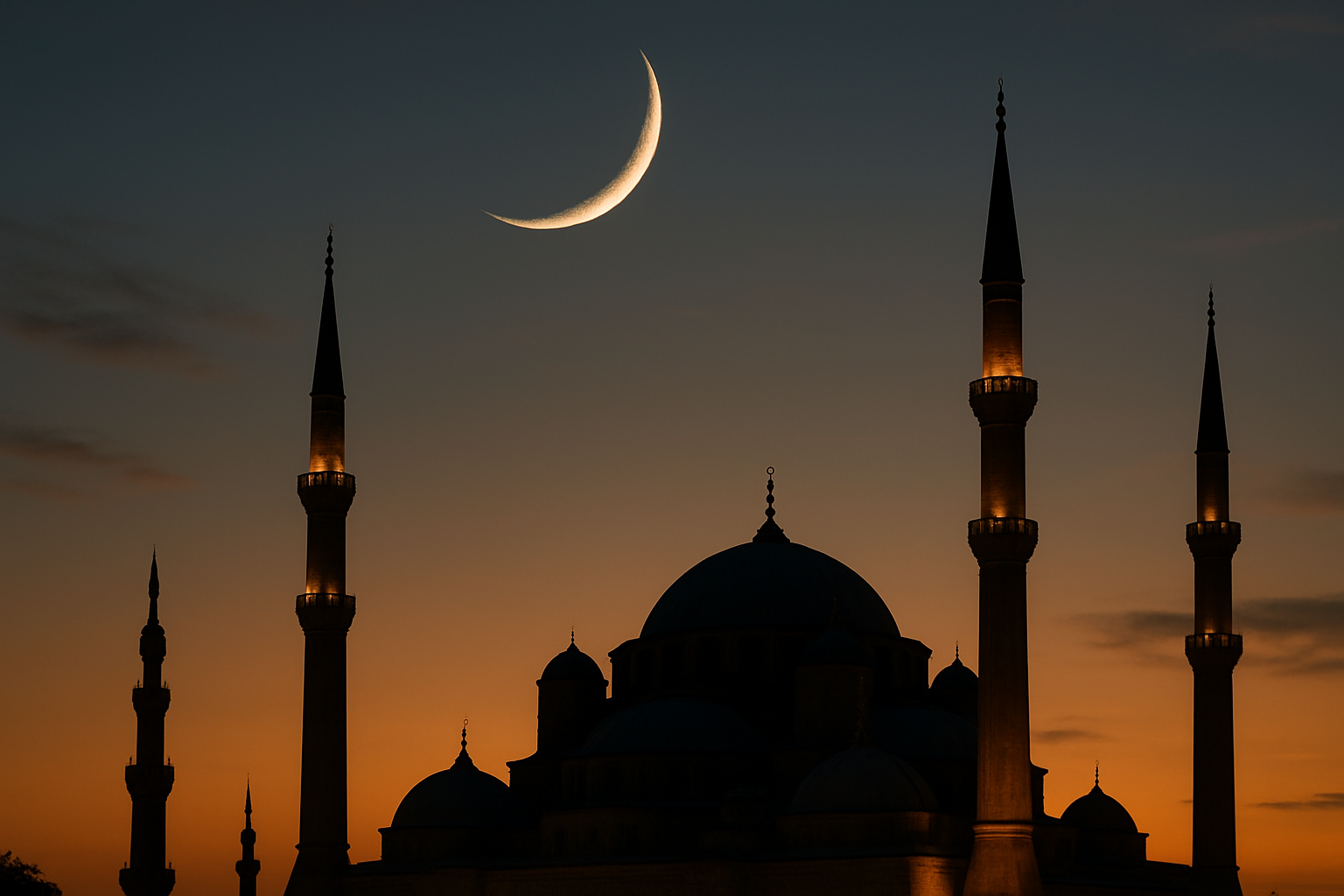
Muslim communities across the globe are making final preparations for the holy month of Ramadan, with moon sighting ceremonies scheduled for tonight and governments implementing comprehensive arrangements to facilitate religious observance for over 1.8 billion Muslims worldwide.
The sacred month is expected to begin Wednesday or Thursday, February 18-19, 2026, pending the crucial crescent moon sighting that officially marks the start of the Islamic fasting month. Officials across multiple countries are preparing for what many describe as one of the most coordinated Ramadan preparations in recent history.
Critical Moon Sighting Ceremonies Tonight
In Saudi Arabia, all eyes will turn to the renowned observatories of Hawtat Sudair and Tamir as the sun sets Tuesday evening. These locations, equipped with advanced astronomical equipment, have historically played pivotal roles in determining the start of Islamic months for much of the Muslim world.
The AlMajmaah University Astronomical Observatory is also providing scientific support, offering astronomical readings that enhance sighting capabilities using both traditional naked-eye observation and modern instruments. While astronomical calculations serve as supporting tools, the actual visual sighting of the crescent moon remains the definitive method for Islamic calendar determination.
In Egypt, discussions have emerged around the controversial "Tawfiqat Ilhamiya" book, which has gained attention for its predictions regarding Islamic months. The text suggests Wednesday, February 18, 2026, as the first day of Ramadan, though official confirmation will depend on tonight's moon sighting ceremonies.
Government Arrangements and Schedule Modifications
Governments across the Muslim world have implemented comprehensive measures to accommodate the spiritual and practical needs of fasting communities. In Pakistan's Sindh province, authorities have officially announced adjusted working hours for all government offices throughout Ramadan.
"Government offices will operate from 10:00 AM to 4:00 PM from Monday to Thursday, with Friday hours from 10:00 AM to 1:00 PM to ensure shorter work hours accommodating the spiritual practices of the holy month,"
— Sindh Government Notification
The notification, approved by the Chief Secretary of Sindh, applies to all government departments, autonomous bodies, private institutions, and local councils within the province, demonstrating the comprehensive scope of Ramadan preparations.
Financial and Religious Obligations
Pakistan's federal government has also addressed the religious obligation of Zakat, announcing a significantly increased threshold for the charitable contribution. The minimum threshold (Nisab) for Zakat deduction from bank accounts has been set at Rs503,529 for Ramadan 2026, substantially higher than the previous year's Rs179,689.
This adjustment affects individuals with savings bank accounts, profit and loss sharing accounts, and similar financial instruments. All Pakistani banks are scheduled to deduct Zakat on the first day of Ramadan, expected to be February 19 or 20, 2026, depending on the duration of the current Islamic month of Shaban.
Spiritual Reflection and Personal Transformation
Across the Arab world, religious leaders and communities are emphasizing Ramadan's role as a month of spiritual renewal and personal transformation. Algerian media outlets have published extensive guidance on utilizing the holy month for positive life changes, particularly for those seeking spiritual and behavioral improvements.
The focus extends beyond mere abstention from food and drink during daylight hours to encompass broader spiritual disciplines including enhanced prayer, Quranic recitation, charitable giving, and community service. Religious authorities stress that Ramadan serves as an opportunity to develop self-discipline, empathy for the less fortunate, and closer connection to spiritual values.
Building on Previous Preparation Success
The current preparations build upon an unprecedented coordination effort that began in early 2026. According to documented initiatives, Saudi Arabia launched massive international programs distributing 2.2 million Quran copies and translations across 120 countries, alongside 1,000 tons of dates and deploying 91 imams to 49 countries for prayer leadership.
This level of international religious diplomacy demonstrates the global significance of Ramadan preparations, with governments, religious institutions, and communities working collaboratively to ensure smooth observance across diverse cultural and geographic contexts.
International Community Engagement
The global nature of Ramadan preparation is evident in the diverse range of countries implementing supportive measures. From educational schedule adjustments to commercial hour extensions, governments worldwide are adapting their operations to accommodate the spiritual and practical needs of Muslim communities.
These preparations occur against the backdrop of increased international attention to religious accommodation and multicultural cooperation, with many non-Muslim majority countries also implementing measures to support their Muslim populations during this significant religious observance.
Technology and Tradition Integration
Modern Ramadan preparations increasingly incorporate technology while maintaining traditional spiritual elements. Mobile applications for prayer times, Quran recitation, and charitable giving are facilitating observance across diverse time zones and cultural contexts, representing a synthesis of ancient spiritual practices with contemporary technological capabilities.
This integration allows Muslims living in diaspora communities to maintain connection with religious practices while adapting to local conditions, contributing to the global nature of modern Ramadan observance.
Economic and Social Implications
The economic implications of Ramadan preparations are substantial, encompassing altered consumption patterns, increased social activities during evening hours after the daily fast is broken (iftar), and significant charitable giving. Businesses and institutions adjust their operations to accommodate these changed patterns, while also benefiting from increased economic activity in sectors such as food service and retail.
The coordinated nature of preparation across multiple countries also demonstrates the effectiveness of international cooperation in facilitating religious observance, serving as a model for managing global religious and cultural diversity in an interconnected world.
Looking Ahead
As communities await tonight's moon sighting results, the extensive preparations undertaken across the globe reflect both the spiritual significance of Ramadan and the sophisticated coordination required to facilitate observance for nearly two billion Muslims worldwide.
The success of these preparation efforts will be measured not only in logistical efficiency but in their ability to create conditions conducive to spiritual reflection, community building, and charitable action that define the essence of this sacred month.
With governments, religious institutions, and communities working in unprecedented coordination, Ramadan 2026 promises to demonstrate the capacity of modern societies to accommodate and celebrate religious diversity while maintaining social cohesion and economic stability.