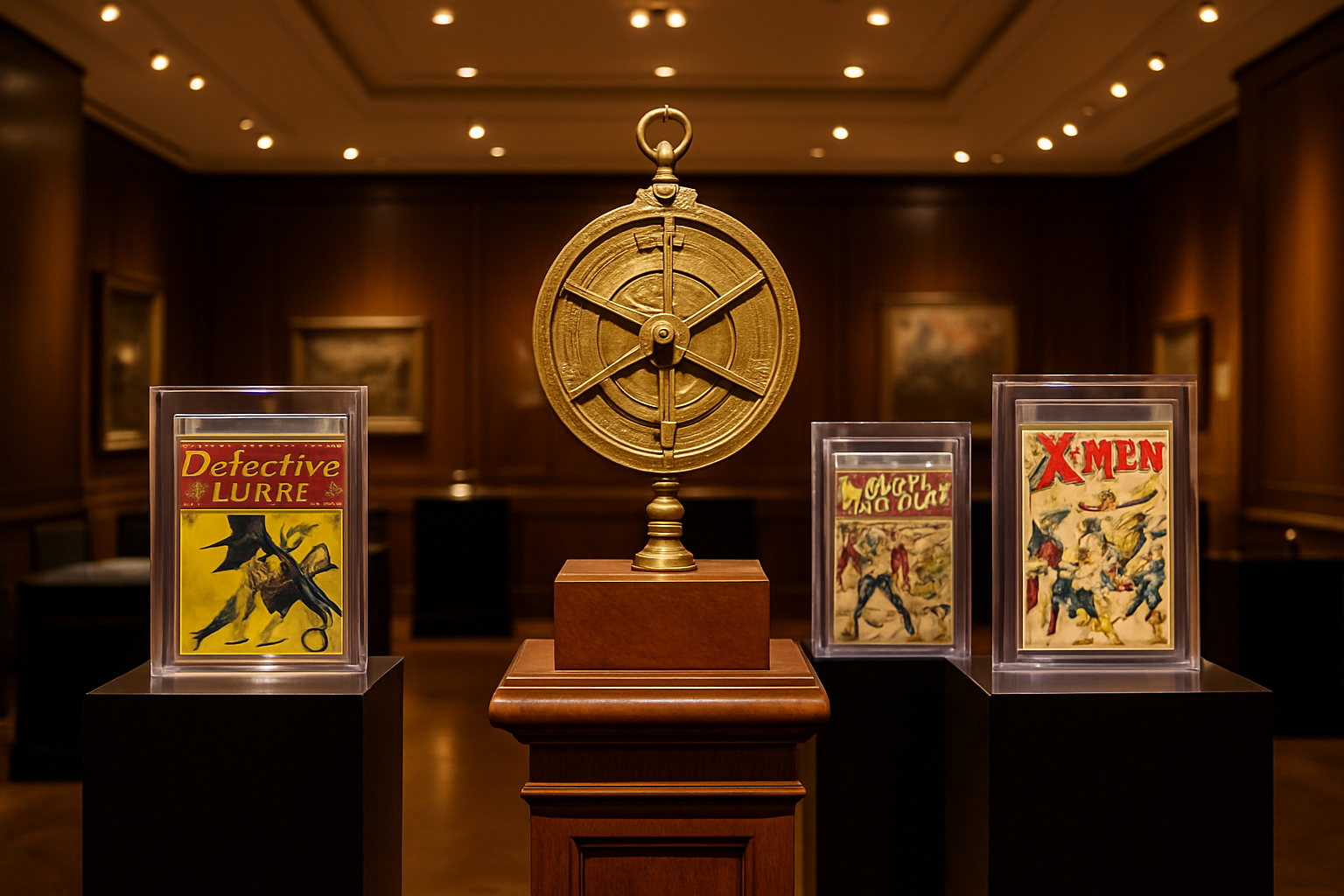
The rare collectibles market has reached extraordinary new heights this weekend, with a 17th-century astrolabe expected to command up to 33 million kronor ($3.3 million) at Sotheby's London and a first-edition Donald Duck comic achieving a record-breaking 150,600 kronor ($15,000) sale in Sweden, demonstrating the robust appetite for authenticated historical artifacts across diverse collecting categories.
These exceptional auction results underscore a broader transformation in the collectibles landscape, where institutional recognition, digital authentication technologies, and growing wealth concentration have elevated previously niche markets to investment-grade asset status. The convergence of historical significance, technological innovation, and cultural nostalgia has created unprecedented demand for authenticated artifacts with clear provenance chains.
17th-Century "Smartphone" Commands Million-Dollar Estimates
The centerpiece of this collectibles surge is an extraordinary astrolabe, marketed by Sotheby's as "the smartphone of the 17th century," scheduled for auction in London. This sophisticated navigation and astronomical calculation instrument, capable of determining time, direction, and celestial positions, represents the pinnacle of pre-digital computing technology and could achieve up to 33 million kronor at sale.
The astrolabe's remarkable valuation reflects the growing recognition of scientific instruments as cultural artifacts deserving of museum-quality preservation. These devices, which enabled global exploration and scientific advancement during the Age of Discovery, represent tangible connections to humanity's intellectual heritage and technological progress.
"Scientific instruments like astrolabes were the cutting-edge technology of their time, enabling navigators to traverse oceans and astronomers to map the heavens. Their complexity and craftsmanship rival modern devices."
— Historical Instruments Expert, Sotheby's London
The auction house's marketing strategy, comparing the astrolabe to contemporary smartphones, successfully contextualizes 17th-century innovation for modern collectors. This approach demonstrates how institutions are bridging historical and contemporary perspectives to build appreciation for pre-digital technological achievements.
Swedish Comic Book Market Achieves Record Performance
Parallel developments in the Swedish collectibles market have produced equally impressive results, with the first edition of "Kalle Anka & C:o" (Donald Duck & Co.) from 1948 selling for 150,600 kronor on the Tradera platform. This represents a significant milestone for Nordic pop culture collectibles and validates the investment potential of carefully preserved entertainment memorabilia.
The Donald Duck comic's exceptional performance reflects the broader cultural renaissance occurring across collectibles markets, where authentic artifacts from the golden age of entertainment achieve institutional recognition. The 1948 publication date places this comic within the post-war cultural boom that established many enduring entertainment franchises.
Multiple Swedish media outlets, including Expressen and Svenska Dagbladet, have covered this record-breaking sale extensively, highlighting the growing mainstream attention to collectibles markets. This media coverage indicates the cultural shift from viewing collectibles as hobbyist pursuits to recognizing them as legitimate cultural heritage worthy of serious documentation and analysis.
Market Infrastructure and Authentication Revolution
The success of both auctions demonstrates the maturation of collectibles market infrastructure, particularly in authentication and provenance verification. Modern collectors and institutions now demand rigorous documentation proving authenticity, ownership history, and cultural significance before committing substantial resources to acquisitions.
Digital platforms like Tradera have democratized access to rare collectibles while maintaining quality standards through seller verification and item authentication processes. This technological integration enables broader participation while protecting collectors from fraudulent reproductions that plagued earlier market iterations.
The astronomical pricing achieved by both the astrolabe and Donald Duck comic reflects the sophisticated evaluation methodologies now standard in collectibles markets. Factors including rarity, condition, provenance, cultural significance, and market demand are systematically analyzed to determine fair market valuations.
Historical Context and Market Evolution
These record-breaking sales occur within the broader context of the 2026 cultural renaissance, where institutions worldwide are investing unprecedented resources in cultural preservation and heritage recognition. This movement encompasses everything from Christie's inaugural anime auctions to the Pink Floyd guitar that sold for $14.55 million, establishing new valuation benchmarks across diverse collecting categories.
The collectibles market has evolved from niche hobbyist communities to sophisticated investment ecosystems attracting institutional participants, wealth management firms, and serious collectors seeking alternative assets with both cultural value and appreciation potential. This transformation mirrors developments in contemporary art markets, where cultural significance increasingly drives economic valuations.
"We're witnessing the democratization of cultural heritage collecting, where properly authenticated artifacts achieve valuations reflecting their true historical and cultural significance."
— Collectibles Market Analyst
Technology's Role in Market Transformation
Advanced authentication technologies, including digital imaging, materials analysis, and blockchain provenance tracking, have revolutionized collectors' ability to verify authenticity and document ownership histories. These innovations address longstanding concerns about forgeries and unclear provenance that previously limited market participation.
Online auction platforms have expanded global access to rare collectibles while maintaining quality standards through sophisticated seller verification and buyer protection programs. This technological integration enables international participation in previously geographically limited markets, increasing demand and supporting higher valuations.
Social media and digital marketing have enhanced storytelling around collectibles, helping potential buyers understand cultural context and historical significance. The astrolabe's "17th-century smartphone" marketing demonstrates how effective communication strategies can build appreciation for historical artifacts among contemporary audiences.
Economic Implications and Future Outlook
The strength demonstrated across diverse collectibles categories suggests robust underlying demand for authenticated cultural artifacts. This trend reflects several converging factors: increased wealth concentration, growing appreciation for tangible assets during digital transformation, and enhanced market infrastructure supporting confident participation.
Educational institutions and museums are increasingly partnering with private collectors and auction houses to ensure important cultural artifacts remain accessible for research and public education. These collaborations balance private ownership with cultural stewardship responsibilities, creating sustainable models for heritage preservation.
Insurance and financial services have evolved to support collectibles ownership, offering specialized coverage, authentication services, and estate planning tailored to cultural artifacts. This professional infrastructure development indicates the market's maturation from hobbyist pursuit to legitimate asset class worthy of institutional support.
Global Cultural Renaissance Impact
The collectibles market surge reflects the broader 2026 cultural renaissance, where societies worldwide are investing in cultural preservation, heritage recognition, and artistic expression. This movement encompasses diverse initiatives from digital heritage archives to traditional craft revival programs, creating comprehensive cultural infrastructure supporting various forms of heritage preservation.
International cooperation in cultural preservation has enhanced cross-border collaboration, enabling global participation in heritage markets while respecting local cultural ownership and significance. These frameworks balance cultural access with appropriate stewardship, ensuring important artifacts remain available for study and appreciation.
The success of both scientific instruments and popular culture memorabilia demonstrates the breadth of contemporary collecting interests, spanning high culture, technological history, and entertainment heritage. This diversity indicates healthy market conditions supporting various collecting strategies and cultural preservation approaches.
Looking ahead, the collectibles market appears positioned for continued growth driven by enhanced authentication technologies, expanding global participation, and growing recognition of cultural artifacts as legitimate investment vehicles. The record-breaking performances of both the 17th-century astrolabe and 1948 Donald Duck comic provide compelling evidence that properly authenticated cultural artifacts with clear provenance can achieve remarkable valuations reflecting their true historical and cultural significance.