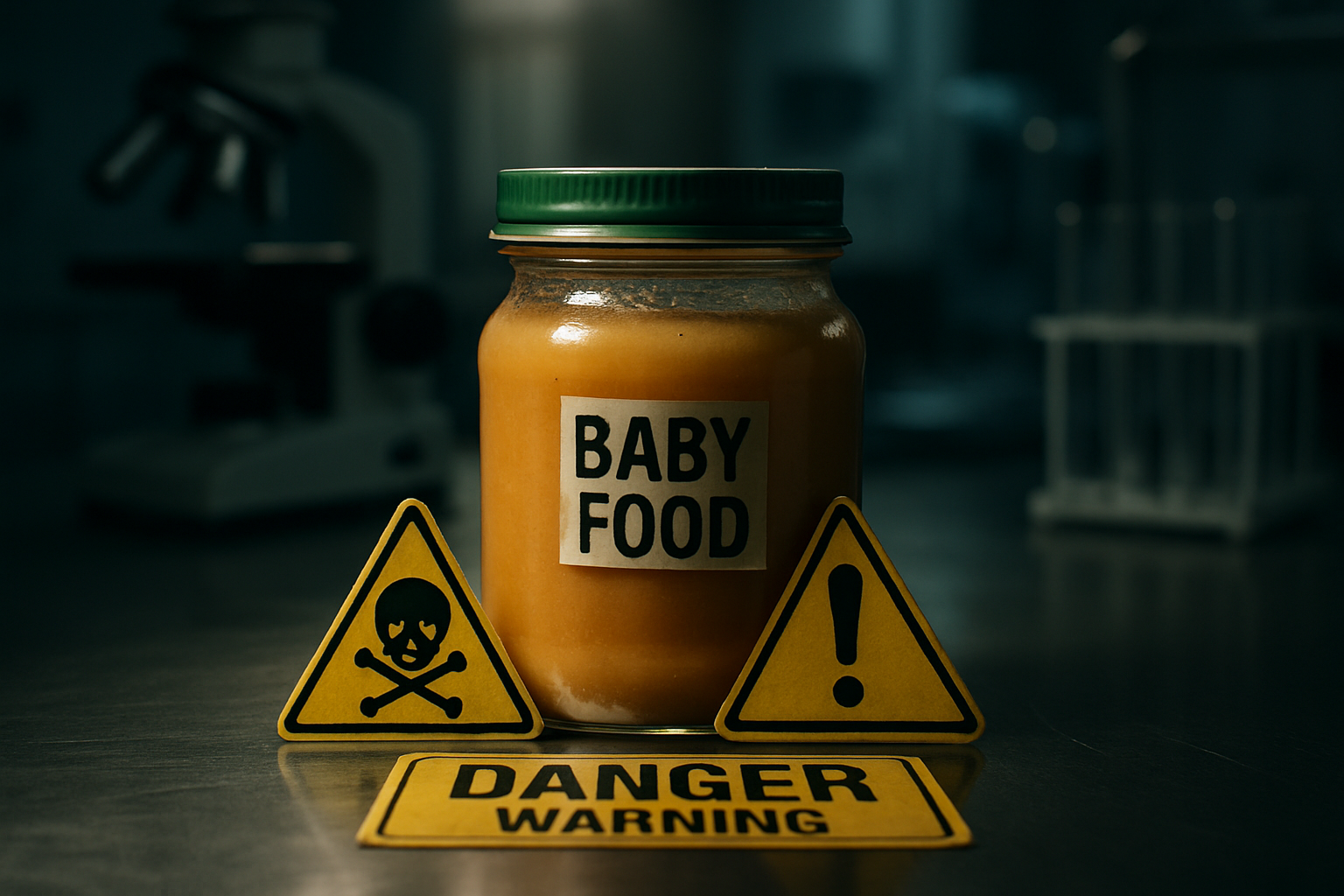
Austrian police have confirmed the presence of rat poison in HiPP baby food jars as part of what authorities describe as a sophisticated criminal extortion plot targeting one of Europe's most trusted infant food manufacturers, prompting urgent safety warnings across multiple countries and the largest baby food recall in recent European history.
The crisis reached a critical escalation on April 20, 2026, when Austrian federal authorities confirmed dangerous substances had been deliberately introduced into HiPP "Carrots and Potatoes" baby food jars following reports from concerned customers in the Eisenstadt-Umgebung district. The Landespolizeidirektion Burgenland laboratory analysis validated what parents had feared: their infant food products contained life-threatening contamination.
Criminal Extortion Scheme Targets Vulnerable Population
According to reports from Austrian media outlet Die Presse, an extortion email was sent to HiPP Germany in late March 2026, but was allegedly not read until after the criminal's deadline had passed. This delayed response appears to have triggered the perpetrator's decision to carry out their threat of product contamination, demonstrating a calculated criminal operation with detailed knowledge of infant food supply chains.
The discovery represents what investigators are calling the most serious deliberate contamination of baby food in European history, targeting the most vulnerable population—infants who depend entirely on processed food products for their nutrition and survival. Unlike accidental contamination incidents, this criminal act shows premeditation and sophisticated understanding of food distribution networks.
"This represents a dangerous escalation from accidental contamination to deliberate criminal targeting of vulnerable infant populations. The perpetrators demonstrated sophisticated knowledge of food distribution networks and insider access to systems."
— European Food Safety Authority Assessment
International Investigation Launched
The Federal Criminal Police have initiated a comprehensive international investigation coordinating with German authorities and Europol for what officials describe as a "comprehensive international manhunt." The scope of the criminal operation appears to extend beyond Austrian borders, with Czech and Slovak authorities also involved in the coordinated response.
Romanian media reports indicate coordinated police searches were conducted on Sunday, targeting what investigators believe is a sophisticated extortion scheme involving multiple jurisdictions. The criminal operation demonstrates concerning knowledge of infant food manufacturing processes, distribution networks, and retail systems across several European countries.
HiPP Germany has implemented voluntary recalls of their entire baby food jar assortment from SPAR Austria during the ongoing investigation, suspending distribution pending investigation completion. Austrian supermarket chain Spar issued immediate recalls of all HiPP baby food glass jars across its retail network following the police investigation findings.
Warning Signs and Safety Protocols
Health authorities have issued specific guidance for parents to identify potentially contaminated products. Warning signs include red circle stickers on jar bottoms, damaged or missing safety seals, unusual odors emanating from products, and any evidence of tampering with packaging integrity.
Austrian Health Minister Schuhmann has advised parents to exercise "heightened caution" when purchasing and using infant food products, emphasizing the life-threatening risks associated with consumption of contaminated baby food. The minister's advisory represents the highest level of food safety alert issued for infant products in recent Austrian history.
Medical experts warn that rat poison consumption poses severe risks to infants, whose developing organ systems cannot process such toxins. Even minimal exposure can cause serious gastrointestinal distress, organ damage, and potentially fatal complications in babies whose immune systems are still developing.
Broader Context of Food Safety Crisis
This criminal contamination occurs within the context of an unprecedented European food safety crisis affecting over 40 countries during the 21st consecutive month of global temperatures exceeding 1.5°C above pre-industrial levels. The sustained warming has created optimal conditions for pathogen growth while overwhelming food safety systems designed for sequential rather than simultaneous challenges.
The incident builds upon a devastating infant formula crisis earlier in 2026 that affected 36 infants across the UK, France, Luxembourg, and Greece due to cereulide toxin contamination in Nestlé and Danone products. However, this represents the first confirmed case of deliberate criminal poisoning targeting infant food products in modern European history.
The European Food Safety Authority (EFSA) has been developing standardized international protocols and enhanced molecular testing procedures for heat-stable toxins that can survive conventional pasteurization processes. These enhanced detection methods are now being rapidly implemented across European food production facilities.
Consumer Confidence and Market Impact
The criminal contamination has accelerated declining consumer confidence in multinational food corporations, driving a measurable shift toward local sourcing and simplified supply chains that offer greater transparency and traceability. Social media platforms are emerging as enforcement tools, with viral videos of food safety violations accelerating regulatory responses across multiple jurisdictions.
Economic implications include rising insurance costs for food manufacturers, mandatory investments in molecular testing infrastructure, and potential long-term market share losses, particularly in the trust-dependent infant formula and baby food sectors. The crisis highlights the vulnerability of complex international food supply chains to criminal exploitation.
Industry experts identify 2026 as a critical transformation turning point requiring international coordination, climate-adaptive food processing technologies, and prevention-focused approaches that integrate traditional dietary wisdom with modern safety science.
Law Enforcement Response
The investigation represents the most serious test of democratic governments' capacity to regulate multinational supply chains while protecting vulnerable populations from criminal exploitation. Cross-border law enforcement capabilities are being tested to determine whether criminals can exploit regulatory gaps or whether coordinated international responses can effectively protect public health.
Success in this investigation requires sustained political commitment and unprecedented coordination between law enforcement agencies, food safety regulators, and healthcare systems across multiple European countries. The case is being treated as a precedent-setting investigation that will influence future food safety and security protocols.
Austrian authorities emphasize that any attempt to manipulate or contaminate food products targeting vulnerable populations "will not be tolerated" and will be prosecuted to the fullest extent of international law. The criminal investigation has been elevated to the highest priority level within European law enforcement networks.
International Cooperation and Future Prevention
The crisis has demonstrated both the vulnerabilities of modern food systems and the necessity of international cooperation in addressing food safety threats that cross national boundaries. EFSA is accelerating the development of standardized international protocols and coordinated early warning systems for cross-border contamination prevention.
Food safety experts emphasize that 2026 represents a critical window for building resilient food systems that can withstand both environmental pressures and criminal exploitation. The tools and knowledge exist for comprehensive responses to immediate threats and systemic vulnerabilities, but success depends on sustained political commitment and international cooperation.
As this investigation continues, it serves as a stark reminder that food safety has evolved from a regulatory concern to a national security issue requiring the highest levels of international coordination and criminal justice response. The protection of vulnerable populations, particularly infants, has become a test of democratic societies' ability to safeguard their most defenseless citizens against sophisticated criminal threats.