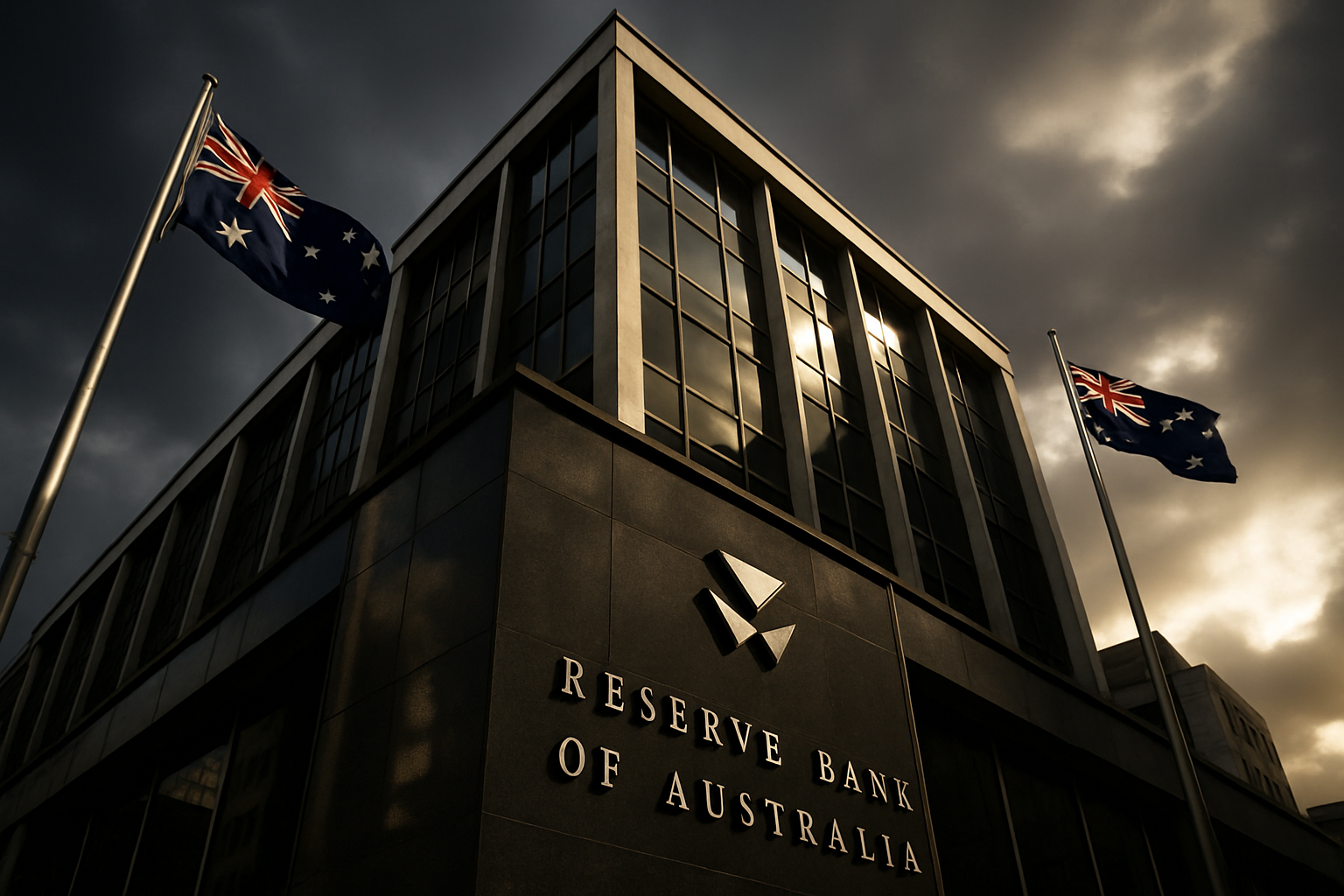
The Reserve Bank of Australia has delivered a 25 basis point interest rate increase to 4.1 percent in a narrow 5-4 board vote, marking the second consecutive monthly rise amid persistent inflation pressures that threaten to derail the economic recovery.
The closely contested decision, announced following Tuesday's monetary policy meeting, brings the official cash rate to its highest level since early 2023, with RBA Governor Michele Bullock acknowledging that a recession has become "a possibility" as the central bank prioritises inflation control over growth concerns.
The rate increase follows February's surprise 25 basis point hike that took the cash rate from pandemic-era lows to 3.85 percent, marking the first tightening in two years. Major Australian banks, including NAB, have already announced they will pass the full increase through to variable mortgage holders within days.
Inflation Data Forces Central Bank's Hand
The decision came after the Australian Bureau of Statistics released higher-than-anticipated inflation figures, describing the data as the central bank's "worst nightmare" scenario. Sources familiar with the board's deliberations indicate the vote was the closest in recent RBA history, reflecting deep divisions over the appropriate monetary policy response.
Until recently, economists and financial markets expected the RBA to maintain rates on hold, with many forecasters predicting a pause in the tightening cycle. However, the inflation surge, compounded by global energy price volatility amid Middle East tensions, forced policymakers to reconsider their stance.
"The second consecutive lift comes after higher-than-anticipated inflation figures from the Bureau of Statistics," confirmed a central bank statement, highlighting the data-dependent nature of current monetary policy decisions.
"This is the most complicated rates call the RBA has faced in years, with the board torn between inflation control and recession risk."
— Market Analyst, commenting on the narrow board vote
Immediate Impact on Mortgage Holders
Australian mortgage holders face immediate financial pressure as major banks move swiftly to implement the rate increase. Research from Canstar found that following February's hike, the vast majority of lenders passed on the full 25 basis point increase within two weeks.
Variable rate mortgage holders, who make up approximately 70% of the Australian mortgage market, now face monthly payment increases exceeding $100 for every $500,000 borrowed. Combined with February's increase, typical households are confronting additional annual mortgage costs of around $3,000.
The cumulative impact represents a dramatic shift from the ultra-low rate environment that supported Australia's pandemic recovery. Mortgage holders who borrowed at peak lending multiples during 2021-2022 are experiencing particular stress, with some facing monthly payment increases of $400-500.
Banking Sector Response
National Australia Bank announced it would pass the rate increase on to mortgage holders in full, becoming the first major bank to confirm the transmission of Tuesday's decision. The bank's move typically signals similar responses from Commonwealth Bank, Westpac, and ANZ within days.
Banking sector analysts note that higher interest rates improve net interest margins for major lenders, offsetting credit quality concerns that emerge during tightening cycles. However, banks remain cautious about credit expansion, with lending standards already tightened significantly from pandemic-era levels.
The RBA's aggressive stance has surprised some market participants who expected a more measured approach given household debt levels. Australia's household debt-to-income ratio remains among the highest globally, creating sensitivity to interest rate changes.
Economic Outlook Darkens
Governor Bullock's acknowledgment that recession has become "a possibility" marks a significant shift in central bank communication. Previous RBA guidance suggested confidence in achieving a "soft landing" that would reduce inflation without triggering a severe economic downturn.
The warning reflects mounting evidence of economic stress beyond mortgage markets. Business investment has slowed, consumer spending is moderating, and labour market conditions are showing signs of cooling after years of historically tight employment conditions.
Economic forecasters are revising growth projections downward, with several major banks now predicting below-trend growth through 2026. The services sector, which drove much of Australia's post-pandemic recovery, faces particular pressure as discretionary spending declines.
Global Context and Policy Coordination
Australia's monetary tightening occurs against a backdrop of divergent global central bank policies. While the European Central Bank maintains its deposit rate at 2.0 percent and the Federal Reserve faces uncertainty under potential leadership changes, the RBA has pursued one of the most aggressive tightening cycles among developed economies.
The policy divergence reflects Australia's unique economic challenges, including persistent services inflation, tight labour market conditions, and elevated household debt levels that amplify monetary policy transmission. Energy price volatility stemming from Middle East tensions has added complexity to the inflation outlook.
International observers note Australia's approach as potentially instructive for other central banks facing similar policy dilemmas. The RBA's willingness to risk recession to achieve inflation control represents a clear prioritisation of price stability over short-term growth considerations.
Market Implications and Forward Guidance
Financial markets reacted with volatility to the announcement, with the Australian dollar strengthening against major trading partners while bond yields surged. Equity markets declined as investors reassessed growth prospects and corporate earnings expectations.
The RBA provided limited forward guidance, maintaining its data-dependent approach while emphasising the board's commitment to returning inflation to the 2-3 percent target range. Officials indicated future decisions would depend on incoming economic data, particularly employment and inflation indicators.
Money market pricing suggests traders expect at least one additional rate increase this year, with some betting on further tightening if inflation remains elevated. However, the narrow board vote suggests policy unanimity cannot be assumed for future meetings.
Housing Market and Household Stress
The residential property market faces intensifying pressure as borrowing costs reach multi-year highs. Property analysts predict further cooling in house price growth, with some regional markets already showing monthly declines.
First-time buyers face particular challenges, with effective deposit requirements increasing as banks factor higher interest rates into serviceability assessments. The generational divide in property access is widening, with many young Australians effectively priced out of homeownership.
Household stress indicators are rising, with financial counselling services reporting increased demand. The combination of higher mortgage costs, elevated general living expenses, and moderating wage growth is creating affordability pressures across income levels.
Political and Policy Implications
The RBA's aggressive stance creates political complications for the federal government, which faces pressure to provide cost-of-living relief while avoiding fiscal measures that could exacerbate inflation. The narrow board vote suggests internal RBA debate over balancing competing economic objectives.
Housing affordability has emerged as a key political issue, with opposition parties criticising government policies they argue have contributed to current pressures. The intersection of monetary policy tightening with housing supply constraints creates complex policy coordination challenges.
Regulatory authorities are monitoring banking sector stability as higher rates test household resilience. APRA has indicated willingness to adjust prudential settings if credit conditions become excessively restrictive, providing a potential circuit breaker for extreme tightening.
Looking Ahead
The path forward remains highly uncertain, with the RBA facing its most challenging policy environment in over a decade. The narrow board vote suggests future decisions will remain contentious, with economic data likely to drive policy direction rather than predetermined frameworks.
Key indicators include monthly inflation readings, labour market developments, and household consumption patterns. The central bank's tolerance for economic weakness while pursuing inflation control will be tested as rate increases flow through the broader economy.
International developments, particularly energy price volatility and global central bank policies, add additional complexity to Australia's monetary policy outlook. The RBA's commitment to domestic price stability may require continued policy divergence from global peers.
As Australia navigates this challenging period, the effectiveness of monetary policy in achieving sustainable inflation control without triggering severe economic disruption will provide crucial lessons for central banks worldwide facing similar dilemmas in an increasingly complex global environment.