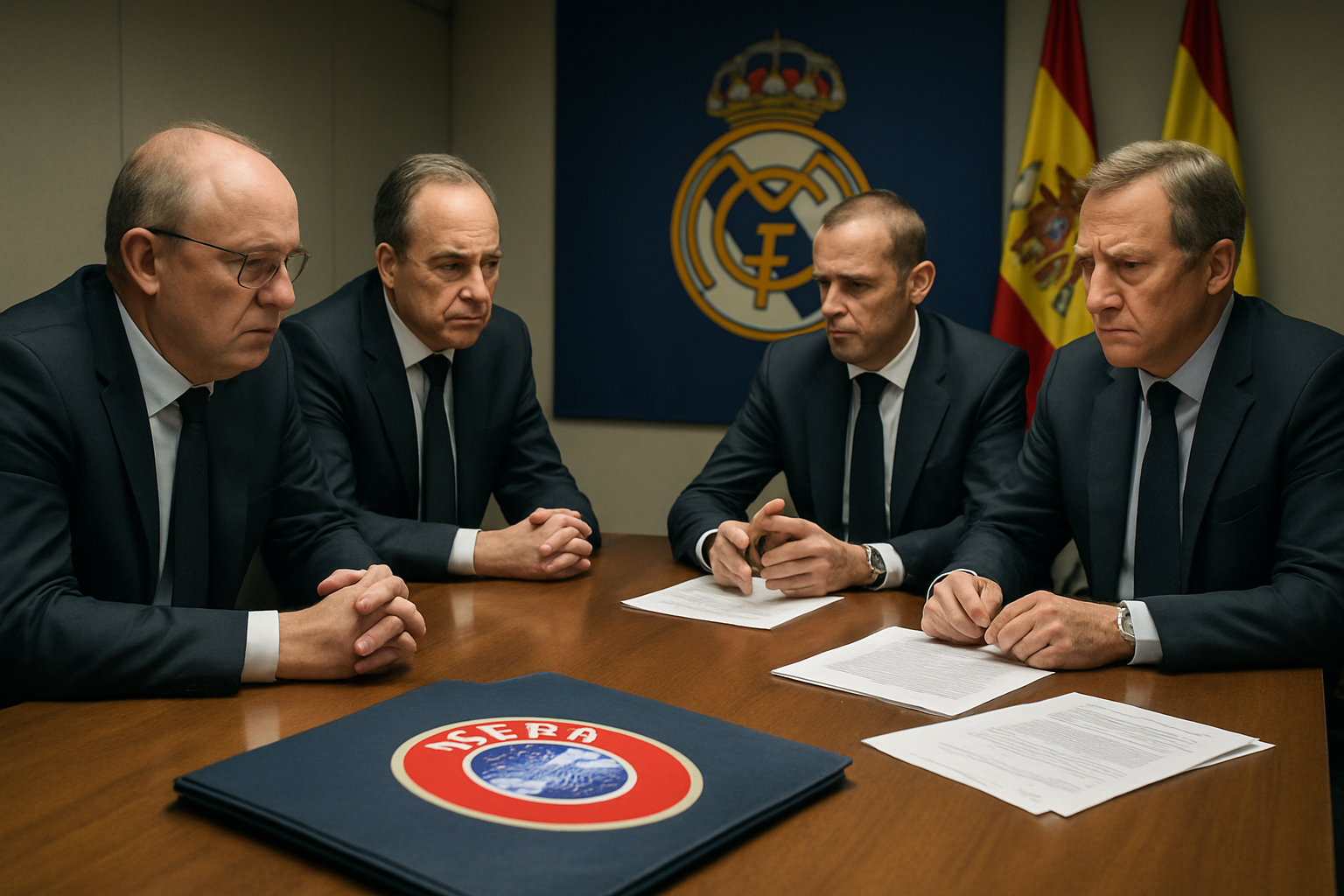
UEFA has sanctioned Real Madrid with a €15,000 fine and imposed conditional stadium sanctions following racist behavior by fans during their Champions League playoff match against Benfica, marking another troubling incident in European football's ongoing battle against discrimination.
The European football governing body announced on Friday that Real Madrid faces immediate financial penalties and the threat of partial stadium closure after a fan was caught on television cameras performing a Nazi salute during the February 25 second-leg match at Santiago Bernabéu. The incident occurred during what should have been a celebratory period for the Spanish giants, who marked their 124th anniversary this week.
Sanctions and Conditional Punishment
UEFA's disciplinary commission imposed the fine "for racist and/or discriminatory behavior by its supporters" during the Champions League playoff encounter. More significantly, the organization has ordered the partial closure of 500 seats in the Bernabéu, though this sanction remains suspended pending Real Madrid's future conduct.
The conditional nature of the stadium closure represents UEFA's standard escalation protocol for discrimination cases. Should similar incidents occur in future European competitions, Real Madrid would face the immediate implementation of the partial closure, potentially affecting the club's revenue and fan attendance during crucial matches.
Real Madrid immediately responded to the incident by announcing the lifetime expulsion of the identified fan, demonstrating the club's zero-tolerance policy toward racist behavior. The swift action aligns with the club's public commitment to combating discrimination, though questions remain about preventive measures and fan education programs.
Context of Ongoing Discrimination Issues
This latest sanction comes amid a broader pattern of racist incidents affecting Spanish football, particularly targeting players of color. The incident follows a well-documented history of discriminatory behavior in European stadiums, despite extensive anti-racism campaigns by UEFA and national football associations.
The timing of the sanctions creates an uncomfortable juxtaposition with Real Madrid's anniversary celebrations. Founded on March 6, 1902, the club has built a reputation as one of football's most successful and globally recognized institutions, with a record 15 European Cup/Champions League titles and countless domestic honors.
UEFA's decision reflects the organization's commitment to its "No to Racism" campaign and the implementation of strict protocols designed to combat discrimination in European football. The three-step protocol allows referees to pause, suspend, or abandon matches when racist incidents occur, as witnessed in several high-profile cases across European competitions.
Real Madrid's Historical Significance
Real Madrid's 124-year history positions the club as a cornerstone of both Spanish and international football. The club has maintained exclusive ownership by its members (socios) and has achieved unparalleled success in European competition, making it the most decorated club in continental football history.
The club's global fanbase and historical significance amplify the impact of such incidents, as Real Madrid's actions and the behavior of its supporters carry particular weight in the football community. This responsibility extends beyond sporting performance to encompass social values and the promotion of inclusive football culture.
UEFA's Anti-Discrimination Framework
The sanctions against Real Madrid operate within UEFA's comprehensive anti-discrimination framework, which has evolved significantly in recent years. The organization has implemented increasingly severe penalties for clubs whose supporters engage in racist behavior, including financial fines, partial stadium closures, and complete venue bans for repeat offenders.
UEFA's approach emphasizes both punishment and prevention, requiring clubs to demonstrate active measures to educate supporters and prevent discriminatory incidents. The conditional nature of Real Madrid's stadium closure sanction reflects this philosophy, providing an opportunity for reform while maintaining the threat of more severe consequences.
Broader Impact on European Football
The incident at the Bernabéu represents a microcosm of persistent challenges facing European football in eliminating racism and discrimination. Despite decades of awareness campaigns, educational programs, and increasingly severe sanctions, discriminatory incidents continue to occur across various leagues and competitions.
Real Madrid's case highlights the ongoing need for comprehensive approaches that combine institutional penalties with grassroots education and cultural change initiatives. The club's response to the sanctions and its efforts to prevent future incidents will likely influence how other major clubs address similar challenges.
Looking Forward
As Real Madrid continues its anniversary celebrations and prepares for upcoming fixtures, the UEFA sanctions serve as a stark reminder of the responsibilities that accompany football's platform and influence. The conditional stadium closure creates a clear incentive for the club to maintain vigilant anti-discrimination efforts.
The incident underscores the reality that combating racism in football requires sustained commitment from clubs, supporters, and governing bodies alike. While Real Madrid has taken immediate action against the individual involved, the broader challenge of creating inclusive stadium environments remains an ongoing priority for European football.
UEFA's decision demonstrates the organization's commitment to enforcing anti-discrimination policies regardless of a club's status or historical significance. As one of football's most prestigious institutions celebrates its rich heritage, the sanctions remind all stakeholders that the fight against racism transcends sporting achievement and requires constant vigilance from every level of the football community.