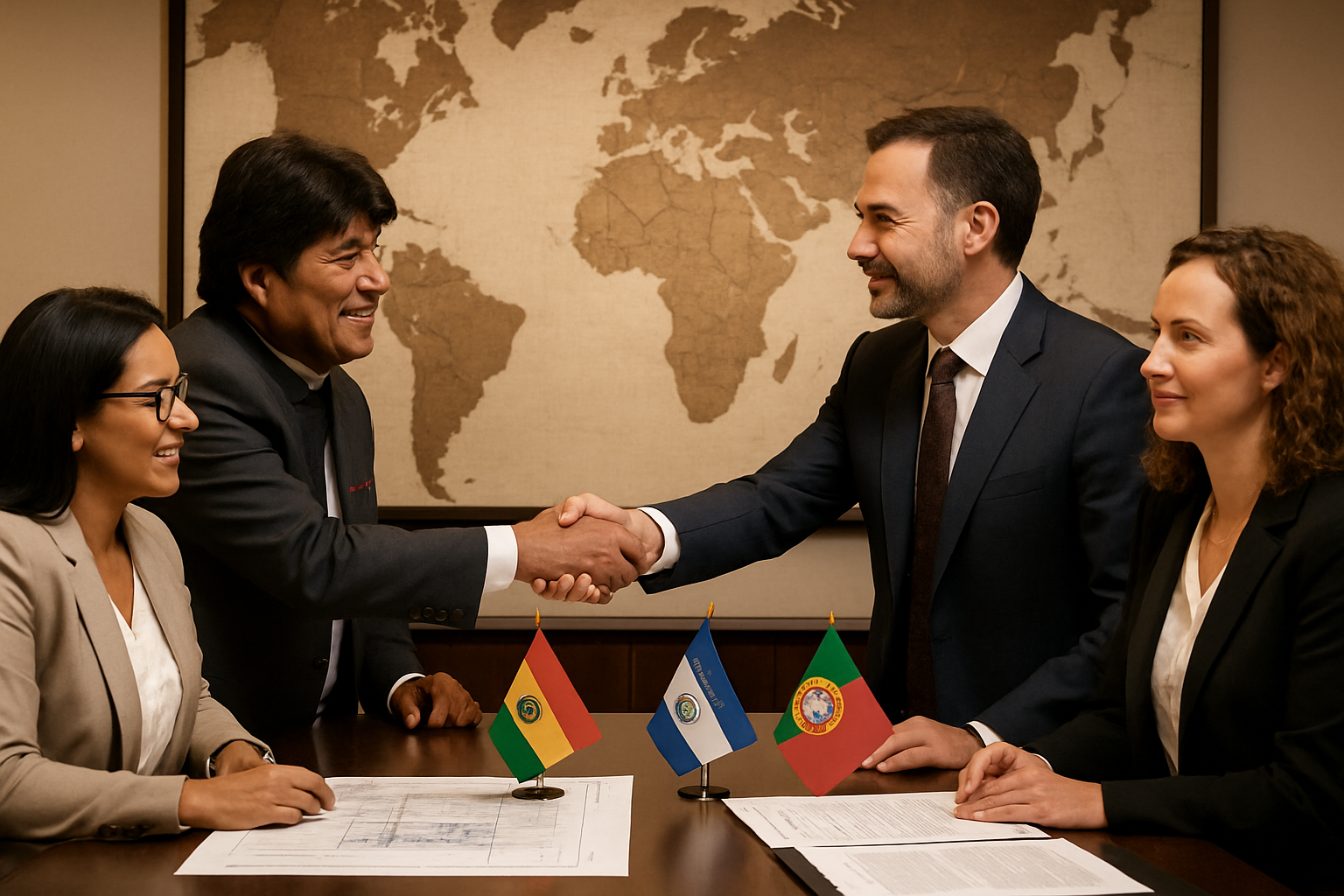
A surge in strategic business partnerships across three continents is reshaping international economic cooperation, with Bolivia advancing micro-enterprise development through World Bank collaboration, El Salvador strengthening ties with France on infrastructure projects, and Portugal leading major railway developments in Africa.
The simultaneous announcements on March 7, 2026, represent a coordinated shift toward bilateral and multilateral partnerships that transcend traditional regional boundaries, demonstrating how nations are seeking diversified economic relationships amid global supply chain vulnerabilities and changing geopolitical landscapes.
Bolivia's Micro-Enterprise Revolution
Bolivia's Ministry of Micro, Small Enterprise and Artisanship unveiled the ambitious "Bolivia para el Mundo" (Bolivia for the World) national strategic program during meetings with World Bank Resident Representative Camille Nuamah. Vice Minister René Villavicencio presented plans for a specialized industrial complex designed exclusively to strengthen the productive capacity of micro and small enterprises (MyPEs) and the country's artisanal sector.
The initiative represents a fundamental shift from traditional large-scale industrial development toward inclusive economic growth that leverages Bolivia's rich artisanal heritage while incorporating modern manufacturing capabilities. The program builds on the World Bank's February 2026 approval of $200 million in funding for Bolivia's economic diversification efforts.
"This initiative will transform how we approach economic development by placing micro and small enterprises at the center of our industrial strategy," Villavicencio stated during the formal presentation.
— René Villavicencio, Vice Minister of Micro, Small Enterprise and Artisanship
The specialized industrial complex will feature integrated supply chain networks, shared manufacturing facilities, and export facilitation services specifically designed for small-scale producers. This model contrasts sharply with traditional industrial development that often excludes micro-enterprises due to scale requirements and capital barriers.
El Salvador-France Strategic Infrastructure Alliance
Vice President Félix Ulloa hosted a high-level French delegation led by Senator Daniel Laurent, President of the France-Central America Friendship Group, marking a significant expansion of diplomatic and economic cooperation between El Salvador and France. The delegation included Senators Jean-Marc Vayssouze-Faure and Anne-Sophie Romagny, alongside French Ambassador Anne Denis-Blanchardon.
The visit follows Vice President Ulloa's recent mission to France, demonstrating the bilateral commitment to sustained diplomatic engagement. Discussions centered on potential collaborations in infrastructure development, cultural preservation, and the ambitious Pacific Train project that could transform Central American regional connectivity.
Ulloa presented El Salvador's remarkable transformation under President Nayib Bukele's administration, highlighting advances in public security, state modernization, economic development, education, and healthcare. The security improvements have created a foundation for increased foreign investment and tourism development, positioning El Salvador as an attractive destination for European partnerships.
The Pacific Train project represents particular French interest, as European engineering expertise could prove crucial in developing this transformative infrastructure initiative. The railway would enhance regional trade corridors and position El Salvador as a key logistics hub connecting Central America to global markets.
Portugal's African Railway Development
Portuguese media reported significant progress on the Lobito Corridor railway project, with Zambian President Hakainde Hichilema confirming that construction of the railway line from the mining region to the Port of Lobito in Angola will commence this year. This development represents a crucial component of the broader African infrastructure renaissance.
The Lobito Corridor project connects Zambia's copper mining regions to Atlantic shipping routes via Angola, creating an alternative to traditional Indian Ocean export routes through Tanzania and South Africa. Portuguese companies are positioned to play significant roles in the engineering and construction phases, leveraging historical ties and technical expertise in railway development.
This railway development aligns with broader African Continental Free Trade Area (AfCFTA) objectives, facilitating cross-border trade and regional integration. The project demonstrates how European technical expertise can contribute to African infrastructure development while creating mutual economic benefits.
Historical Context of Global Partnership Evolution
These developments occur within the context of unprecedented global infrastructure investment, with Planet News analysis showing over $570 billion in infrastructure projects announced or advanced in 2026. The memory of recent global supply chain disruptions has driven nations to diversify their economic partnerships and develop alternative trade routes.
The partnerships announced March 7 reflect lessons learned from the pandemic and recent geopolitical tensions, where over-reliance on single supply chains or bilateral relationships proved vulnerable to disruption. Bolivia's focus on micro-enterprises addresses the need for economic resilience at the grassroots level, while El Salvador's European partnerships provide alternatives to traditional regional relationships.
Technology Integration and Modern Partnership Models
Modern business partnerships increasingly incorporate digital technology integration from the initial planning stages. Bolivia's industrial complex will feature smart manufacturing capabilities, real-time monitoring, and integrated logistics management. El Salvador's infrastructure projects with France will include advanced engineering systems and environmental optimization technologies.
The Lobito Corridor railway project incorporates modern signaling systems, automated operations, and predictive maintenance capabilities that represent significant technological advancement over traditional African railway infrastructure. These technological components create ongoing partnership opportunities beyond initial construction, including maintenance, training, and system upgrades.
Economic Multiplier Effects and Regional Integration
The economic implications of these partnerships extend far beyond immediate project impacts. Bolivia's micro-enterprise focus could create thousands of small business opportunities while preserving traditional artisanal knowledge and techniques. The approach recognizes that sustainable economic development often requires building from existing cultural and economic foundations rather than imposing external models.
El Salvador's French partnerships provide access to European markets and technical expertise while positioning the country as a bridge between European and Central American economies. The cultural components of the cooperation demonstrate recognition that sustainable business partnerships require understanding of local contexts and values.
Portugal's involvement in African railway development creates triangular partnerships connecting European engineering expertise, African resources and markets, and global supply chain networks. This model provides alternatives to bilateral arrangements while respecting African ownership and development priorities.
Challenges and Implementation Considerations
Despite promising initial announcements, these partnerships face significant implementation challenges. Bolivia's micro-enterprise development requires sustained political commitment across electoral cycles and sophisticated coordination between government agencies, international partners, and local communities. Success depends on maintaining focus on small-scale producers while achieving economies of scale necessary for export competitiveness.
El Salvador's European partnerships must navigate complex regulatory frameworks spanning multiple countries and legal systems. The Pacific Train project, in particular, requires extensive environmental assessments, community consultations, and coordination with neighboring countries to achieve regional connectivity objectives.
The Lobito Corridor railway faces technical challenges including cross-border coordination, environmental compliance, and integration with existing transportation networks. Success requires sustained cooperation between Zambia, Angola, and international partners while addressing local community needs and environmental protection requirements.
Strategic Implications for Global Trade
These partnerships demonstrate a fundamental shift in how nations approach international economic cooperation. Rather than relying primarily on traditional regional blocs or bilateral relationships with major powers, countries are developing diversified partnership portfolios that provide multiple options for trade, investment, and technical cooperation.
Bolivia's World Bank partnership provides multilateral legitimacy and technical expertise while maintaining national ownership of development priorities. El Salvador's French cooperation demonstrates how middle-income countries can access European expertise and markets through strategic diplomatic initiatives. Portugal's African involvement shows how medium-sized European nations can contribute to global development while creating economic opportunities for their own companies.
The timing of these announcements suggests coordination through international forums and development institutions, reflecting growing sophistication in global economic diplomacy. Countries are learning to leverage multiple partnerships simultaneously, creating competitive advantages through diverse relationships rather than exclusive bilateral arrangements.
Future Development Trajectories
The success of these March 2026 partnerships will likely influence future international cooperation models, particularly for middle-income countries seeking to balance sovereignty with international integration. Bolivia's micro-enterprise focus could provide templates for other resource-rich countries seeking to develop value-added industries while preserving cultural heritage.
El Salvador's multi-faceted European cooperation demonstrates how countries can use diplomatic initiatives to access technical expertise and markets while maintaining domestic political priorities. The model shows potential for other Central American nations seeking to diversify beyond traditional hemispheric relationships.
Portugal's African railway involvement illustrates how European nations can contribute to global development while creating commercial opportunities for domestic companies. This triangular cooperation model respects African development priorities while providing alternatives to dominant bilateral arrangements.
The convergence of these partnerships in early March 2026 suggests that international business cooperation is entering a new phase characterized by greater diversity, technological integration, and recognition that sustainable economic development requires balancing global integration with local ownership and cultural preservation. Success will depend on maintaining this balance while delivering tangible benefits for all participating communities and nations.