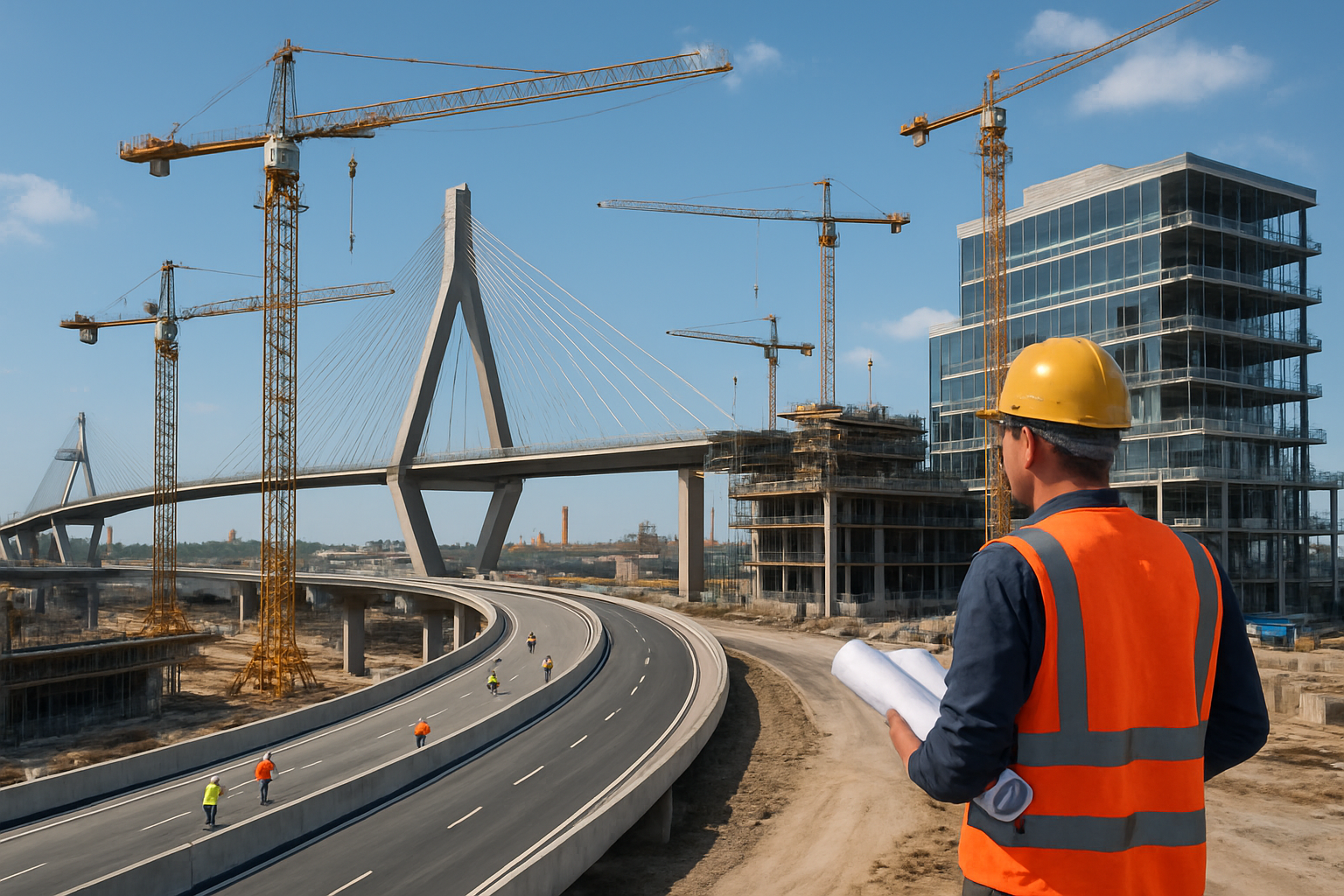
A sweeping global infrastructure renaissance is transforming nations across continents in 2026, as coordinated development initiatives from Finland's groundbreaking thermal energy systems to El Salvador's historic bridge projects demonstrate an unprecedented $570 billion international commitment to modern infrastructure.
The ambitious scope of this global transformation spans from Nordic innovation to Central American connectivity, revealing how nations worldwide are simultaneously investing in next-generation infrastructure that combines cutting-edge technology with practical economic development.
Finland's Energy Storage Revolution
At the forefront of this infrastructure boom, Vantaan Energia has achieved a remarkable milestone in Finland, successfully excavating the foundation for what will become the world's largest thermal energy storage facility. This unprecedented project represents a scale "unlike anything seen before," according to company sources, positioning Finland as a global leader in sustainable energy infrastructure.
The thermal storage facility represents more than just energy infrastructure—it embodies the sophisticated approach characterizing 2026's development wave. The project incorporates advanced materials science, environmental sustainability principles, and long-term energy security planning that addresses both current needs and future climate challenges.
El Salvador's Transportation Infrastructure Surge
Simultaneously, El Salvador is executing one of its most significant infrastructure programs in decades. Alex Beltrán, executive director of FOVIAL El Salvador, has announced major progress on two critical transportation projects that will transform the country's connectivity and economic prospects.
The construction of a new bridge over the Guastena River in Chalatenango represents a solution to a historic problem in the region. The original bridge collapsed due to heavy rains and was replaced by an unsafe provisional crossing that was later swept away by flooding. This new bridge addresses not just immediate transportation needs but also climate resilience, incorporating enhanced drainage systems and weather-resistant materials that can withstand extreme weather events.
"This project solves a historical problem in the zone where previous infrastructure repeatedly failed due to inadequate design for local conditions."
— Alex Beltrán, Executive Director, FOVIAL El Salvador
The second major project involves constructing a new road connection linking Nuevo Cuscatlán with the highway to Puerto de La Libertad. This strategic route will alleviate traffic congestion in one of El Salvador's most economically important corridors, where manufacturing facilities, commercial zones, and high vehicle flow currently create significant bottlenecks during peak hours.
Germany's Defense Industry Investment
The global infrastructure surge extends beyond civilian projects to strategic defense capabilities. Germany's Bundeswehr has placed a significant order with Uudenkaupunki, demonstrating how infrastructure development encompasses security and defense applications. While the purchase price remains classified for security reasons, the contract represents expanding international cooperation in specialized maritime vessel construction.
This defense industry investment illustrates the multifaceted nature of contemporary infrastructure development, where nations are simultaneously modernizing civilian infrastructure while strengthening strategic capabilities through international partnerships.
Technology Integration and Smart Systems
What distinguishes the 2026 infrastructure renaissance from previous development cycles is the comprehensive integration of smart technology from the design phase. Projects across all nations now incorporate real-time monitoring systems, predictive maintenance capabilities, and digital payment integration as standard features rather than optional additions.
Climate adaptation has evolved from a regulatory requirement to a fundamental design principle. Enhanced drainage systems, renewable energy integration, and weather-resistant materials are now standard components, reflecting lessons learned from recent climate-related infrastructure failures worldwide.
Economic Multiplier Effects
The economic implications of this infrastructure surge extend far beyond construction employment. Each project creates sustained economic benefits through reduced transportation costs, enhanced market access, and improved business productivity. Finland's energy storage facility will attract international research partnerships and green technology investments, while El Salvador's transportation improvements will facilitate commerce and reduce logistics costs for businesses throughout the region.
International cooperation models have evolved beyond traditional funding arrangements toward comprehensive partnerships that include technology transfer, capacity building, and ongoing operational support. These sophisticated frameworks ensure that infrastructure investments create lasting benefits rather than simply completing construction projects.
Regional Integration and Global Connectivity
The 2026 infrastructure wave demonstrates unprecedented coordination between nations, with projects designed to enhance regional integration and global connectivity. Transportation networks now emphasize intermodal connections, energy systems focus on cross-border cooperation, and digital infrastructure prioritizes international compatibility.
This coordinated approach reflects a strategic understanding that modern infrastructure challenges transcend national boundaries. Climate adaptation, energy security, and economic competitiveness require collaborative solutions that individual nations cannot address independently.
Implementation Challenges and Innovation
Despite the remarkable scope of global infrastructure development, projects face significant challenges including material cost inflation, skilled labor shortages, and supply chain disruptions. The global semiconductor shortage has increased certain technology costs sixfold, forcing innovative approaches to smart infrastructure implementation.
These constraints have paradoxically accelerated innovation, with engineers developing more efficient systems that achieve superior performance while using fewer specialized components. This adaptive approach ensures that infrastructure development remains economically viable despite supply chain pressures.
Environmental Sustainability Integration
Environmental protection has evolved from a compliance requirement to a core economic development strategy. The most successful infrastructure projects demonstrate that comprehensive environmental protection functions as an economic growth engine rather than a regulatory burden.
Finland's thermal storage facility exemplifies this approach by providing renewable energy infrastructure that reduces long-term operational costs while attracting sustainable investment. El Salvador's bridge projects incorporate flood management and ecosystem protection that prevent millions in potential damage costs.
Future Implications
The infrastructure developments of 2026 are establishing precedents that will influence global development strategies for decades ahead. The convergence of technological advancement, environmental awareness, and international cooperation represents a fundamental evolution in how nations approach infrastructure investment.
Success factors identified across all projects include sustained political commitment, transparent governance frameworks, comprehensive stakeholder engagement, and adaptive management capabilities that respond to changing conditions while maintaining core objectives.
As nations continue implementing these ambitious infrastructure programs throughout 2026, the results will demonstrate whether coordinated international development can successfully address 21st-century challenges including climate change, technological disruption, and economic transformation. The stakes extend beyond individual projects to encompass humanity's capacity for building sustainable, resilient infrastructure foundations for future prosperity.