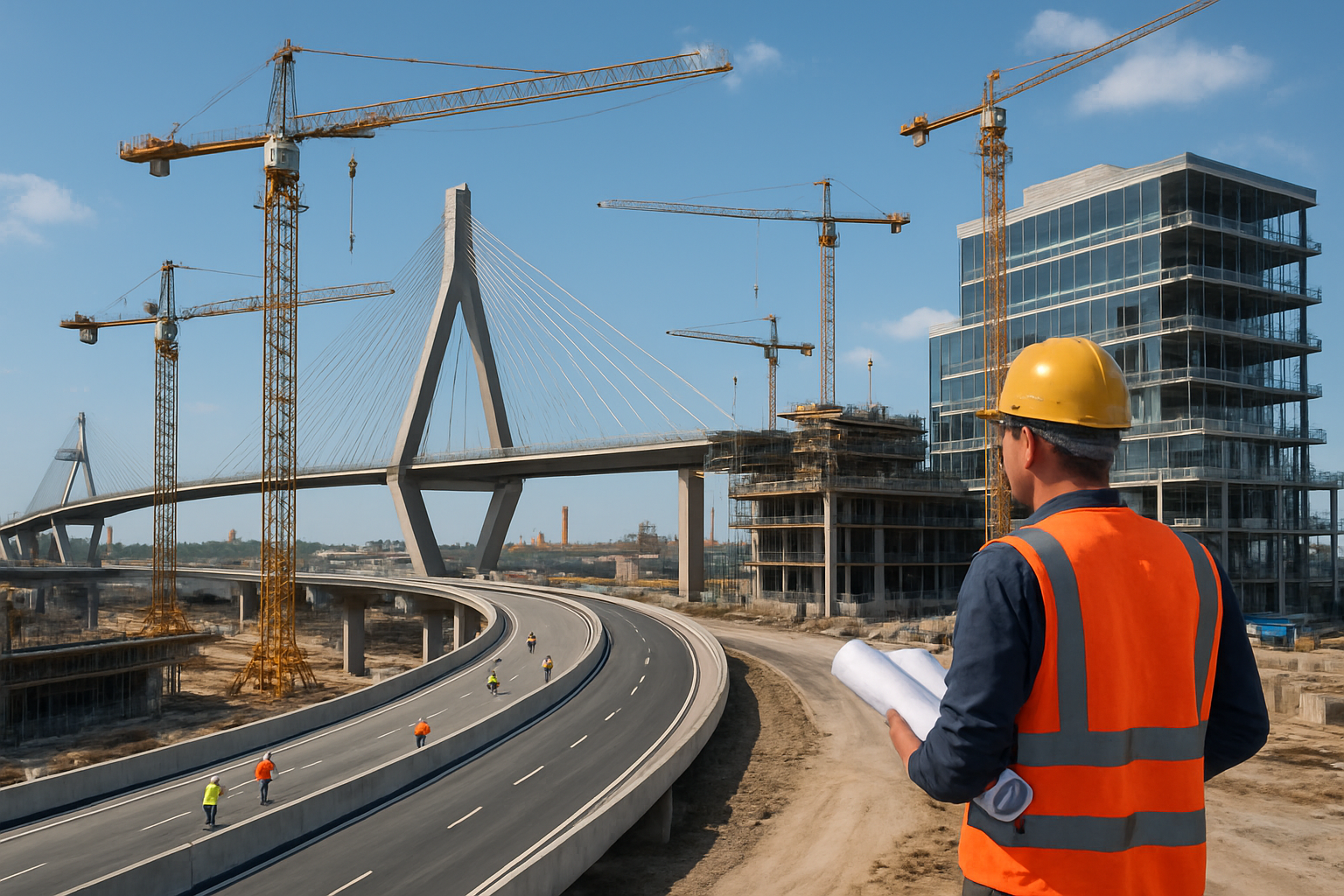
A transformative wave of regional infrastructure development is reshaping global connectivity as Afghanistan's CASA-1000 power project advances toward 2027 completion, Lithuania secures properties for the ambitious Rail Baltica railway network, and Colombia delivers modernized child development centers. These projects represent cornerstones of an unprecedented $570+ billion worldwide infrastructure surge that is redefining international cooperation and economic integration across continents.
CASA-1000: Central Asian Energy Integration Breakthrough
The long-awaited CASA-1000 energy project achieved a pivotal milestone in April 2026, with officials confirming commercial operations will commence in summer 2027. This ambitious power transmission initiative spans four nations and represents one of the most significant regional energy integration projects connecting Central and South Asia.
Critical progress reviews conducted in Dushanbe between April 18-20 brought together Tajik authorities, Afghanistan's state power utility Da Afghanistan Breshna Sherkat, the World Bank, and engineering firm KAMANI Engineering Corporation. The multi-stakeholder collaboration reflects the project's strategic importance for regional energy security and cross-border economic cooperation.
"The project is key to boosting regional cooperation and enabling the export of surplus hydropower from Central Asia to energy-deficient markets in South Asia."
— Daler Juma, Tajik Energy Minister
Construction has been completed in Kyrgyzstan, Tajikistan, and Pakistan, while work continues in Afghanistan. According to project officials, the Afghan segment remains on track for completion by spring 2027, establishing the foundation for full commercial operations. Once operational, CASA-1000 will strengthen regional energy security, support economic integration, and expand electricity trade networks across Central and South Asian markets.
The project represents a fundamental shift toward viewing energy infrastructure as strategic foundations for international cooperation rather than purely domestic assets. CASA-1000's success will establish precedents for cross-border energy integration that could influence similar initiatives across developing regions worldwide.
Colombia's Social Infrastructure Transformation
In Colombia's Palmira municipality, Mayor Víctor Ramos delivered a significant achievement for childhood development infrastructure by inaugurating modernized Child Development Centers (CDI) in the Harold Eder, Loreto, and El Sembrador neighborhoods. These facilities represent the culmination of nearly a decade of strategic planning and targeted investment in early childhood education infrastructure.
The comprehensive modernization project addresses critical gaps in educational infrastructure while providing essential support for working families through improved childcare facilities. The upgraded centers incorporate contemporary safety standards, educational technology platforms, and community engagement spaces designed to serve multiple generations of families in historically underserved neighborhoods.
Colombia's infrastructure developments align with broader Latin American trends toward comprehensive social infrastructure that combines educational facilities with community development objectives. The strategic timing reflects government priorities for post-pandemic recovery through targeted investments in human capital development and community resilience building.
The project demonstrates how infrastructure investment can address multiple policy objectives simultaneously - improving educational outcomes, supporting female labor force participation, and strengthening community social fabric through centralized facilities that serve as neighborhood anchors.
Rail Baltica: Europe's Continental Integration Vision
Lithuania's government made a decisive commitment to European integration by approving the acquisition of 2,500 properties between Vilnius and Kaunas for the transformative Rail Baltica railway project. This European-gauge railway network will fundamentally reshape Baltic connectivity by linking Estonia, Latvia, and Lithuania to the broader European transportation system.
The extensive property acquisitions represent a critical implementation phase in what has emerged as Europe's most ambitious cross-border railway development initiative. Rail Baltica will establish direct connections linking Tallinn, Riga, and Vilnius with Warsaw and Berlin, fundamentally altering transportation patterns across Northern Europe while reducing strategic dependence on Russian infrastructure networks.
The project faces substantial technical and financial challenges, with dramatic cost efficiency variations between participating countries creating implementation complexities. Estonia has demonstrated remarkable cost-effectiveness, achieving full kilometer construction costs equivalent to Latvia's substructure work alone. Despite these disparities, Baltic leaders maintain unwavering commitment to 2030 completion targets.
Rail Baltica represents more than transportation infrastructure - it embodies European integration principles through physical connectivity that enables enhanced trade, tourism, and labor mobility across previously fragmented regional markets.
Technology Integration and Climate Adaptation Revolution
Contemporary infrastructure projects universally incorporate sophisticated technology integration from initial design phases rather than retrofitting systems after completion. Real-time monitoring capabilities, predictive maintenance systems, digital payment integration, and environmental optimization have evolved from optional enhancements to fundamental requirements for project approval and financing.
Climate adaptation measures represent a paradigm shift in infrastructure planning philosophy, moving from historical weather patterns toward future climate conditions. Enhanced drainage systems, weather-resistant materials, and backup power capabilities are standard features designed for sustained global temperature increases. This "build back better" approach acknowledges climate realities, with January 2026 marking the 18th consecutive month exceeding 1.5°C above pre-industrial levels.
The integration of artificial intelligence, Internet of Things connectivity, and automated operations enables infrastructure systems to adapt dynamically to changing conditions while optimizing performance and reducing operational costs. These technological capabilities transform infrastructure from static assets into responsive systems capable of continuous improvement.
Economic Multiplier Effects and Strategic Integration
Infrastructure investments generate substantial economic impacts extending far beyond initial construction employment through reduced logistics costs, enhanced market access, and improved regional competitiveness. The CASA-1000 project will reduce energy costs across participating countries while enabling surplus energy exports, creating revenue streams that support broader economic development.
Colombia's childhood development centers create permanent employment opportunities in education and social services while supporting female labor force participation through reliable childcare infrastructure. These multiplier effects demonstrate how social infrastructure investments generate both immediate construction jobs and long-term economic opportunities.
Rail Baltica will facilitate enhanced trade flows, tourism development, and labor market flexibility across the Baltic region while strengthening connections to broader European markets. The project supports European Union single market objectives through physical infrastructure that makes economic integration practically achievable.
Regional integration benefits demonstrate infrastructure's strategic importance for international cooperation frameworks. Projects provide physical foundations enabling economic agreements like the African Continental Free Trade Area (AfCFTA), European Union connectivity initiatives, and Asian economic partnerships to deliver tangible benefits for participating nations.
Implementation Challenges and Success Strategies
Global infrastructure development confronts universal challenges including material cost inflation, skilled labor shortages, environmental compliance requirements, and complex multi-stakeholder coordination demands. The ongoing global semiconductor shortage has created sixfold price increases for memory chips essential to smart infrastructure control systems, affecting project timelines through 2027.
Successful project implementation consistently requires sustained political commitment transcending electoral cycles, transparent governance frameworks that ensure accountability, comprehensive stakeholder engagement processes, and adaptive management strategies responding to changing conditions. International cooperation provides essential technical assistance, knowledge sharing, and coordinated procurement mechanisms to address supply chain disruptions.
Environmental sustainability has evolved from optional consideration to fundamental requirement for project approval and international financing. Climate impact assessments, renewable energy integration, and ecosystem protection measures are mandatory components of contemporary infrastructure development.
Strategic Significance of the 2026 Infrastructure Surge
The coordinated global infrastructure development occurring throughout 2026 represents a watershed moment establishing precedents that will influence transportation, energy, and development policies for decades ahead. The unprecedented convergence of technological advancement, environmental awareness, and international cooperation has created development models that prioritize comprehensive sustainability alongside economic growth.
These infrastructure initiatives demonstrate a fundamental choice between proactive transformation and reactive crisis management approaches. As climate change accelerates and global interconnectedness deepens, the infrastructure decisions made in 2026 will determine nations' adaptive capacity for thriving in an interconnected, climate-challenged world.
The evolution from viewing infrastructure as simple physical construction toward comprehensive systems supporting economic development, environmental protection, and social connectivity represents sophisticated understanding of 21st-century development requirements. Projects must simultaneously serve immediate community needs while building foundations for sustainable prosperity in an uncertain but increasingly interconnected global environment.
Success stories emerging from Afghanistan's energy integration, Colombia's social infrastructure modernization, and Lithuania's transportation network expansion provide practical templates for addressing regional development challenges through coordinated international cooperation, technological innovation, and community engagement strategies that balance local needs with global sustainability requirements.