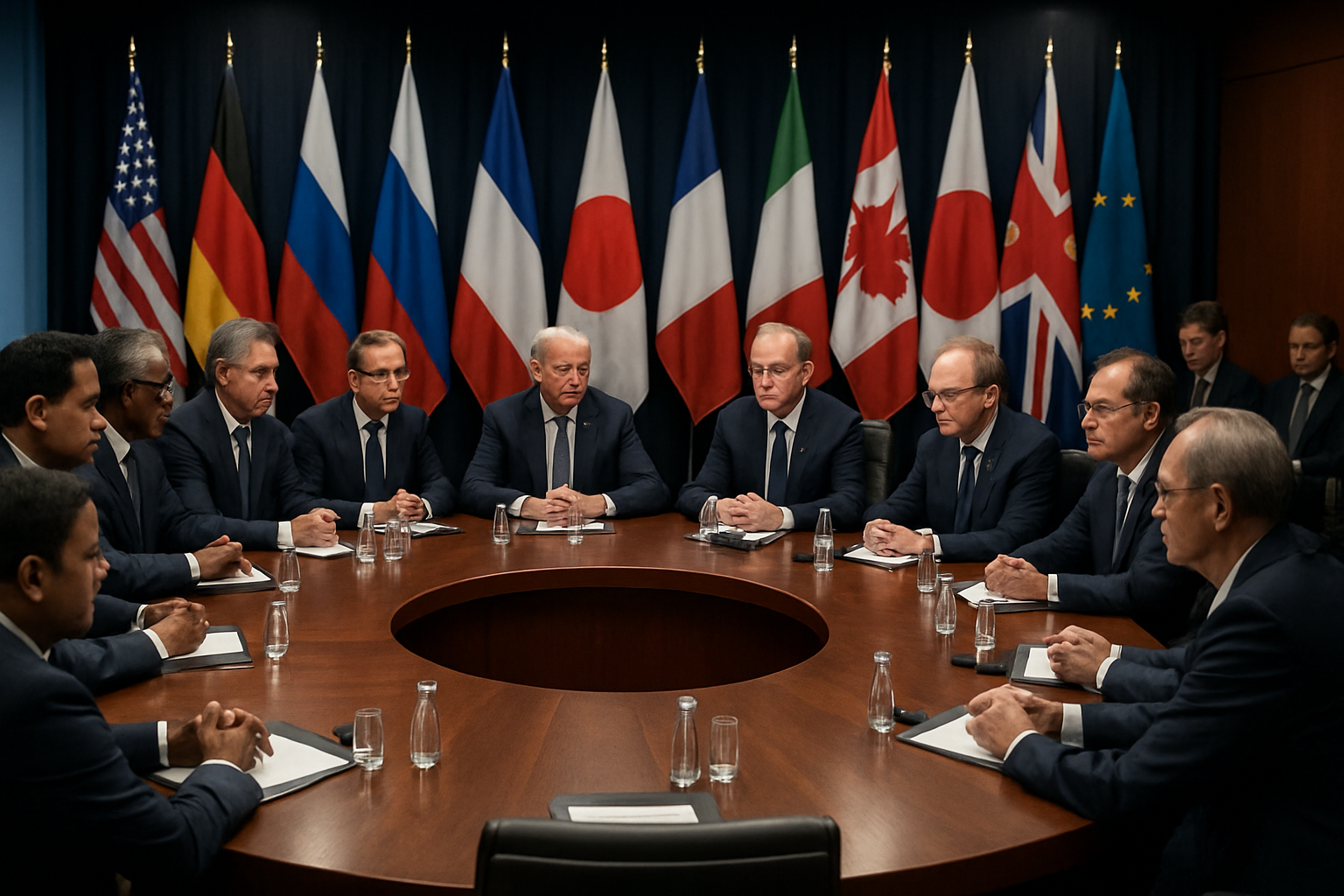
A wave of significant political developments across four major regional powers – Kuwait, Pakistan, Somalia, and Nigeria – has underscored the complex dynamics of contemporary governance, with new ministerial appointments, security leadership changes, parliamentary disruptions, and revelations about political influence shaping the regional landscape in early February 2026.
These concurrent political movements, spanning the Middle East, South Asia, East Africa, and West Africa, reflect broader themes of institutional adaptation, security challenges, and democratic processes that continue to define political trajectories in the developing world.
Kuwait Consolidates Leadership Structure
Kuwait moved to strengthen its governmental framework on February 2, 2026, as new ministers took their oath of office before the Amir at Bayan Palace. The ministerial appointments represent a significant reshuffling within Kuwait's executive branch, occurring during a period of regional uncertainty and economic transition.
The ceremony at Bayan Palace, the official residence of Kuwait's ruling family, underscores the constitutional monarchy's commitment to orderly governance transitions. While specific details about the new ministers' portfolios remain limited, the timing of these appointments comes as Gulf nations continue to navigate post-pandemic economic recovery and regional security concerns.
Kuwait's political system, which features both an elected National Assembly and appointed executive branch, has historically demonstrated stability compared to other regional powers. The latest ministerial changes likely reflect ongoing efforts to align government priorities with evolving domestic and international challenges.
Pakistan Restructures Security Leadership
Pakistan announced major changes to its security apparatus on February 2, 2026, with the federal government deciding to transfer Punjab Inspector General of Police Dr. Usman Anwar to serve as Director General of the Federal Investigation Agency (FIA). The decision, confirmed by highly-placed government sources, represents a significant reshuffling of Pakistan's law enforcement hierarchy.
According to reports from Dawn newspaper, the government has already given approval for the Punjab police high command changes, with a summary submitted to Prime Minister Shehbaz Sharif for final approval. Dr. Anwar's appointment as FIA DG was expected to be formalized on Tuesday, February 3.
The provincial government has prepared a panel of three candidates for the new Punjab police chief position, including Lahore Capital City Police Officer Bilal Siddique Kamyana, Punjab Counter Terrorism Department Additional Inspector General Wasim Sial, and Special Branch Additional Inspector General Rao Abdul Kareem.
"The government has given approval to change the Punjab police high command. A summary has been submitted to the prime minister for final approval."
— Highly-placed Government Source, as reported by Dawn
These security leadership changes come at a particularly sensitive time for Pakistan, following major counter-terrorism operations in Balochistan that resulted in significant militant casualties and heightened security concerns across the country. The reshuffling may reflect the government's desire to strengthen federal investigative capabilities while ensuring effective provincial law enforcement leadership.
Somalia Faces Parliamentary Crisis
Somalia's democratic institutions encountered severe turbulence on February 2, 2026, as the second meeting of the Federal Parliament ended in chaos and violence. The session, intended to debate constitutional amendments, collapsed amid procedural disputes and physical confrontations between lawmakers.
The parliamentary disruption represents a significant setback for Somalia's ongoing state-building efforts and constitutional reform process. Members of both houses of the Federal Parliament had convened to discuss amendments to certain constitutional articles, but the session devolved into disorder before any substantive progress could be achieved.
This incident highlights the ongoing challenges facing Somalia's federal system, where regional tensions, clan dynamics, and institutional weaknesses continue to complicate governance. The failure to conduct orderly parliamentary proceedings raises questions about the effectiveness of current democratic mechanisms and the need for institutional reforms.
Somalia's parliamentary system has struggled with legitimacy and functionality issues since the country's return to federal governance. The latest chaos underscores the fragility of democratic institutions in a country still grappling with security threats, economic challenges, and political fragmentation.
Nigeria's Political Inner Circle Dynamics Revealed
In Nigeria, former President Muhammadu Buhari's ex-Chief of Staff, Professor Ibrahim Gambari, made significant comments about presidential governance structures on February 2, 2026, dismissing claims that cabals hijacked the previous administration. His remarks provide insight into the operational dynamics of Nigeria's highest political offices.
Professor Gambari stated that every president maintains a cabal or inner circle, characterizing such arrangements as normal features of executive governance rather than problematic deviations. His comments respond to longstanding criticisms that informal power structures dominated decision-making during Buhari's tenure from 2015 to 2023.
"Every president has a cabal or inner circle"
— Professor Ibrahim Gambari, Former Chief of Staff to President Buhari
The revelation comes as Nigeria continues to evaluate the legacy of the Buhari administration and assess current President Bola Tinubu's governance approach. Gambari's comments provide a rare insider perspective on how presidential power operates in Africa's most populous democracy, where informal networks often play crucial roles in policy formulation and implementation.
Regional Implications and Broader Context
These concurrent political developments across four strategically important nations reflect broader patterns of governance evolution in the developing world. Each case illustrates different aspects of institutional adaptation, from Kuwait's monarchical stability to Pakistan's security restructuring, Somalia's democratic fragility, and Nigeria's informal power dynamics.
The timing of these developments coincides with a period of significant global political realignment, as nations navigate post-pandemic recovery, shifting security threats, and evolving international partnerships. The political changes in these four countries – representing different governance models and regional dynamics – may influence broader patterns of institutional development across their respective regions.
Kuwait's ministerial appointments suggest continued commitment to stable governance within the Gulf Cooperation Council framework. Pakistan's security leadership changes reflect ongoing efforts to balance federal and provincial authority amid persistent security challenges. Somalia's parliamentary crisis highlights the ongoing difficulties of democratic consolidation in post-conflict societies. Nigeria's revelations about presidential inner circles illuminate the informal dimensions of democratic governance in Africa.
Looking Forward: Governance Challenges and Opportunities
As these four nations navigate their respective political transitions and challenges, their experiences may offer lessons for broader regional governance trends. The success or failure of Kuwait's new ministerial team, Pakistan's security restructuring, Somalia's institutional reforms, and Nigeria's transparency initiatives could influence political development patterns across the Middle East, South Asia, East Africa, and West Africa.
The convergence of these political developments in early February 2026 underscores the dynamic nature of contemporary governance, where traditional institutional arrangements continue to evolve in response to changing domestic and international pressures. How these nations address their current political challenges may shape regional stability and democratic development for years to come.