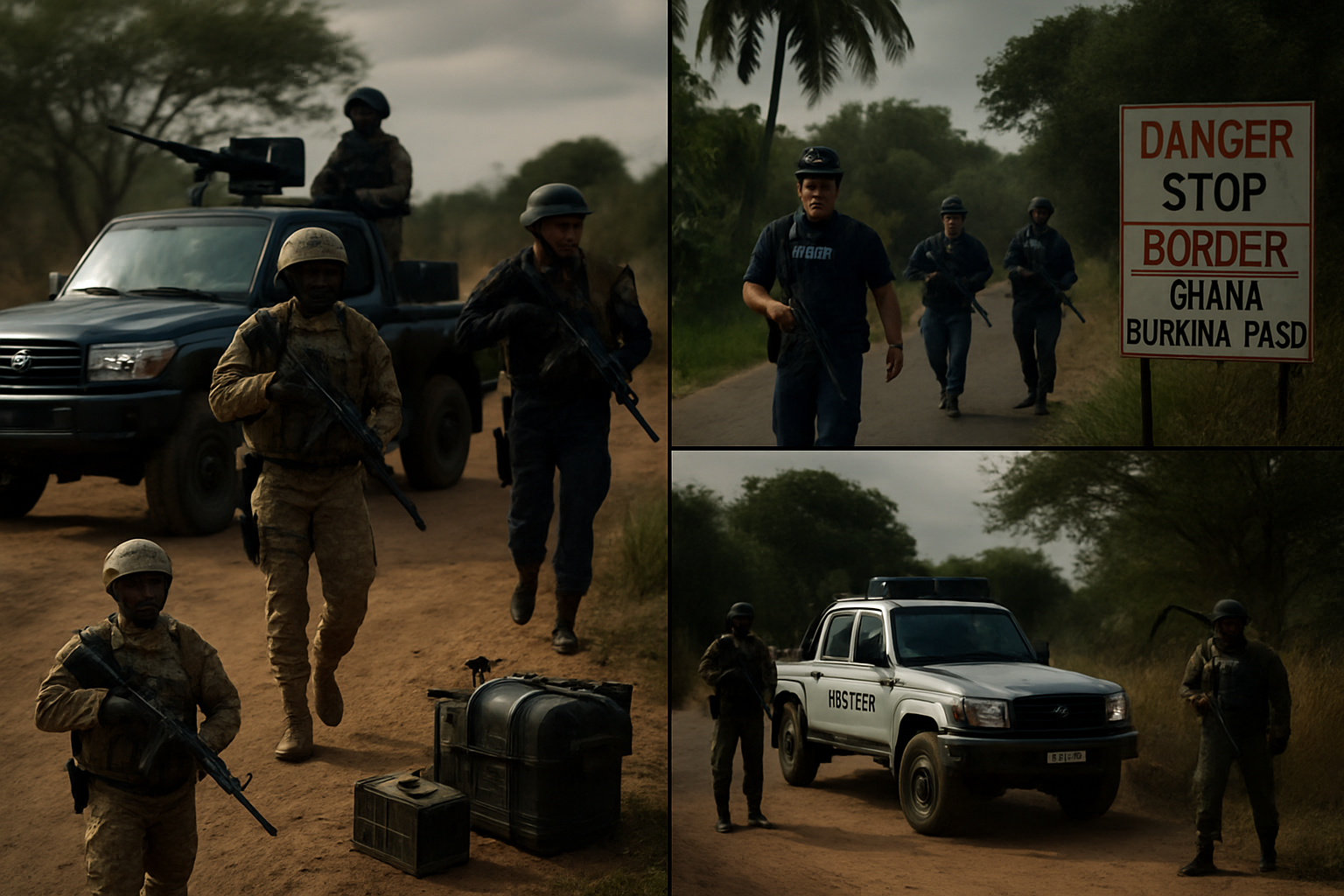
Regional security concerns have reached critical levels across multiple theaters, with West African terrorism threats demanding immediate international cooperation while Pacific territories struggle with rising crime rates linked to budget constraints, highlighting the interconnected nature of global security challenges in 2026.
International relations expert Ishmael Hlovor has issued urgent warnings following the deadly terrorist attack in Titao, northern Burkina Faso, which claimed the lives of eight Ghanaian traders. The attack underscores the expanding reach of terrorist organizations beyond traditional strongholds, threatening regional stability and cross-border commerce throughout West Africa.
Ghana-Burkina Faso Security Cooperation Critical
Speaking on Joy FM's Top Story, Hlovor emphasized that Ghana's security directly depends on active collaboration with Burkina Faso authorities to address persistent terrorist threats. "The terrorist situation in Burkina Faso will not resolve itself," he warned, calling for coordinated efforts to identify terrorist operating areas and strengthen security in vulnerable regions.
The expert stressed that Ghana's optimal strategy involves continuous collaboration with Burkina Faso's government to build comprehensive security infrastructure. This approach recognizes that modern terrorist networks operate across borders, requiring equally coordinated counter-terrorism responses to protect civilian populations and maintain regional stability.
"The best Ghana can do is to continue to collaborate with the authorities in Burkina Faso, that is the government of [Burkina Faso], to identify areas where terrorist groups operate and build up security in those regions."
— Ishmael Hlovor, International Relations Expert
Parliamentary Demands for Enhanced Security Measures
Ranking Member on Parliament's Foreign Affairs and Regional Integration Committee, Samuel Abdullai Jinapor, welcomed the Ministry of Foreign Affairs' new travel advisory but declared it fundamentally inadequate for addressing the scale of security challenges facing Ghanaian citizens abroad.
Jinapor argued that cross-border trading represents essential livelihood activities for countless Ghanaians, making simple travel restrictions unrealistic and economically devastating. His remarks highlight the complex balance between security concerns and economic necessities that define modern regional security challenges.
"Well, I think the call by the Ministry of Foreign Affairs [for travel advisories] is welcomed, but the directive on its own is inadequate," Jinapor stated, emphasizing the need for comprehensive security solutions that protect citizens while preserving essential economic relationships.
Pacific Region Crime Surge Following Austerity
Meanwhile, in the Commonwealth of the Northern Mariana Islands (CNMI), Department of Public Safety Commissioner Anthony Macaranas confirmed significant increases in property crimes and drug-related cases following the government's implementation of austerity measures in October 2025.
The crisis demonstrates how fiscal constraints can create security vulnerabilities, as reduced government services and employment opportunities contribute to social instability. Macaranas acknowledged seeing "fluctuations in reported crimes" while investigations continue into social media reports about criminal activities.
The CNMI's experience illustrates broader challenges facing island territories and developing regions where economic pressures intersect with security concerns. Governor David M. Apatang's Directive 2026-8 implemented austerity measures including reduced work hours for government employees, affecting Department of Public Safety and fire department operations during a critical period.
Economic Security Interconnections
The CNMI situation exemplifies how economic and security challenges reinforce each other in vulnerable regions. Fiscal 2026 revenue shortfalls amid severe economic downturns have forced governments to reduce essential services precisely when social stability requires enhanced support systems.
These developments occur against the backdrop of broader regional security patterns documented throughout 2026, including the expansion of terrorist activities from traditional strongholds into previously stable areas across West Africa, systematic targeting of cross-border commerce, and the emergence of new security threats in Pacific territories.
Historical Context and Emerging Patterns
The current security challenges build upon established patterns of regional instability that have characterized multiple theaters throughout 2026. West African terrorism has demonstrated concerning geographical expansion, moving beyond northeastern Nigeria strongholds to affect middle belt regions and neighboring countries.
Previous incidents this year include the devastating Kwara State massacre that killed over 162 people in coordinated attacks by Lakurawa (Islamic State-affiliated group), highlighting the sophisticated operational capabilities of terrorist organizations operating across national boundaries.
Intelligence failures have been particularly notable, with communities providing months of advance warnings about terrorist presence that were systematically ignored by security authorities. This pattern suggests fundamental challenges in intelligence gathering, processing, and response coordination that require immediate reform.
International Cooperation Requirements
The multi-regional nature of current security challenges demands enhanced international cooperation frameworks that can address both immediate threats and underlying vulnerabilities. Traditional bilateral security arrangements appear insufficient for addressing the sophisticated, cross-border nature of contemporary security threats.
Regional organizations including the Economic Community of West African States (ECOWAS) and Pacific partnership frameworks face pressure to develop more effective coordination mechanisms for intelligence sharing, joint operations, and resource allocation during crisis periods.
The Alliance of Sahel States formation by Niger, Mali, and Burkina Faso represents both a challenge and opportunity for regional security cooperation, as these nations distance themselves from traditional regional frameworks while facing ongoing terrorist pressures.
Economic and Humanitarian Implications
Current security challenges create substantial economic disruptions that extend far beyond immediate conflict zones. Cross-border trade, essential for millions of people's livelihoods, faces systematic disruption through terrorist attacks, travel restrictions, and security concerns that limit commercial activities.
Humanitarian consequences include displaced populations seeking shelter, disrupted agricultural activities during critical planting seasons, and destroyed commercial establishments that serve as economic anchors for rural communities. These impacts create conditions for further instability unless addressed through comprehensive approaches.
The interconnected nature of security, economic, and humanitarian challenges requires coordinated responses that address immediate security threats while building long-term resilience through economic development, governance improvements, and social stability initiatives.
Future Implications and Recommendations
The current security landscape suggests that traditional approaches to regional security may require fundamental reconsideration. The expansion of terrorist activities, the emergence of new crime patterns linked to economic pressures, and the limitations of current international cooperation frameworks all point toward the need for innovative solutions.
Enhanced intelligence cooperation, joint training programs, coordinated counter-terrorism operations, and comprehensive approaches that address economic and social vulnerabilities alongside security threats represent essential components of effective responses to contemporary regional security challenges.
Success will depend on sustained political commitment from regional governments, adequate resource allocation for security and development initiatives, and international support that recognizes the global implications of regional instability in an interconnected world.
As these multiple security challenges continue to evolve, the international community faces a critical test of its capacity to support regional solutions while addressing the underlying conditions that enable security threats to emerge and spread across traditional boundaries.