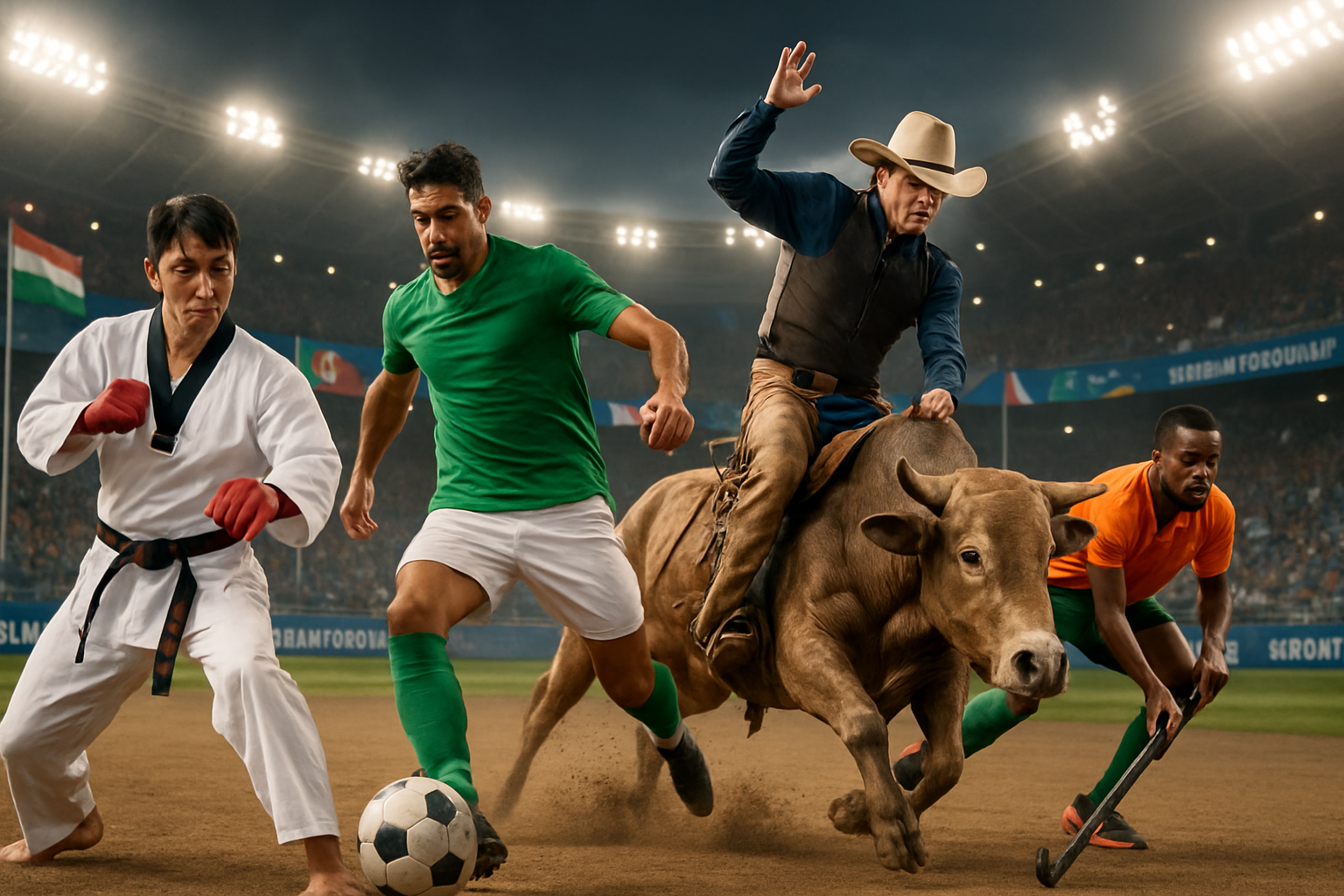
Regional sports championships across Europe and North America delivered extraordinary performances in April 2026, highlighting the continuing democratization of athletic excellence and the breakdown of traditional sporting hierarchies that have defined modern competition.
Bosnia and Herzegovina achieved unprecedented success at the European ITF Taekwon-do Championships in Maribor, Slovenia, capturing an remarkable ten medals across all age categories. The achievement represents the nation's strongest-ever performance in international martial arts competition and demonstrates the systematic development programs that have transformed the Balkan country into a emerging taekwondo powerhouse.
Taekwondo Excellence in Maribor
The standout performer for Bosnia Herzegovina was Mehmed Krupić, the former junior world champion who made a successful transition to senior competition. Krupić claimed silver in the heavyweight division (81kg category), defeating opponents from Poland, Russia, and Ukraine en route to the final. His performance validates the strategic investment in youth development programs that identified and nurtured his talent from an early age.
In the pre-junior categories, Una Živanić secured silver in the 60kg division, building on her bronze medal performance from the previous year's championships. The consistency of her results demonstrates the depth of Bosnia Herzegovina's taekwondo program, which has prioritized technical excellence and systematic coaching development.
"This success is the result of years of dedicated preparation and investment in our athletes. We have created a system that supports our competitors from grassroots to elite level."
— Bosnia Herzegovina Taekwon-do Federation Official
Bronze medals were captured by promising young athletes Esma Panjeta (40kg) and other pre-junior competitors, indicating a strong pipeline of talent that bodes well for future international competitions. The medals span across pre-junior, junior, and senior categories, demonstrating the comprehensive nature of Bosnia Herzegovina's taekwondo development infrastructure.
Football Drama Across the Balkans
While taekwondo provided celebration, football delivered typical drama across the region. The Premijer Liga of Bosnia Herzegovina witnessed a thrilling encounter between traditional rivals Borac and Velež at the Gradski Stadium in Banja Luka. Despite taking a commanding two-goal lead, Borac dramatically surrendered their advantage, allowing Velež to secure a crucial away point despite playing with ten men for a significant portion of the match.
The result exemplifies the competitive balance that has emerged in Balkan football, where tactical discipline and mental resilience often prove more decisive than raw talent or financial resources. Velež's ability to maintain composure while numerically disadvantaged and playing away from home demonstrates the professional standards that have elevated regional football.
Meanwhile, Hull City's struggles in the English Championship continued under the guidance of Bosnian coach Sergej Jakirović. The club's inability to maintain leads has become a concerning pattern, complicating their aspirations for Premier League promotion. Jakirović's tactical approach, while sophisticated, has struggled to translate into consistent results in England's highly competitive second tier.
Women's Football World Cup Qualification Success
Bosnia Herzegovina's women's national team provided another highlight with their dominant 6-0 victory over Liechtenstein in Vaduz during FIFA Women's World Cup 2027 qualifications. The comprehensive victory featured a hat-trick from Milena Nikolić, who scored in the 5th, 24th, and 35th minutes, along with goals from Selma Kapetanović, Marija Milinković, and Emina Ekić.
The result positions the "Zmajice" (Female Dragons) at the top of their qualification group, building momentum for their World Cup campaign. Coach Selver Hodžić has implemented a systematic approach that emphasizes technical proficiency and tactical flexibility, enabling the team to adapt to different opponents and match situations.
The team's earlier 13-1 victory over the same opponents in March had raised eyebrows, but the consistent high-scoring performances demonstrate genuine quality rather than fortunate circumstances. The goal difference accumulated across these matches provides crucial advantage in what promises to be a competitive qualification process.
Canadian Rodeo Excellence
Across the Atlantic, Canada's Jake Gardner from Fort St. John, British Columbia, established himself as the world's premier bull rider following his championship victory at RodeoHouston in March. Gardner's rise to the top of the Professional Rodeo Cowboys Association standings represents a remarkable achievement for a sport where American dominance has historically been overwhelming.
Gardner's success story embodies the democratization of sporting excellence that has characterized 2026. Originally not scheduled to compete at RodeoHouston, he received a last-minute call-up and capitalized on the opportunity with a performance that elevated him to world number one rankings. His achievement demonstrates how preparation, talent, and opportunity can converge to produce breakthrough performances.
"Being ranked number one in the world is surreal. It shows that with hard work and dedication, Canadian athletes can compete with anyone."
— Jake Gardner, Professional Rodeo Cowboys Association
The significance extends beyond individual achievement to represent the globalization of American sporting traditions. Canadian rodeo programs have invested in coaching, facilities, and competitive opportunities that now rival traditional American strongholds. Gardner's success provides a template for other international competitors seeking to challenge established hierarchies in uniquely American sports.
Global Sporting Democratization
These regional championships reflect broader trends transforming international sport in 2026. The success of Bosnia Herzegovina in taekwondo, their women's football team's World Cup qualification campaign, and Canada's emergence in professional rodeo all demonstrate how systematic investment, coaching excellence, and infrastructure development can enable smaller nations to compete with traditional powerhouses.
The breakdown of geographic and economic barriers has been facilitated by improved coaching education, international cooperation programs, and enhanced access to competition opportunities. Nations that previously struggled to achieve international recognition are now producing world-class athletes across diverse disciplines.
Technology has played a crucial role in this democratization. Advanced performance analysis, video coaching, and international knowledge sharing have enabled coaches and athletes worldwide to access techniques and strategies previously confined to elite sporting nations. The result is unprecedented competitive depth across all levels of international competition.
Regional Competition Infrastructure
The success of these regional championships also highlights the importance of competition infrastructure in developing sporting excellence. The European ITF Taekwon-do Championships in Maribor provided a high-quality platform for athletes to demonstrate their abilities, while the Professional Rodeo Cowboys Association's systematic ranking and tour structure enabled Gardner's achievement to be properly recognized and rewarded.
Regional competitions serve as crucial stepping stones between domestic success and global recognition. They provide athletes with international competition experience while maintaining accessible geographic and financial requirements. This intermediate level of competition has become increasingly sophisticated, offering prize money, media coverage, and ranking points that can launch careers.
The investment in these regional platforms reflects a growing understanding that sporting development requires comprehensive ecosystems rather than isolated elite programs. Success at the highest levels increasingly depends on the depth and quality of competition available throughout an athlete's developmental journey.
Looking Forward
As 2026 progresses, these regional championships establish important precedents for international sporting development. The systematic approaches implemented by Bosnia Herzegovina in taekwondo and women's football, combined with Canada's emergence in professional rodeo, demonstrate that sporting excellence is increasingly determined by organization, coaching quality, and strategic vision rather than traditional advantages.
The implications extend beyond individual sports to influence broader international sporting governance and development policies. Success stories from emerging sporting nations provide templates that can be adapted and implemented globally, accelerating the democratization of athletic excellence across all disciplines and regions.
These developments also underscore the importance of regional cooperation and knowledge sharing in sporting development. The most successful programs increasingly involve international partnerships, coaching exchanges, and shared resources that transcend national boundaries while respecting cultural identities and sporting traditions.