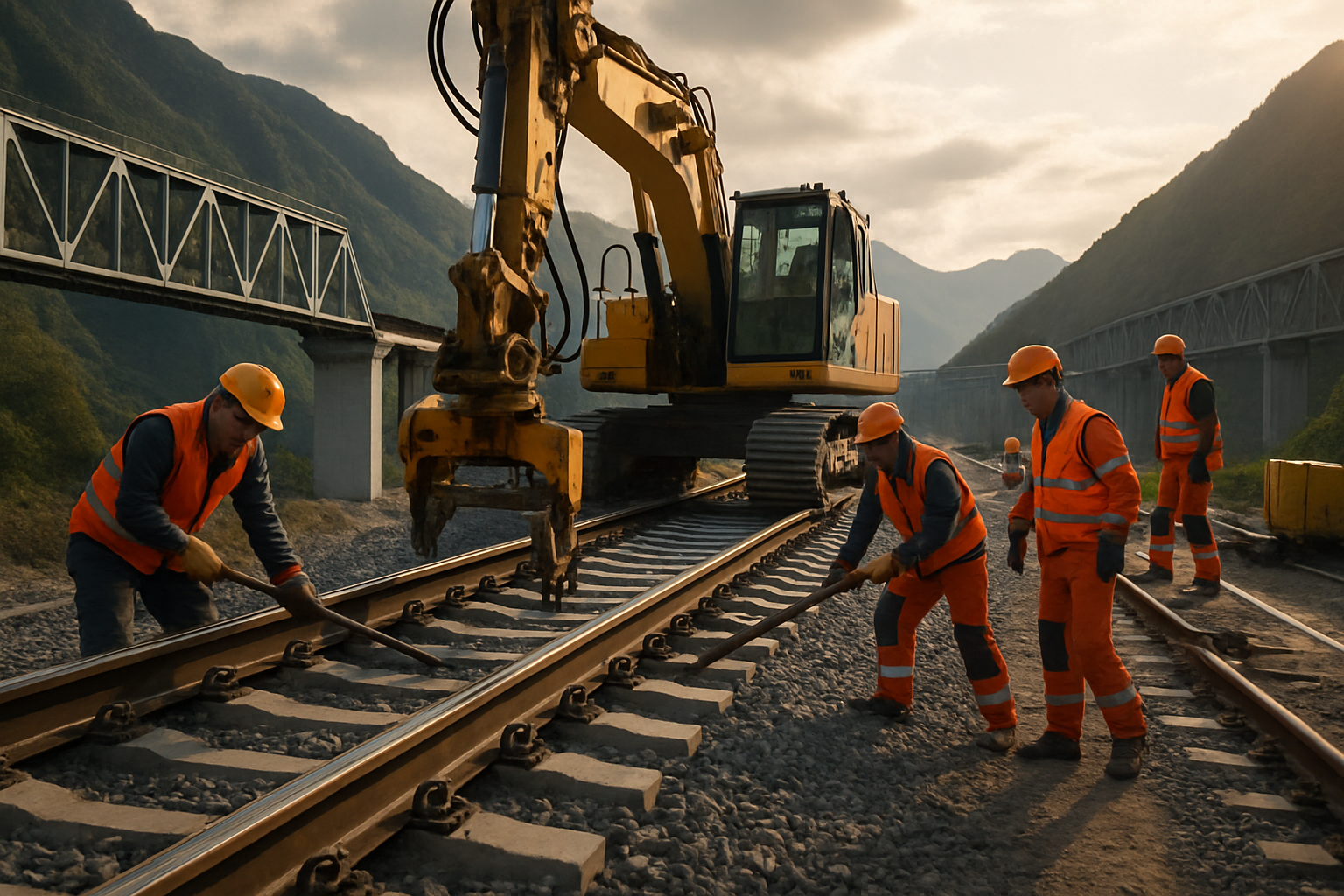
A new wave of transportation infrastructure investment is transforming regional connectivity across Asia, with Uzbekistan officially ratifying a groundbreaking tri-national railway agreement while Malaysia pushes forward with major road improvement projects.
President of the Republic of Uzbekistan Shavkat Mirziyoyev has signed a decree approving an international agreement that formalizes cooperation with neighboring countries in the transport sector, marking a significant milestone in Central Asian connectivity. The agreement centers on the ambitious "Uzbekistan–Afghanistan–Pakistan" (UAP) railway project, which Pakistan's Prime Minister Shehbaz Sharif has described as a "breakthrough for the region" during recent high-level meetings.
Historic Railway Partnership Takes Shape
The UAP railway project represents one of the most significant transportation infrastructure initiatives in Central Asia's modern history. The agreement between the three nations establishes formal mechanisms for cooperation across the transport sector, creating a framework for enhanced regional trade and economic integration.
During a strategic meeting between President Mirziyoyev and Prime Minister Sharif, the Pakistani leader emphasized the transformative potential of this railway connection. The project is expected to significantly enhance trade flows between Central Asia and South Asia, providing landlocked Afghanistan and Uzbekistan with improved access to Pakistan's ports and international markets.
The railway initiative builds on growing recognition of transportation infrastructure as a catalyst for economic development and regional integration. For Uzbekistan, the project represents a key component of its broader strategy to diversify trade routes and reduce dependence on traditional northern corridors.
Malaysia Addresses Urban Mobility Crisis
Meanwhile, in Southeast Asia, Malaysia is tackling pressing urban transportation challenges with a proposed RM300 million upgrade project targeting chronic traffic congestion along a critical route in Johor state.
Tebrau MP and Johor PKR vice chairman Jimmy Puah Wee Tse has proposed upgrading the main FT03 route from Pandan to Kota Tinggi, which has long been a source of complaints among road users. The comprehensive upgrade includes plans for a large U-turn near Taman Dato Chellam in Puteri Wangsa, addressing one of the most problematic sections of the route.
"We will work with Johor JKR to bring this proposal to the federal Public Works Department. Our goal is to ease congestion and reduce travel time from up to an hour to about 30 minutes."
— Jimmy Puah Wee Tse, Tebrau MP
The FT03 route serves as the only main highway linking several densely populated areas in Johor Bahru to Kota Tinggi, making the upgrade crucial for regional economic activity and quality of life for residents. The project demonstrates Malaysia's commitment to addressing urban mobility challenges through strategic infrastructure investment.
Regional Transportation Renaissance
These developments are part of a broader transportation infrastructure renaissance occurring across Asia and beyond. Historical context from recent projects shows an unprecedented surge in connectivity investments, with nations recognizing infrastructure as fundamental to economic competitiveness and regional integration.
The UAP railway project particularly aligns with broader trends toward multimodal transportation networks that connect landlocked regions with maritime trade routes. For Afghanistan, which has faced significant economic challenges, the railway represents a potential lifeline for increased trade and economic recovery.
Pakistan's enthusiasm for the project reflects its strategic position as a bridge between Central Asia and global markets through its port facilities, particularly Gwadar Port, which serves as a key component of the China-Pakistan Economic Corridor (CPEC).
Economic and Strategic Implications
The transportation projects carry significant economic implications beyond their immediate infrastructure value. The UAP railway is expected to create thousands of jobs during construction and operation, while facilitating increased trade volumes that could benefit all three participating nations.
For Malaysia's FT03 upgrade, the economic benefits include reduced fuel consumption from shorter travel times, decreased vehicle maintenance costs, and improved productivity as workers spend less time commuting. The project is also expected to enhance the region's attractiveness for business investment and development.
These initiatives demonstrate how strategic infrastructure investment can address multiple challenges simultaneously – economic development, regional integration, and improved quality of life for citizens.
Implementation Challenges and Opportunities
Both projects face implementation challenges that are common to major infrastructure initiatives. The UAP railway must navigate complex international coordination requirements, financing arrangements, and security considerations, particularly given Afghanistan's current situation.
Malaysia's road upgrade project must work through multiple levels of government approval, from state authorities to federal departments, while managing environmental considerations and minimizing disruption to existing traffic during construction.
However, both projects also present significant opportunities for technological innovation and best practices in transportation development. Modern infrastructure projects increasingly incorporate smart technology, environmental sustainability, and climate adaptation features that enhance long-term value and resilience.
Looking Forward
As these transportation projects advance, they represent broader trends in global infrastructure development that prioritize connectivity, sustainability, and economic integration. The UAP railway project could serve as a model for other regional cooperation initiatives, while Malaysia's approach to urban mobility challenges offers lessons for other rapidly growing Southeast Asian cities.
The success of these projects will depend on sustained political commitment, effective project management, and continued international cooperation. As infrastructure needs continue to grow globally, these initiatives demonstrate the potential for strategic transportation investments to transform regional economies and improve millions of lives.
Both projects reflect a recognition that in an increasingly interconnected world, transportation infrastructure serves not just as a means of moving people and goods, but as a foundation for economic opportunity, regional stability, and shared prosperity.