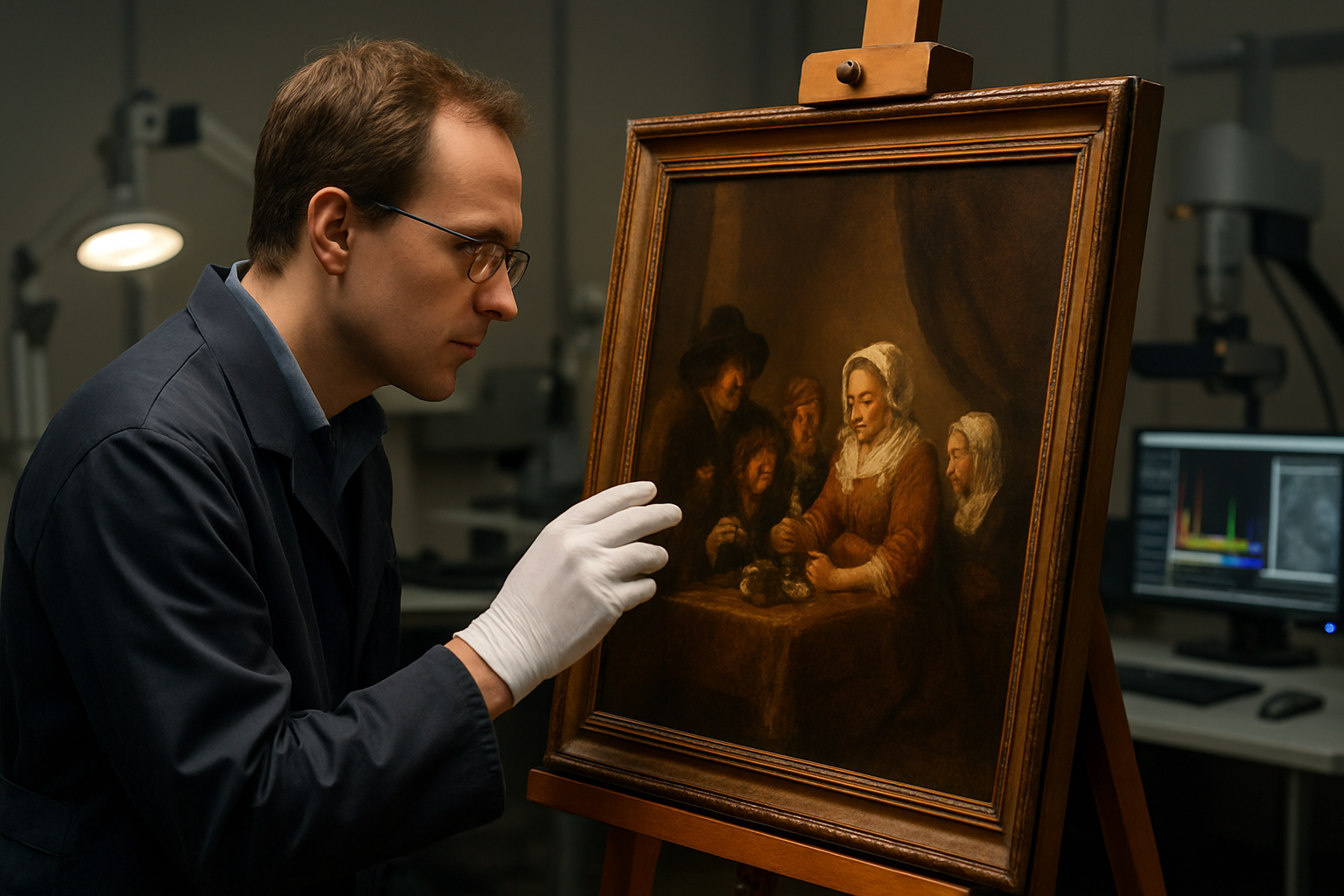
A painting that languished in obscurity for over six decades has been authenticated as a genuine masterpiece by Rembrandt van Rijn, representing one of the most significant art historical discoveries of 2026 and highlighting the revolutionary transformation of museum authentication practices.
"Vision of Zechariah in the Temple," dating from 1633 during Rembrandt's peak Amsterdam period, was dismissed by art experts in the 1960s and removed from official catalogues. However, advanced scientific analysis conducted at the Rijksmuseum Amsterdam has now confirmed its authenticity, ending 65 years of scholarly rejection and establishing new protocols for art historical investigation.
Jonathan Bikker, the Rijksmuseum's curator of 17th-century Dutch paintings, reflected on the significance of the discovery: "I get maybe two emails a week with someone who thinks they have a Rembrandt painting. And of course, most often, 99 per cent of the time, they don't. But this painting was different."
Scientific Revolution in Art Authentication
The authentication breakthrough relied on sophisticated analytical techniques unavailable to mid-20th century scholars. X-ray fluorescence spectroscopy revealed characteristic Rembrandt materials, including expensive ultramarine blue and vermillion pigments that were hallmarks of the master's palette. Infrared reflectography uncovered pentimenti—artist changes made during the painting process—that provided crucial insights into Rembrandt's creative development.
Dendrochronological analysis of the wood panel confirmed the dating, while examination of canvas weave patterns and ground layer composition supported the attribution. Most significantly, the scientific evidence revealed the sophisticated layering techniques and brushwork that are unmistakably Rembrandt's signature style.
The painting depicts the biblical scene of the priest Zechariah receiving a divine vision in the Temple of Jerusalem, rendered with the dramatic chiaroscuro lighting and psychological intensity that define Rembrandt's religious works from his most productive period.
The Renaissance of Rediscovery
This authentication represents part of a broader phenomenon that art historians are calling the "renaissance of rediscovery"—a systematic reexamination of dismissed artworks using modern analytical methods. The conservative attribution practices that dominated the post-World War II period, while protecting against forgeries, also led to the rejection of numerous genuine works that lacked extensive documentation.
The Rijksmuseum's approach demonstrates how contemporary scholarship successfully combines traditional connoisseurship with cutting-edge scientific analysis. This hybrid methodology has become the gold standard for major museums worldwide, providing unprecedented accuracy in attribution while revealing new insights into artistic techniques and historical contexts.

Collaborative Museum Model
The success of this authentication highlights a new paradigm in museum-private collector relationships. The current owners of "Vision of Zechariah in the Temple" brought the work to the Rijksmuseum for analysis, demonstrating how collaboration between private collectors and major institutions can advance scholarship while respecting ownership rights.
This partnership model is being adopted by leading museums globally, creating networks of expertise that benefit the entire art historical community. Rather than competing for acquisitions, institutions are sharing resources and knowledge to unlock the secrets of previously misattributed or dismissed works.
"This discovery challenges us to reconsider how many other masterpieces may be hiding in plain sight, waiting for the right combination of technology and scholarly insight to reveal their true identity."
— Dr. Sarah Richardson, Art Authentication Specialist
Economic and Cultural Implications
The authentication has profound economic implications, as Rembrandt works typically sell for tens of millions of dollars at auction. However, the cultural significance extends far beyond market value. The painting will be displayed publicly for the first time in 65 years, allowing audiences to experience a newly recovered piece of Dutch Golden Age heritage.
The discovery also raises important questions about the art market and the thousands of works that may have been incorrectly attributed over the decades. Museums worldwide are investing in the technological infrastructure necessary to conduct similar investigations of their collections.
International Impact and Future Directions
This breakthrough is part of the documented "February 2026 Cultural Renaissance," a period of unprecedented international cooperation in cultural preservation and discovery. The Rijksmuseum's success provides a template for other institutions seeking to balance scientific rigor with traditional art historical methods.
The authentication techniques pioneered in this case are already being applied to other disputed attributions across Europe and North America. Several major museums have announced similar reexamination projects, suggesting that the art world may be on the verge of multiple rediscoveries.
The integration of artificial intelligence and machine learning into art analysis promises even more sophisticated future investigations. However, experts emphasize that technology must enhance rather than replace human expertise and cultural understanding.
Preserving Cultural Heritage for Future Generations
The story of "Vision of Zechariah in the Temple" demonstrates how cultural treasures can be lost not through physical destruction, but through scholarly dismissal. The painting survived 65 years of rejection to emerge as a testament to the evolving nature of art historical knowledge.
This rediscovery emphasizes the dynamic nature of cultural heritage, where new evidence and methodologies can fundamentally alter our understanding of artistic history. It also highlights the responsibility of contemporary scholars to remain open to reevaluating past judgments in light of new capabilities.
As museums worldwide embrace this collaborative, technology-enhanced approach to authentication, the art world may be entering a golden age of rediscovery. The Rijksmuseum's success with the Rembrandt authentication provides not just a recovered masterpiece, but a roadmap for unlocking the hidden treasures that may be waiting in collections around the globe.
The painting will be integrated into the Rijksmuseum's permanent collection display, where visitors can witness firsthand this remarkable intersection of 17th-century genius and 21st-century scientific precision—a perfect embodiment of how tradition and innovation can work together to preserve and reveal our shared cultural heritage.