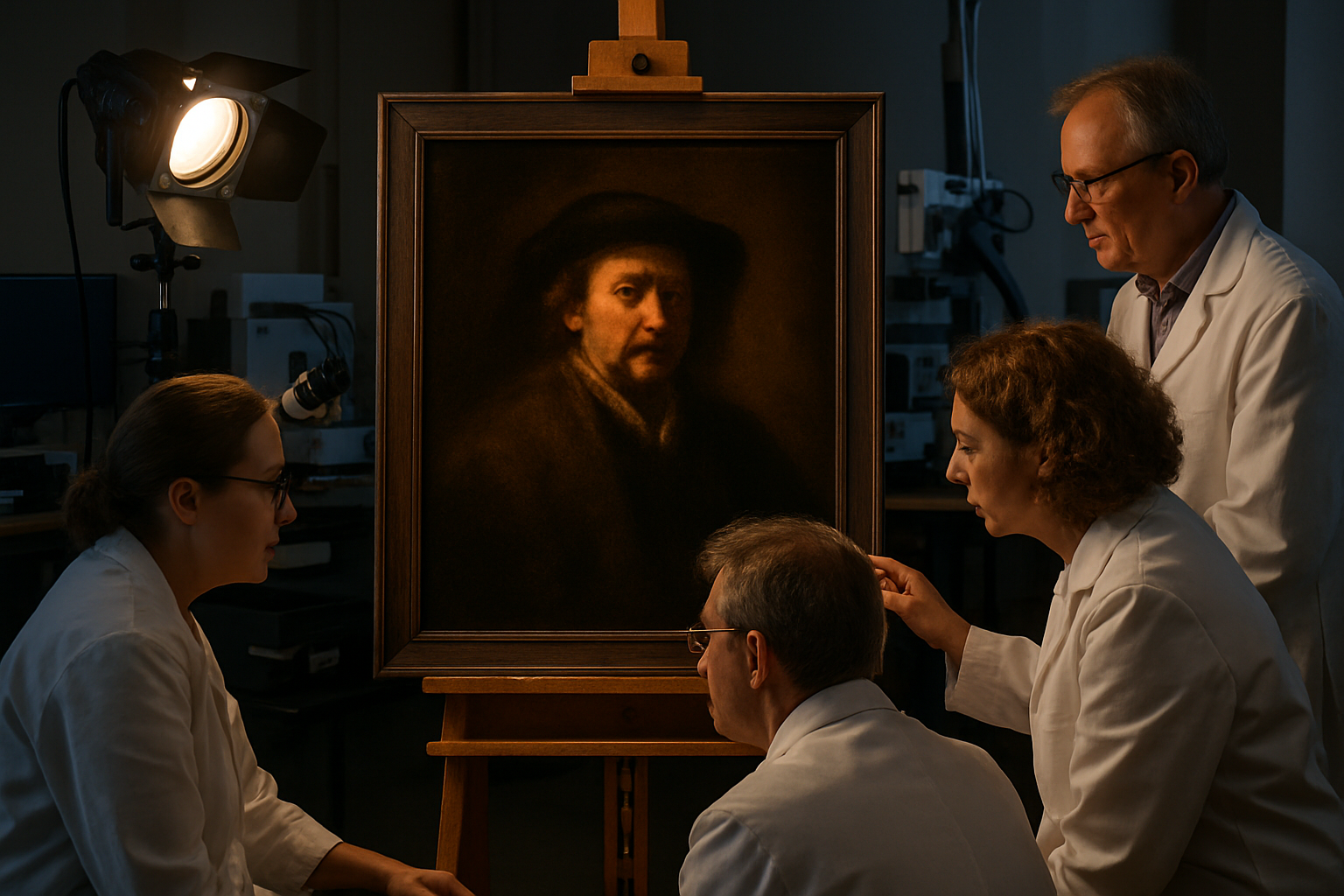
The Rijksmuseum in Amsterdam announced the authentication of a previously dismissed Rembrandt painting, "Vision of Zechariah in the Temple" (1633), marking the end of a 65-year mystery that had relegated the masterpiece to obscurity since 1960.
The painting, which had been absent from public view and scholarly discourse for more than six decades, was delivered to the museum by its current owner and subjected to comprehensive analysis using cutting-edge techniques unavailable to previous generations of art historians.
Revolutionary Authentication Process
Museum researchers employed advanced technological methods to definitively establish the work's authenticity, overturning decades of scholarly skepticism. The analysis included sophisticated imaging techniques, pigment analysis, and canvas examination that revealed unmistakable hallmarks of Rembrandt's hand and studio practices from the 1630s.
"This represents one of the most significant Rembrandt discoveries in recent decades," said museum officials, though they noted the authentication process required extensive documentation and peer review before the announcement.
The painting's rediscovery comes at a time when the art world is experiencing renewed interest in reassessing previously attributed works, with several museums worldwide conducting similar technical investigations of their collections.
A Masterwork Lost to Time
Dating to 1633, "Vision of Zechariah in the Temple" was created during Rembrandt's most productive period in Amsterdam, when the artist was establishing his reputation as the leading painter of the Dutch Golden Age. The work depicts the biblical scene of the priest Zechariah receiving a divine vision in the Temple of Jerusalem, rendered with the dramatic chiaroscuro lighting technique that became Rembrandt's signature.
The painting's disappearance from scholarly recognition in 1960 reflected the more conservative attribution practices of mid-20th century art history, when scholars were increasingly cautious about accepting works as authentic without extensive documentation. This approach, while protecting against false attributions, may have led to the dismissal of genuine works lacking clear provenance.
Technical Innovation Reveals Truth
The Rijksmuseum's analysis utilized methods unavailable to art historians in the 1960s, including X-ray fluorescence spectroscopy, infrared reflectography, and dendrochronological analysis of the wooden panel support. These techniques revealed not only the characteristic materials and methods of Rembrandt's workshop but also pentimenti—changes made during the painting process—that provide insight into the artist's creative development.
Pigment analysis confirmed the use of materials consistent with Rembrandt's known palette, including the expensive ultramarine blue and vermillion that the prosperous artist could afford during his successful Amsterdam period. Canvas weave patterns and ground layer composition further supported the attribution.
Impact on Art Historical Scholarship
The authentication raises important questions about how many other dismissed works might deserve reconsideration with modern analytical techniques. Art historians note that the post-World War II period saw increased skepticism about attributions, particularly for works lacking extensive documentation.
This discovery joins a growing list of rehabilitated attributions that have emerged as museums worldwide apply new technologies to their collections. The process reflects broader changes in art historical methodology, where scientific analysis increasingly complements traditional connoisseurship.
"Every generation of scholars brings new tools and perspectives to understanding art history. What seemed impossible to prove in 1960 can now be demonstrated conclusively through technical analysis."
— Museum Conservation Expert
Return to Public View
Following its authentication, the painting will be displayed at the Rijksmuseum for the first time in 65 years, allowing visitors to experience this lost masterpiece. The museum plans to present the work alongside documentation of the authentication process, educating the public about modern conservation science.
The rediscovery also highlights the importance of private collectors and owners in preserving artworks through periods when institutional recognition may be lacking. The current owner's decision to submit the painting for analysis demonstrates how collaboration between private collectors and museums can advance scholarly understanding.
Broader Implications for Museums Worldwide
The successful authentication of "Vision of Zechariah in the Temple" provides a template for other institutions conducting similar investigations. Museums worldwide are increasingly investing in technological infrastructure that enables sophisticated analysis of their collections.
This development comes as part of what scholars are calling a "renaissance of rediscovery," where advanced analytical techniques are revealing hidden treasures in museum storage rooms and private collections. The Rijksmuseum's announcement is expected to encourage other institutions to undertake similar comprehensive reviews of previously dismissed attributions.
The authentication also demonstrates how scholarly consensus can evolve with new evidence, reinforcing the dynamic nature of art historical knowledge. As technology continues to advance, experts predict that more lost masterpieces may emerge from the shadows of historical skepticism.
The "Vision of Zechariah in the Temple" now takes its rightful place among Rembrandt's authenticated works, serving as a reminder that great art has the power to transcend even decades of institutional oversight and emerge triumphant when truth finally prevails.