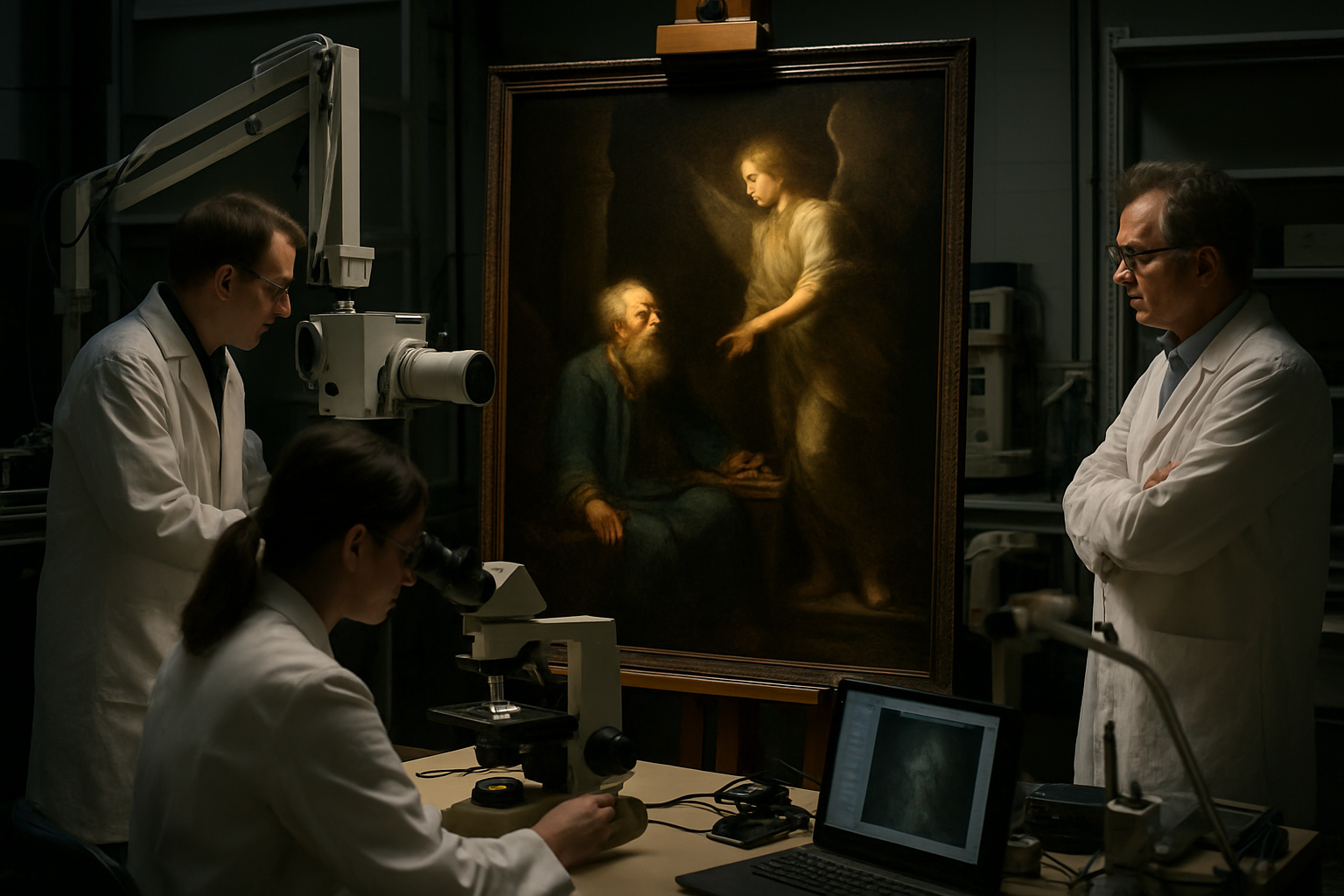
The Rijksmuseum Amsterdam has achieved a remarkable breakthrough in art historical scholarship, successfully authenticating Rembrandt van Rijn's "Vision of Zechariah in the Temple" after the masterpiece spent 65 years dismissed from official recognition as a genuine work by the Dutch master.
The 1633 painting, which depicts the biblical priest Zechariah receiving a divine vision in the Temple of Jerusalem, was brought to the museum by its current private owners for comprehensive analysis. Using advanced scientific techniques unavailable to mid-20th century scholars, the authentication represents a triumph of modern analytical methods over conservative post-World War II attribution practices.
Scientific Breakthrough Confirms Attribution
The museum's research team employed cutting-edge technologies including X-ray fluorescence spectroscopy, infrared reflectography, and dendrochronological analysis to definitively establish the work's authenticity. These sophisticated analytical tools revealed characteristic Rembrandt materials, including expensive ultramarine blue and vermillion pigments that match the artist's documented palette from his peak Amsterdam period.
"The analysis of the materials, the stylistic and thematic similarities, the modifications made by Rembrandt and the global quality of the painting confirm the conclusion that this canvas is an authentic work by Rembrandt van Rijn," the museum stated in an official announcement.
The scientific investigation also uncovered crucial evidence of pentimenti—visible changes made by the artist during the painting process. These alterations provide insight into Rembrandt's creative development and serve as additional confirmation of authenticity, as such spontaneous modifications are characteristic of original works rather than copies.
A Painting Lost to History
The discovery is particularly significant given the painting's troubled history. Originally created in 1633 during what art historians consider Rembrandt's golden period in Amsterdam, the work disappeared from scholarly recognition around 1960 due to increasingly conservative attribution practices that emerged after World War II.
Taco Dibbits, director of the Rijksmuseum, emphasized the rarity of such discoveries, telling reporters that finding a new Rembrandt is something that "occurs few times" in the art world. The authentication marks the first time the painting has been publicly displayed in over six decades.
The biblical subject matter showcases Rembrandt's mastery of chiaroscuro—the dramatic interplay of light and shadow that became his signature technique. The painting captures the moment when the elderly priest Zechariah, father of John the Baptist, encounters an angel in the Temple, rendered with the psychological intensity and spiritual depth that characterizes Rembrandt's religious works.
The Renaissance of Rediscovery
This authentication is part of what scholars are calling a "renaissance of rediscovery," where modern analytical techniques are enabling the rehabilitation of artworks previously dismissed by earlier generations of art historians. The success at the Rijksmuseum demonstrates how technological advancement can illuminate artistic treasures that have been hiding in plain sight.
The canvas weave patterns and ground layer composition provided additional scientific evidence supporting the attribution. Advanced imaging revealed the distinctive preparation techniques Rembrandt employed, including the specific way he prepared his canvases—details that would be nearly impossible for later copyists or forgers to replicate accurately.
The authentication process also benefited from the museum's experience with similar advanced analysis during the recent large-scale restoration of Rembrandt's famous "The Night Watch." The techniques perfected during that project proved invaluable in confirming the authenticity of "Vision of Zechariah in the Temple."
Collaboration Between Private Collectors and Museums
The discovery represents a new model of collaboration between private collectors and major museums. Rather than competing for acquisitions, the partnership demonstrates how shared expertise and resources can advance art historical scholarship while respecting private ownership.
This collaborative approach is becoming increasingly common as museums worldwide invest in technological infrastructure for collection analysis. The Rijksmuseum's success provides a template for other institutions conducting similar investigations into works with disputed attributions.
The economic implications are significant, as authentic Rembrandt works are valued in the tens of millions of dollars. However, museum officials emphasized that the cultural and historical value transcends monetary considerations, noting that the painting represents a recovered piece of Dutch Golden Age heritage.
Global Impact on Art Historical Methodology
The authentication reflects a broader evolution in art historical methodology, combining traditional connoisseurship with scientific analysis. This hybrid approach is proving more effective than either method alone, creating new standards for attribution practices worldwide.
The success raises important questions about other dismissed works that may deserve reconsideration using modern analytical techniques. Museums across Europe and North America are reportedly reassessing their own collections and examining works that were rejected during the conservative attribution period of the mid-to-late 20th century.
The timing of the discovery aligns with what cultural observers have termed the "February 2026 Cultural Renaissance"—a period of unprecedented international cooperation in cultural preservation and discovery. Similar breakthroughs in archaeological finds, museum restitutions, and heritage preservation have been documented across multiple continents.
Future Public Display
The Rijksmuseum plans to display "Vision of Zechariah in the Temple" publicly for the first time since its return to official recognition. The exhibition will showcase not only the painting itself but also the scientific analysis that confirmed its authenticity, providing visitors with insight into modern conservation science.
The authentication success demonstrates how cultural institutions can serve as bridges between past and present, using contemporary technology to recover and preserve artistic heritage for future generations. The painting's return to public recognition after 65 years in artistic limbo represents a victory for both scholarship and cultural preservation.
As art historical scholarship continues to evolve with advancing technology, the Rijksmuseum's achievement with "Vision of Zechariah in the Temple" provides hope that other lost masterpieces may yet emerge from obscurity, waiting for the right combination of scientific analysis and scholarly dedication to restore them to their rightful place in art history.