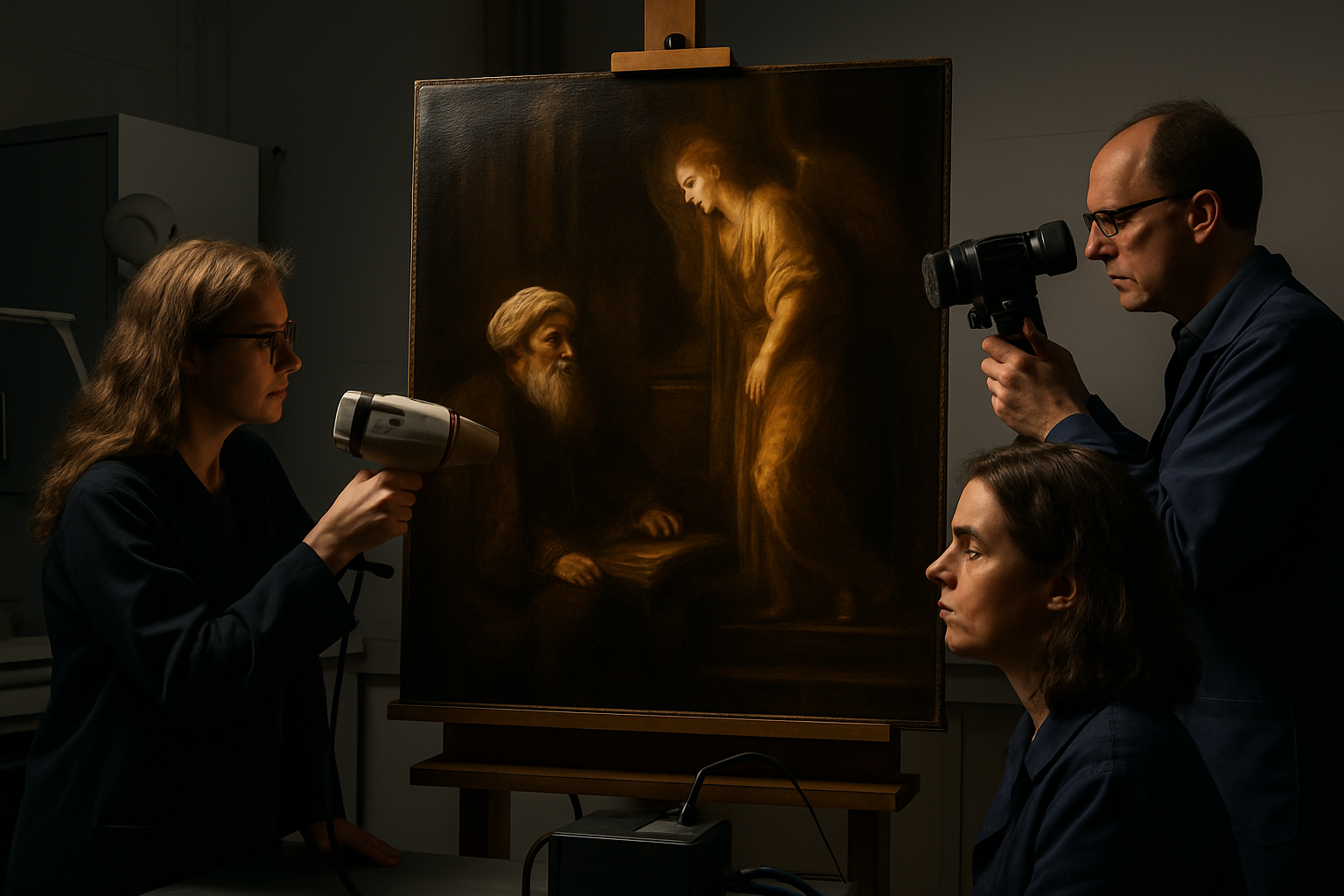
A Rembrandt painting that disappeared from scholarly recognition for 65 years has been dramatically authenticated by the Rijksmuseum Amsterdam, representing one of the most significant art historical rediscoveries of the 21st century.
"Vision of Zechariah in the Temple," dating from 1633 during Rembrandt's peak Amsterdam period, had been dismissed from the Dutch master's official catalogue in 1960 due to conservative mid-20th century attribution practices. The painting subsequently vanished into private ownership, only to resurface when its current owners delivered it to the Rijksmuseum for comprehensive analysis.
Advanced Technology Reveals Hidden Truth
The authentication breakthrough relied on sophisticated analytical techniques unavailable to scholars in the 1960s. Museum conservators employed X-ray fluorescence spectroscopy, infrared reflectography, and dendrochronological analysis to build an irrefutable case for the work's authenticity.
The scientific investigation revealed characteristic Rembrandt materials including expensive ultramarine blue and vermillion pigments, while canvas weave patterns and ground layer composition supported the attribution. Perhaps most compelling were the pentimenti—visible changes made by the artist during the painting process—which provided unique insight into Rembrandt's creative development.
"When I saw this painting in our conservation laboratory, the quality and technique immediately suggested we were looking at something extraordinary. The scientific analysis confirmed what our eyes told us—this is genuine Rembrandt."
— Senior Curator, Rijksmuseum Amsterdam
Biblical Subject Matter and Historical Context
The painting depicts the biblical scene of priest Zechariah receiving a divine vision in the Temple of Jerusalem, a subject that allowed Rembrandt to demonstrate his mastery of dramatic lighting and psychological depth. Created in 1633, the work represents the artist at the height of his powers during his most productive Amsterdam period.
The dismissal of the painting in 1960 reflected broader trends in art historical scholarship during the post-World War II period, when increased skepticism about attributions lacking extensive documentation led to the rejection of numerous works that are now being reconsidered through modern analytical methods.
The Renaissance of Rediscovery
This authentication is part of what scholars are calling the "renaissance of rediscovery"—a growing movement where advanced scientific techniques are rehabilitating artworks previously dismissed by earlier generations of art historians. Museums worldwide are investing in technological infrastructure for collection analysis, creating new opportunities to reconsider works that fell victim to overly conservative attribution practices.
The success demonstrates the evolving methodology of art historical scholarship, which now combines traditional connoisseurship with scientific analysis to reach more definitive conclusions. This hybrid approach has proven particularly effective for works from periods where documentation may be incomplete or lost.
Global Cultural Context
The rediscovery occurs within what has been documented as the "February 2026 Cultural Renaissance," a period of unprecedented global activity in cultural preservation and artistic collaboration. From Egypt's artifact repatriations to Singapore's heritage education initiatives, institutions worldwide are embracing technological innovation while maintaining authentic cultural expression.
The collaboration between private collectors and museums that enabled this discovery has become a template for other institutions conducting similar investigations. Rather than viewing private ownership as an obstacle to scholarship, the art world is increasingly recognizing how constructive partnerships can advance both research and public understanding.
Implications for Art Historical Scholarship
The authentication raises important questions about other dismissed works that may deserve reconsideration. The dynamic nature of art historical knowledge—evolving as new evidence emerges—challenges static notions of artistic canons and suggests that our understanding of major artists' outputs remains fluid and subject to revision.
Museums that previously avoided acquiring works not included in official catalogues may now be more willing to take calculated risks on pieces that show promise under scientific analysis, potentially leading to more discoveries in coming years.
Economic and Cultural Impact
Beyond its scholarly significance, the rediscovery has substantial economic implications. Authentic Rembrandt works command tens of millions of dollars at auction, but more importantly, the painting's authentication adds to our understanding of one of history's greatest artists during his most creative period.
The painting will be displayed publicly for the first time in 65 years, allowing visitors to experience a newly recovered masterpiece that represents not just artistic achievement, but the triumph of modern scientific methods in service of cultural heritage preservation.
"This rediscovery demonstrates that our understanding of art history is not fixed. New technologies allow us to correct past mistakes and recover lost chapters in the story of human creativity."
— International Art Historical Society
Looking Forward
The success of "Vision of Zechariah in the Temple" authentication establishes new standards for art historical investigation, proving that collaboration between traditional scholarship, advanced technology, and institutional resources can yield extraordinary results. As other museums adopt similar approaches, the coming years may witness additional rediscoveries that reshape our understanding of artistic heritage.
This remarkable resurrection of a lost masterpiece serves as a powerful reminder that cultural treasures sometimes hide in plain sight, waiting for the right combination of expertise, technology, and opportunity to reclaim their rightful place in art history.