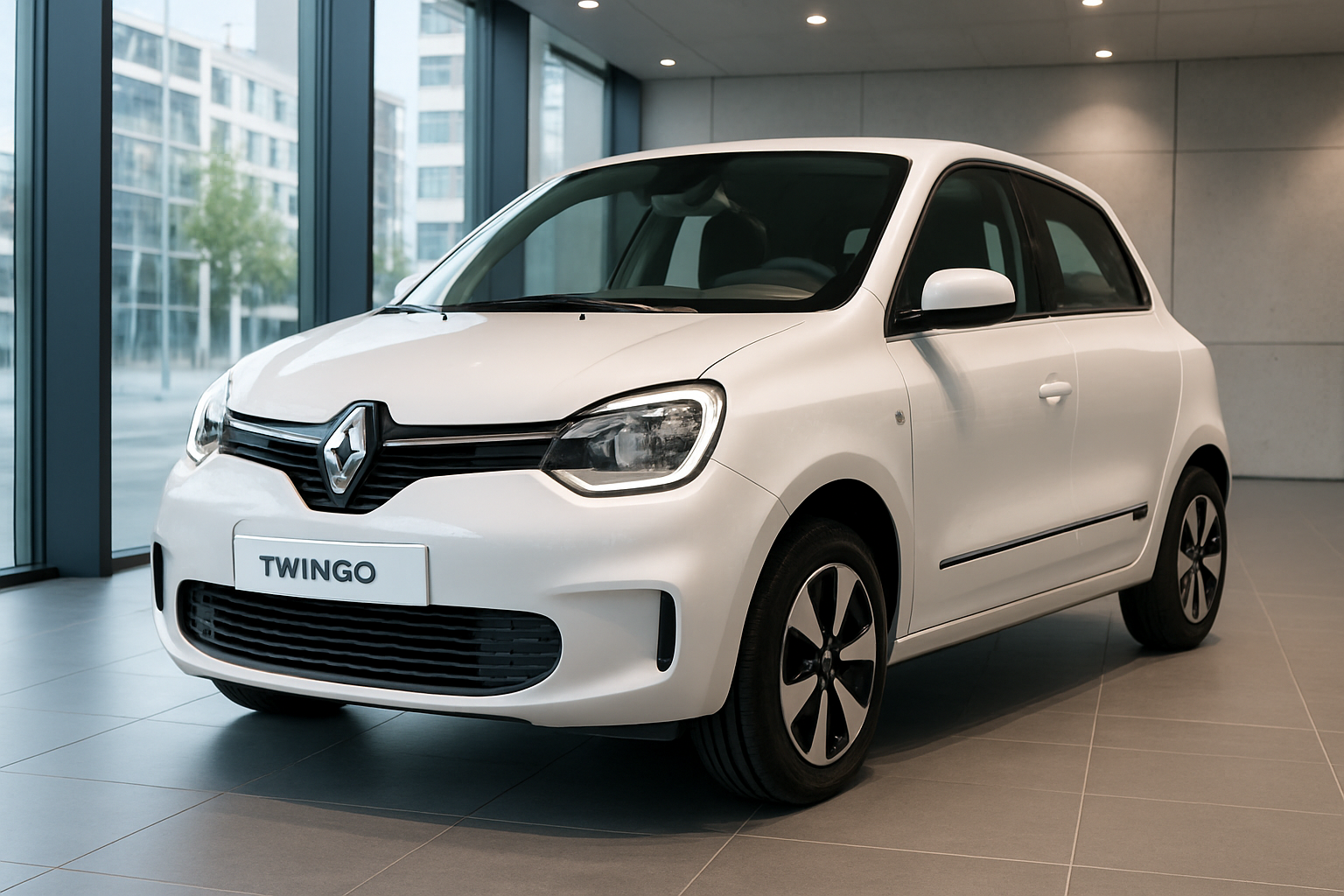
Renault has officially launched the fourth generation of its popular Twingo as an exclusively electric vehicle, the Twingo E-Tech, priced at €20,000, positioning the French automaker at the forefront of affordable electric mobility in Europe's increasingly competitive small car market.
The new Twingo E-Tech represents a fundamental shift for Renault's entry-level offering, abandoning traditional combustion engines entirely in favor of battery-electric propulsion. This strategic decision aligns with broader European automotive industry trends toward electrification, driven by increasingly stringent environmental regulations and growing consumer demand for sustainable transportation solutions.
Strategic Positioning in Electric Vehicle Market
At €20,000, the Twingo E-Tech positions itself as one of the most accessible electric vehicles in the European market, directly competing with emerging Chinese manufacturers who have been "flooding Europe" with competitively priced electric models. This pricing strategy reflects Renault's recognition that affordability remains the primary barrier to mass EV adoption, particularly in urban environments where the Twingo's compact dimensions excel.
The launch comes at a critical moment for the European automotive industry, which faces unprecedented pressure from Chinese competitors achieving technological breakthroughs like BYD's Megawatt Flash Charging system (1,360 kW, enabling 400km range in 5 minutes) and advanced cold-weather battery technologies. European manufacturers including Volkswagen and Stellantis have intensified calls for Brussels to provide financial incentives supporting domestic EV production amid this competitive pressure.
Technical Specifications and Urban Focus
As suggested by its name, the Twingo E-Tech is available exclusively with battery-electric drive, representing Renault's commitment to electrifying its smallest vehicle segment. The compact city car maintains the Twingo's traditional strengths in urban maneuverability while incorporating modern electric vehicle technology designed for daily commuting and short-distance travel.
The vehicle targets urban consumers who face unique EV adoption challenges, particularly apartment dwellers who lack home charging access. This demographic represents a significant portion of potential EV buyers in European cities, where the Twingo's compact dimensions and electric powertrain offer advantages in congested urban environments and increasingly restricted city centers.
Market Context and Industry Transformation
The Twingo E-Tech launch occurs amid the most significant automotive industry transformation in over a century, characterized by supply chain challenges including memory chip shortages driving sixfold price increases and China's control of 60% global critical materials production and 90% refining capacity for lithium, cobalt, and rare earth elements.
"The automotive industry is experiencing unprecedented change, and affordable electric vehicles like the Twingo E-Tech are essential for democratizing sustainable mobility."
— Industry Analysis, European Automotive Sector
European consumers increasingly view electric vehicles favorably due to superior family travel experiences including quieter cabins, better climate control, and reduced vibration compared to traditional engines. However, range anxiety and charging infrastructure availability remain concerns, particularly for smaller, more affordable EVs targeting price-conscious consumers.
Infrastructure and Policy Support
The Twingo E-Tech benefits from rapidly expanding European charging infrastructure, with Austria adding 1,000 additional stations and Estonia maintaining leadership with 88% renewable electricity and continental Europe's largest battery storage capacity serving 90,000 households. This infrastructure development addresses urban-rural adoption disparities where homeowners and rural residents have charging advantages while city dwellers face barriers despite higher EV interest.
Recent battery longevity studies exceed predictions, with Tesla Model S vehicles (2012-2014) retaining 85-92% capacity after 200,000+ miles and Nissan Leaf models (2011-2013) showing 75-85% retention after a decade, suggesting 15-20 year practical lifespans that support robust used EV markets and improve total cost of ownership calculations.
Competitive Landscape and Global Implications
The €20,000 price point places the Twingo E-Tech in direct competition with Chinese manufacturers who have achieved remarkable cost reductions through vertical integration and government support. This pricing reflects European manufacturers' recognition that competing solely on brand heritage and traditional quality advantages is insufficient against technologically advanced, price-competitive alternatives from Asia.
Regional manufacturing strategies are emerging as automakers establish EV production closer to primary markets, reducing transportation costs and supply chain vulnerabilities while improving responsiveness to local requirements. Renault's approach with the Twingo E-Tech demonstrates how traditional European manufacturers can leverage their understanding of local consumer preferences and regulatory environments.
Climate Urgency and Market Transformation
The launch occurs as January 2026 marked the 18th consecutive month exceeding 1.5°C pre-industrial levels, emphasizing transportation electrification urgency during what climate scientists term the "decisive climate action decade." Vehicle-to-grid technology advancement enables EVs to serve as mobile energy storage, charging during off-peak renewable generation and discharging during high demand periods.
Commercial vehicle electrification is accelerating alongside passenger cars, with Tesla announcing large-scale Semi truck production and BMW beginning electric 3 Series production at its Munich facility. This broader transformation creates momentum for affordable vehicles like the Twingo E-Tech as charging infrastructure and consumer acceptance reach critical mass.
Economic and Social Impact
Price competitiveness is improving as EVs achieve cost parity when total ownership costs are considered, though higher upfront prices remain barriers for many consumers. The Twingo E-Tech's €20,000 pricing addresses this challenge directly, potentially accelerating EV adoption among price-sensitive segments historically excluded from electric mobility.
Urban planning increasingly favors electric vehicles through low-emission zones, preferential parking, and congestion charge exemptions. These policy advantages complement the Twingo's urban focus, creating additional value propositions beyond environmental benefits and operating cost savings.
Future Outlook and Industry Implications
The Twingo E-Tech represents more than a single model launch—it signals Renault's commitment to democratizing electric mobility through affordable, practical vehicles designed for real-world urban transportation needs. Success could establish templates for other European manufacturers seeking to compete with Chinese alternatives while maintaining profitability.
Industry transformation requires coordination across energy systems, infrastructure development, materials supply chains, and regulatory frameworks. The Twingo E-Tech's market reception will provide crucial data about European consumer willingness to embrace affordable electric vehicles when supported by appropriate pricing, infrastructure, and policy frameworks.
As the automotive sector navigates this unprecedented transformation, vehicles like the Twingo E-Tech demonstrate how traditional manufacturers can adapt their core competencies—understanding local markets, regulatory compliance, and consumer preferences—to compete effectively in an increasingly electrified, globally competitive automotive landscape that will define transportation for decades to come.