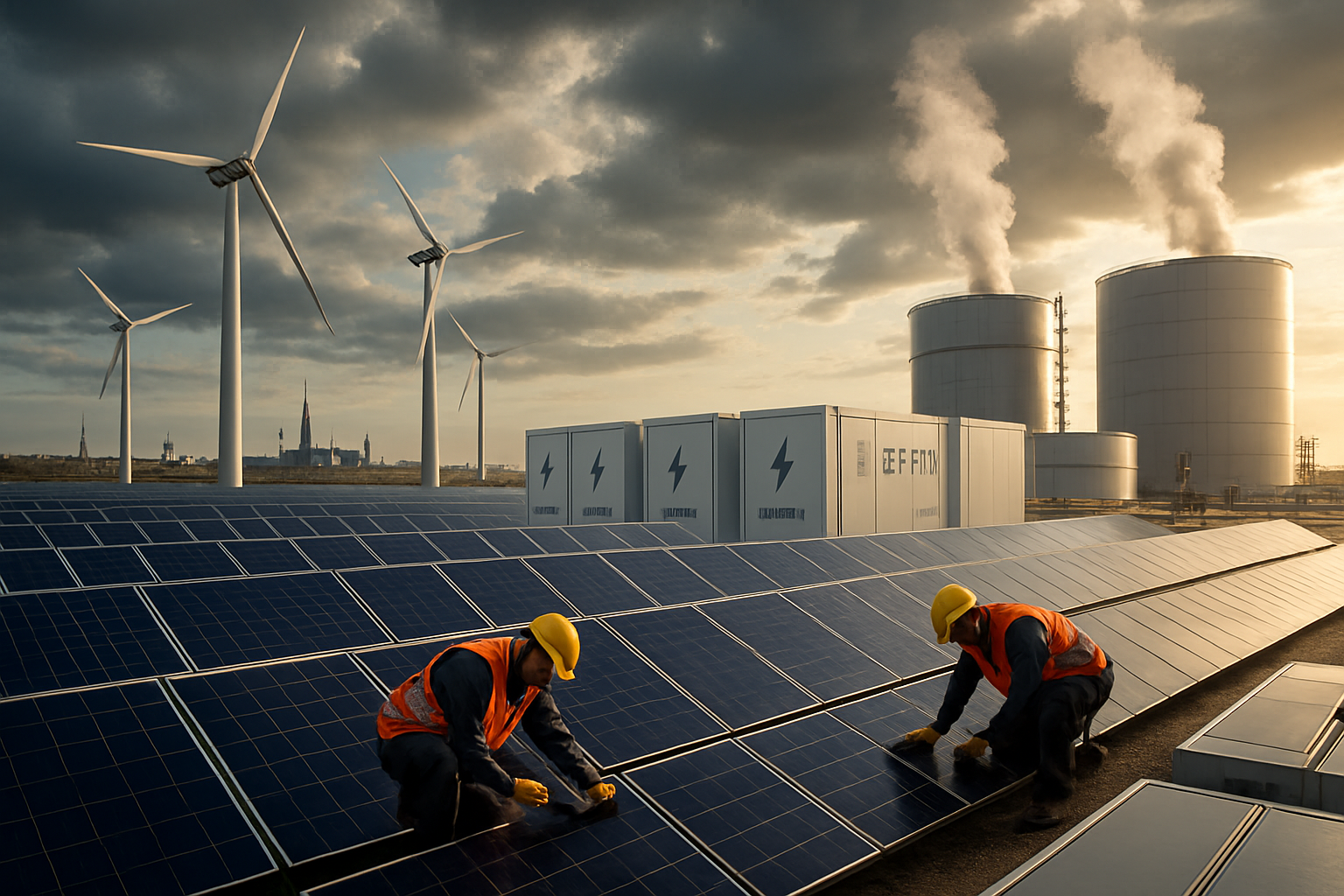
A global surge in renewable energy infrastructure development is accelerating across multiple continents, with Australia fast-tracking over $9 billion in solar, wind, and battery projects within just two years, while Estonia has opened the largest heat storage facility in the Baltic region, signaling unprecedented momentum in the global transition to clean energy.
The developments, spanning from Australia's sweeping planning reforms to Estonia's cutting-edge thermal storage technology and Guatemala's competitive energy procurement processes, demonstrate the diverse approaches nations are taking to build resilient, sustainable energy systems amid growing climate urgency and supply chain challenges.
Australia's Renewable Revolution Accelerates
Australia's renewable energy sector has experienced dramatic expansion through the deployment of sweeping planning powers that have successfully pushed through a comprehensive portfolio of solar, wind, and battery projects valued at more than $9 billion over just two years. The fast-track approval process has emerged as a model for overcoming traditional regulatory bottlenecks that have historically delayed critical clean energy infrastructure development.
The Australian approach represents a strategic shift toward streamlined environmental and planning approvals, enabling developers to rapidly deploy utility-scale renewable projects across the continent. This acceleration comes at a critical time when Australia seeks to diversify its energy mix and reduce dependence on fossil fuel exports, while meeting increasing domestic electricity demand and international climate commitments.
Industry experts highlight that the success of Australia's fast-track mechanism demonstrates how regulatory innovation can unlock massive private investment in renewable infrastructure, creating thousands of jobs while positioning the country as a regional clean energy leader. The projects span multiple technologies, including large-scale solar farms, offshore and onshore wind installations, and advanced battery energy storage systems designed to provide grid stability and backup power during peak demand periods.
Estonia's Thermal Innovation Leadership
In a parallel development showcasing technological innovation in renewable energy infrastructure, Estonia has inaugurated the largest heat storage facility in the Baltic region at the Väo energy complex in Tallinn, operated by Utilitas. This groundbreaking facility represents a significant advancement in thermal energy storage technology, capable of storing and distributing heat to meet demand during peak periods while improving overall energy efficiency.
The Estonian facility addresses one of the most challenging aspects of renewable energy integration: intermittency management. By storing excess thermal energy during periods of low demand and releasing it when needed, the system provides crucial grid stability while supporting the country's ambitious renewable energy targets. The technology is particularly valuable in Nordic climates where heating demand remains high throughout extended winter periods.
According to historical context from recent energy developments, Estonia has been at the forefront of Baltic energy innovation, having previously opened continental Europe's largest battery storage facility serving 90,000 households. The new heat storage facility builds on this foundation, demonstrating Estonia's commitment to comprehensive energy storage solutions that combine electrical and thermal technologies for maximum efficiency and resilience.
Guatemala's Competitive Energy Market
Meanwhile, in Central America, Guatemala is experiencing unprecedented interest in its energy sector, with 43 companies acquiring bidding documents for the PEG 5 electricity procurement process. The tender seeks to contract 1,550 megawatts of electricity generation capacity, representing a substantial expansion of the country's power infrastructure and reflecting strong international confidence in Guatemala's energy market.
The competitive bidding process, scheduled for completion within days of the acquisition period closing, has attracted diverse participants ranging from international renewable energy developers to regional power companies. This level of interest indicates the growing attractiveness of Central American energy markets for private investment, supported by improving regulatory frameworks and increasing electricity demand from economic growth.
However, the process has also generated concerns within the energy sector regarding technical requirements, financial guarantees, and implementation timelines. Industry stakeholders emphasize the importance of transparent evaluation criteria and realistic project development schedules to ensure successful project completion and grid integration.
Global Context and Supply Chain Challenges
These renewable energy infrastructure developments occur within the broader context of unprecedented global energy transition acceleration, despite significant supply chain vulnerabilities. Recent analysis from EU auditors highlights critical concerns about materials shortages, with China controlling 60% of global production and 90% of refining capacity for lithium, cobalt, and rare earth elements essential for renewable energy technologies.
The supply chain challenges have prompted international cooperation initiatives, including the US-EU-Japan Critical Minerals Strategic Partnership involving 55 countries, aimed at diversifying sources of critical materials and reducing dependency on single suppliers. Alternative supply sources are being developed across Africa, with countries including Angola, DRC, Guinea, Kenya, Morocco, Sierra Leone, and Zambia participating as key suppliers.
Memory price increases of sixfold have affected major technology companies including Samsung, SK Hynix, and Micron, with shortages expected to continue until 2027. These constraints underscore the importance of strategic planning and resource management in renewable energy infrastructure development.
International Cooperation and Technology Transfer
The current wave of renewable energy infrastructure development is characterized by extensive international cooperation and technology transfer initiatives. Recent projects have demonstrated successful partnerships between developed and developing nations, enabling knowledge sharing and financial support for clean energy deployment.
Examples include Romania's €58.5 million wind farm financing through international banking partnerships, India's ₹50,000 crore energy infrastructure investment, and various African nations implementing large-scale solar and wind projects with international technical assistance. These collaborations provide essential funding mechanisms while building local capacity for renewable energy project management and maintenance.
The Estonian heat storage facility, for instance, incorporates advanced European technologies and engineering expertise, while Australia's fast-track projects benefit from international investment and supply chain partnerships. Guatemala's competitive procurement process attracts global developers with diverse technological approaches and financing capabilities.
Climate Urgency Drives Acceleration
The acceleration in renewable energy infrastructure development comes amid growing climate urgency, with January 2026 recorded as the hottest month in global history, marking 18 of the past 19 months exceeding 1.5°C above pre-industrial levels. This sustained warming trend, occurring despite La Niña conditions that should provide cooling effects, demonstrates that climate change is now overriding natural climate variability.
The extreme weather events accompanying this warming trend, including severe winter conditions in Europe causing Estonia to set new electricity consumption records, massive blackouts in Cuba, and unprecedented temperature swings affecting infrastructure resilience, highlight the critical importance of robust, diversified energy systems capable of meeting demand under extreme conditions.
Emergency responses to these events have reinforced the value of energy storage technologies like those pioneered in Estonia, while Australia's rapid renewable deployment provides models for quickly scaling clean energy capacity to meet both climate goals and energy security requirements.
Economic Multiplier Effects
The economic implications of this renewable energy infrastructure surge extend far beyond direct energy generation benefits. Australia's $9 billion investment creates substantial employment opportunities in manufacturing, construction, maintenance, and related services sectors, while building long-term economic competitiveness through reduced energy costs and enhanced energy independence.
Estonia's thermal storage innovation positions the country as a technology leader in advanced energy systems, creating export opportunities for engineering expertise and equipment while attracting international research and development partnerships. The facility supports broader economic development by ensuring reliable, efficient heating systems for industrial and residential customers.
Guatemala's procurement process, meanwhile, represents significant foreign direct investment potential, with successful bidders committing to long-term infrastructure development that supports broader economic growth through reliable electricity supply and job creation in rural areas where many projects are located.
Future Outlook and Scaling Challenges
Despite the positive momentum demonstrated by these developments, significant challenges remain in scaling renewable energy infrastructure to meet global climate targets. Technical challenges include grid integration of variable renewable sources, energy storage technology costs, and transmission infrastructure requirements for connecting remote renewable resources to population centers.
Financial challenges encompass the massive capital requirements for global energy transition, estimated at multiple trillions of dollars annually, along with ensuring access to concessional financing for developing countries. Regulatory challenges involve coordinating standards across international borders, managing trade disputes over clean energy equipment, and maintaining political support for long-term infrastructure investments.
Success in overcoming these challenges requires continued innovation in technology and financing mechanisms, sustained international cooperation, and adaptive policy frameworks that can respond to rapidly evolving energy technologies and market conditions. The projects highlighted in Australia, Estonia, and Guatemala provide important models for different aspects of this complex global transformation.
As the renewable energy infrastructure surge continues to accelerate, the experiences of these pioneering projects will provide valuable lessons for scaling clean energy deployment worldwide, contributing to the urgent goal of limiting global warming while building more resilient, sustainable energy systems for the future.