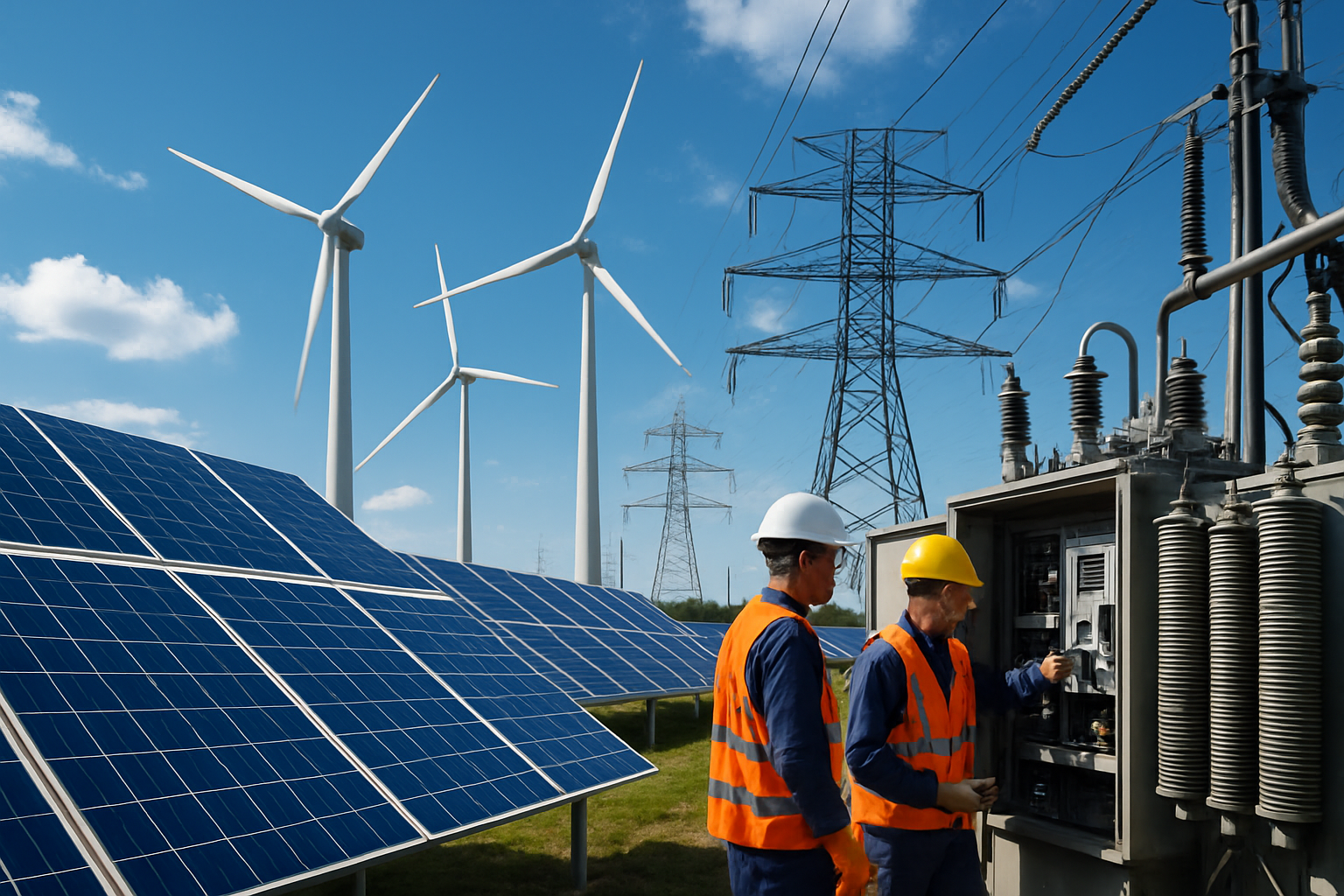
European nations are accelerating grid modernization investments to support renewable energy expansion, with Slovenia approving nearly €59 million in power grid upgrades while Canada engages in critical policy discussions to advance clean energy development across North America.
The Slovenian government's approval of six major grid upgrade projects represents a strategic commitment to energy transition infrastructure, with contracts signed on March 9th backing initiatives co-financed by the European Union's Modernisation Fund. The total investment package reaches €174 million, demonstrating the scale of transformation required to accommodate the rapid expansion of renewable power sources.
Strategic Grid Investment Positions Slovenia for Energy Transition
Slovenia's comprehensive approach addresses critical infrastructure bottlenecks that have historically limited renewable energy integration. National transmission operator ELES and regional distribution companies will implement projects designed to strengthen network capacity and reliability while facilitating easier connections for new renewable energy sources.
"Energy transition in reality begins with the grid," Energy Minister Bojan Kumer emphasized, highlighting how these investments will enable faster renewable energy integration while improving supply security across the nation. The projects encompass both urban and industrial network upgrades, targeting areas where energy demand is growing most rapidly.
The initiative reflects broader European recognition that aging electrical infrastructure represents one of the most significant barriers to renewable energy deployment. Grid modernization enables variable renewable sources like solar and wind to provide stable electricity supply through advanced monitoring and automated control systems.
Canadian Policy Framework Addresses Renewable Development Obstacles
Simultaneously, Canada is engaging in crucial policy discussions to accelerate renewable energy development, with the Pembina Institute advocating for comprehensive removal of regulatory obstacles that currently impede clean energy projects. The organization emphasizes that addressing these barriers must factor into ongoing negotiations around electricity emissions policy between Alberta and Ottawa.
The policy discussions come at a critical time when renewable energy projects across Canada face complex approval processes and interconnection challenges similar to those Slovenia is addressing through its grid modernization program. Solar and wind power projects require streamlined regulatory frameworks and enhanced grid infrastructure to reach their full potential.
Canadian energy analysts note that removing development obstacles would deliver superior climate results compared to alternative approaches such as carbon capture and storage, positioning renewables as the most effective pathway toward national emission reduction targets.
Global Context: Supply Chain Challenges and Climate Urgency
These developments occur against the backdrop of unprecedented global climate urgency, with January 2026 marking the 18th consecutive month of global temperatures exceeding 1.5°C above pre-industrial levels. This sustained warming pattern demonstrates that human-induced climate change is now overriding natural climate variability, creating additional pressure for rapid clean energy deployment.
The renewable energy sector continues facing supply chain vulnerabilities, with China controlling 60% of global production and 90% of refining capacity for critical materials including lithium, cobalt, and rare earth elements essential for solar panels, wind turbines, and battery storage systems. The US-EU-Japan Critical Minerals Partnership, involving 55 countries, represents a coordinated response to these dependencies through diversified supply chains and alternative supplier development.
Memory chip shortages have created additional challenges for renewable energy systems, with prices increasing sixfold and shortages expected to continue until 2027 when new fabrication facilities come online. These components are crucial for the smart grid management and automated control systems that enable effective renewable energy integration.
European Leadership in Renewable Infrastructure
Slovenia's grid investment joins a broader pattern of European renewable energy leadership. Estonia operates continental Europe's largest battery storage facility with capacity serving 90,000 households, while achieving 88% renewable electricity production in 2024. Austria has similarly reached exceptional renewable energy integration levels, demonstrating viable pathways toward carbon neutrality.
The European Parliament's approval of a historic 90% emissions reduction target by 2040 provides the policy framework driving these infrastructure investments. The legislation includes flexibility mechanisms such as international carbon credits and forest-based emissions compensation, allowing member states greater implementation flexibility while maintaining ambitious climate targets.
Hungary's advancement of the Paks II nuclear construction project, representing Europe's largest atomic energy investment at €39.1 billion, demonstrates how countries are pursuing diverse clean energy strategies. The integration of nuclear baseload power with variable renewables offers a comprehensive approach to carbon-free electricity generation.
Technology Integration and Smart Grid Development
Modern renewable energy infrastructure incorporates sophisticated technology integration from the design phase. Digital monitoring, real-time analytics, predictive maintenance, and automated operations have become standard requirements rather than optional upgrades. These systems enable precise environmental and economic benefit measurement crucial for policy development and investment decisions.
The evolution from basic infrastructure to complex integrated systems supporting economic and social development reflects the maturation of renewable energy technology. AI-powered systems, cybersecurity measures, and network redundancy are now fundamental design elements ensuring grid stability while managing the intermittency challenges associated with solar and wind power.
Slovenia's grid modernization projects exemplify this technological sophistication, incorporating weather-resistant materials, enhanced drainage systems, and backup capabilities designed specifically for extreme weather events that are becoming more frequent due to climate change.
Economic Multiplier Effects and Employment Creation
The renewable energy transition generates significant economic multiplier effects beyond direct infrastructure investment. Digital infrastructure typically produces $3-4 in economic returns per dollar invested over a decade, while renewable energy projects create both immediate construction employment and permanent operational positions.
Regional integration benefits emerge through cross-border connectivity, enabling energy trading and disaster resilience cooperation. Slovenia's strategic position in Central Europe positions it as a potential regional energy hub, with grid upgrades facilitating electricity exports to neighboring countries during periods of excess renewable generation.
The employment implications extend across multiple sectors, from manufacturing and engineering to maintenance and environmental services. These positions often offer higher wages and greater job security compared to traditional energy sector employment, contributing to broader economic development goals.
Implementation Challenges and Adaptive Management
Despite significant progress, renewable energy deployment faces persistent implementation challenges requiring adaptive management approaches. Sustained political commitment across electoral cycles remains crucial, as energy infrastructure projects typically require decades to fully realize their benefits.
Technical capacity building demands specialized skills that are currently in short supply globally. Training programs for grid management, renewable energy maintenance, and smart system operation need rapid scaling to meet growing demand for qualified technicians and engineers.
Climate change adds complexity by disrupting project timelines and requiring infrastructure designs that can withstand increasingly severe weather conditions. The success of initiatives like Slovenia's grid modernization depends on flexible project management that can adapt to rapidly changing environmental conditions.
International Cooperation and Knowledge Sharing
Effective renewable energy transition requires enhanced international cooperation and knowledge sharing between nations facing similar challenges. Slovenia's EU Modernisation Fund co-financing demonstrates how multilateral approaches can leverage diverse expertise, financing sources, and technological capabilities more effectively than purely national initiatives.
The US-EU-Japan Critical Minerals Partnership exemplifies the type of coordinated response needed to address supply chain vulnerabilities while building resilient renewable energy sectors. Seven African nations participating as alternative suppliers illustrate how developing countries can become strategic partners rather than aid recipients in the global energy transition.
South-South cooperation is expanding rapidly, with developing nations emerging as environmental solution providers leveraging indigenous knowledge, abundant renewable resources, and innovative governance approaches. This evolution challenges traditional North-South development paradigms and creates more diverse pathways for achieving global climate targets.
Future Trajectory and Strategic Implications
The convergence of grid modernization initiatives like Slovenia's with policy reform discussions in Canada represents a critical juncture in global renewable energy development. The success or failure of these coordinated efforts will significantly influence energy policy approaches worldwide for decades to come.
Window for effective climate action continues narrowing, but the sophisticated technological advancement and international cooperation demonstrated by current renewable energy initiatives offer genuine hope for achieving planetary sustainability goals. The combination of infrastructure investment, policy innovation, and international partnership creates conditions for accelerating clean energy deployment at the scale required by climate science.
As Slovenia's Energy Minister Kumer noted, energy transition truly begins with the grid. The €59 million investment in Slovenian infrastructure, combined with similar initiatives across Europe and policy reforms in North America, establishes the foundation for a comprehensive renewable energy transformation that could serve as a template for global climate action during this decisive decade.