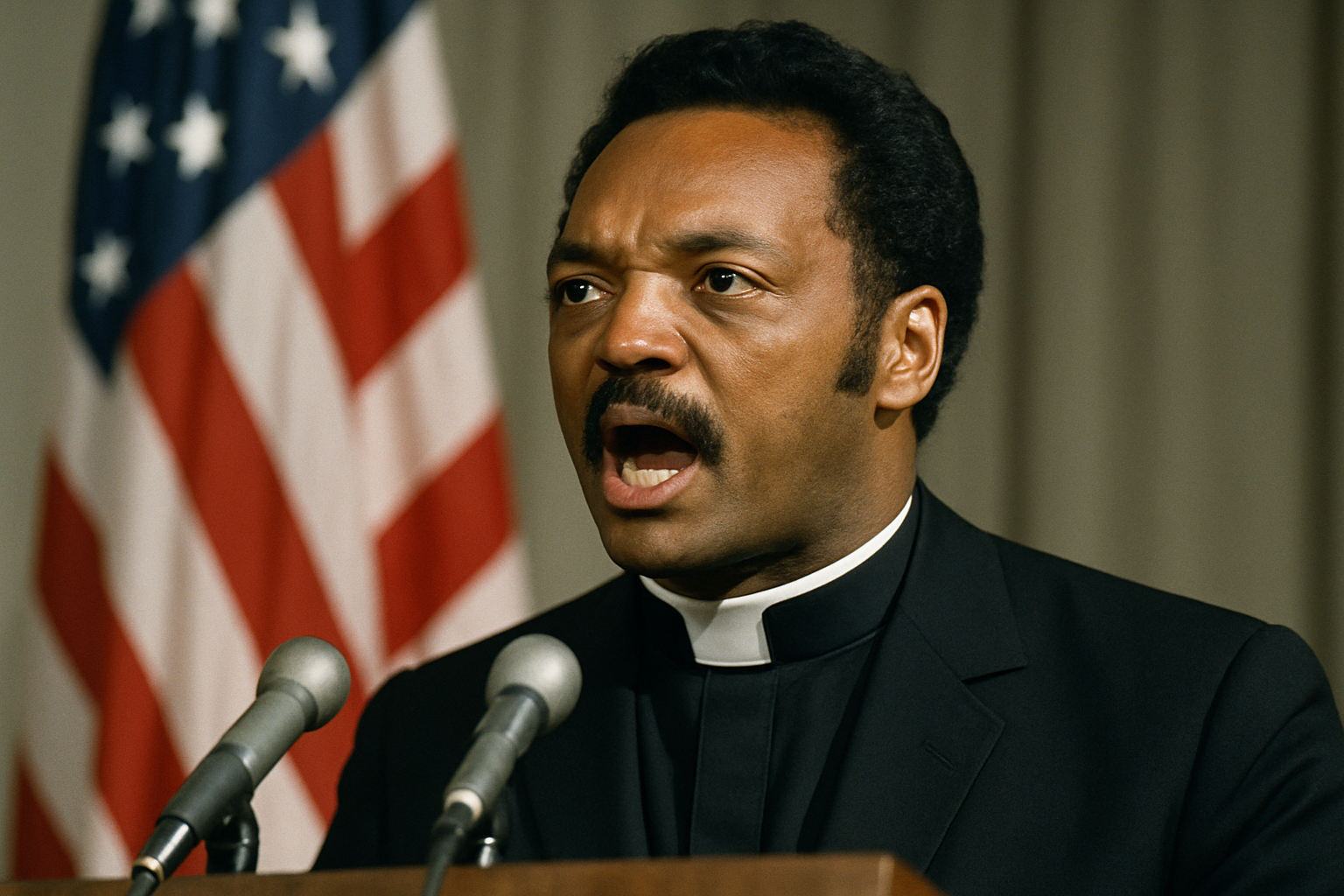
Reverend Jesse Louis Jackson, the towering civil rights leader and two-time presidential candidate who became a global symbol of the fight for equality and justice, died peacefully on Tuesday morning at age 84, surrounded by his family at their Chicago-area home.
The family announced Jackson's passing in a statement, describing him as "a servant leader - not only to our family, but to the oppressed, voiceless, and overlooked around the world." He had been hospitalized in recent months under observation for progressive supranuclear palsy (PSP), a rare neurological condition that affects movement and balance.
Jackson's death marks the end of an extraordinary six-decade career that transformed American politics and civil rights, from his early days as a protégé of Dr. Martin Luther King Jr. to becoming the first African American to mount serious campaigns for the presidency.
From King's Circle to National Leadership
Born October 8, 1941, in Greenville, South Carolina, Jackson rose from humble beginnings in the segregated South to become one of America's most influential civil rights leaders. He was present at the Lorraine Motel in Memphis on April 4, 1968, when Dr. King was assassinated, a moment that would define his life's mission.
At just 26 years old, Jackson emerged as a national leader following King's death, founding Operation PUSH (People United to Save Humanity) in 1971 and later the Rainbow Coalition in 1984. His organizations became powerful forces for economic empowerment, voting rights, and social justice in American communities.
"Suffering breeds character. Character breeds faith. In the end, faith will not disappoint."
— Jesse Jackson
Historic Presidential Campaigns
Jackson made history as the first African American to mount serious campaigns for the Democratic presidential nomination in 1984 and 1988. His Rainbow Coalition united diverse groups - African Americans, Hispanics, Native Americans, Asian Americans, and white progressives - in a groundbreaking approach to coalition politics.
In his 1988 campaign, Jackson won 13 primaries and caucuses, finishing second to Michael Dukakis for the nomination. His electrifying speech at the 1988 Democratic National Convention in Atlanta, where he delivered his famous "Keep Hope Alive" message, remains one of the most powerful moments in American political history.
"When I look out at this convention, I see the face of America - red, yellow, brown, black and white," Jackson declared, articulating a vision of American diversity that would influence politics for decades to come.
Master Orator and Global Mediator
Beyond his domestic civil rights work, Jackson became a respected international mediator and advocate for human rights worldwide. He successfully negotiated the release of American prisoners in Syria in 1984 and Yugoslavia in 1999, demonstrating his diplomatic skills on the global stage.
Jackson was known for his rhythmic speaking style and powerful oratory, with phrases like "I am somebody" and "Keep hope alive" becoming rallying cries for the dispossessed. His speeches combined Baptist preaching traditions with political activism, inspiring millions around the world.
Later Years and Health Struggles
In 2017, Jackson was diagnosed with Parkinson's disease, but he remained active in civil rights causes well into his 80s. He continued to advocate for voting rights, economic justice, and police reform, adapting his message for new generations of activists.
His son, Jesse Jackson Jr., served in Congress from 1995 to 2012, continuing the family's tradition of public service. Jackson is survived by his wife Jacqueline Brown Jackson, with whom he shared more than 50 years of marriage, five children, and numerous grandchildren.
International Recognition and Legacy
Jackson's influence extended far beyond American borders. He traveled to South Africa during apartheid, met with Nelson Mandela, and advocated for international human rights throughout his career. In 2021, France awarded him the Légion d'honneur, the country's highest order of merit, in recognition of his lifetime of activism.
International tributes poured in following news of his death. European leaders, Asian officials, and African dignitaries recognized Jackson's global impact on human rights and social justice. UK Member of Parliament Diane Abbott called him "a direct connection to the great era of civil rights."
Political Impact and Obama's Path
Political historians widely credit Jackson with making Barack Obama's presidency possible by proving that a Black candidate could compete at the highest levels of American politics. His Rainbow Coalition strategies influenced progressive politics for decades, demonstrating the power of diverse coalitions in American democracy.
Jackson kept issues of poverty, inequality, and racial injustice in the public consciousness throughout his career, refusing to let America forget its unfinished business on civil rights. His campaigns opened doors and changed perceptions about Black political leadership in America.
Family Statement and Final Tributes
The Jackson family emphasized his unwavering commitment to justice in their statement: "His unwavering commitment to justice, equality, and human rights helped shape a global movement for freedom and dignity. Our father was a servant leader who believed in the power of love to overcome hatred and division."
President Trump, despite past conflicts, called Jackson "a good man" who "loved people." Democratic leaders across the country praised his contributions to American democracy and civil rights progress.
"His legacy will live on in every person who believes that change is possible, that justice will prevail, and that we must never stop fighting for what is right."
— Jackson Family Statement
Memorial Services and National Mourning
Memorial services are being planned in Chicago, where Jackson spent much of his career, and in South Carolina, his birthplace. The events are expected to draw thousands of mourners, including civil rights leaders, politicians, and ordinary Americans whose lives were touched by Jackson's message of hope and equality.
Jackson's death comes at a time of renewed focus on civil rights and racial justice in America, making his passing particularly poignant for those continuing the struggle he helped lead for more than half a century.
A Legacy That Endures
As the last major surviving civil rights leader from the King era, Jackson's death truly marks the end of a historic chapter in American civil rights. His life spanned from the segregated South of his youth to the election of America's first Black president, a transformation he helped make possible.
His famous words continue to resonate: "When I look out at this convention, I see the face of America - red, yellow, brown, black and white." That vision of an inclusive, diverse America remains his most enduring contribution to the nation's ongoing struggle for equality and justice.
The Reverend Jesse Louis Jackson leaves behind a legacy of courage, persistence, and unwavering faith in the possibility of change. His voice may be silenced, but his message lives on in the countless lives he touched and the movements he inspired around the world.