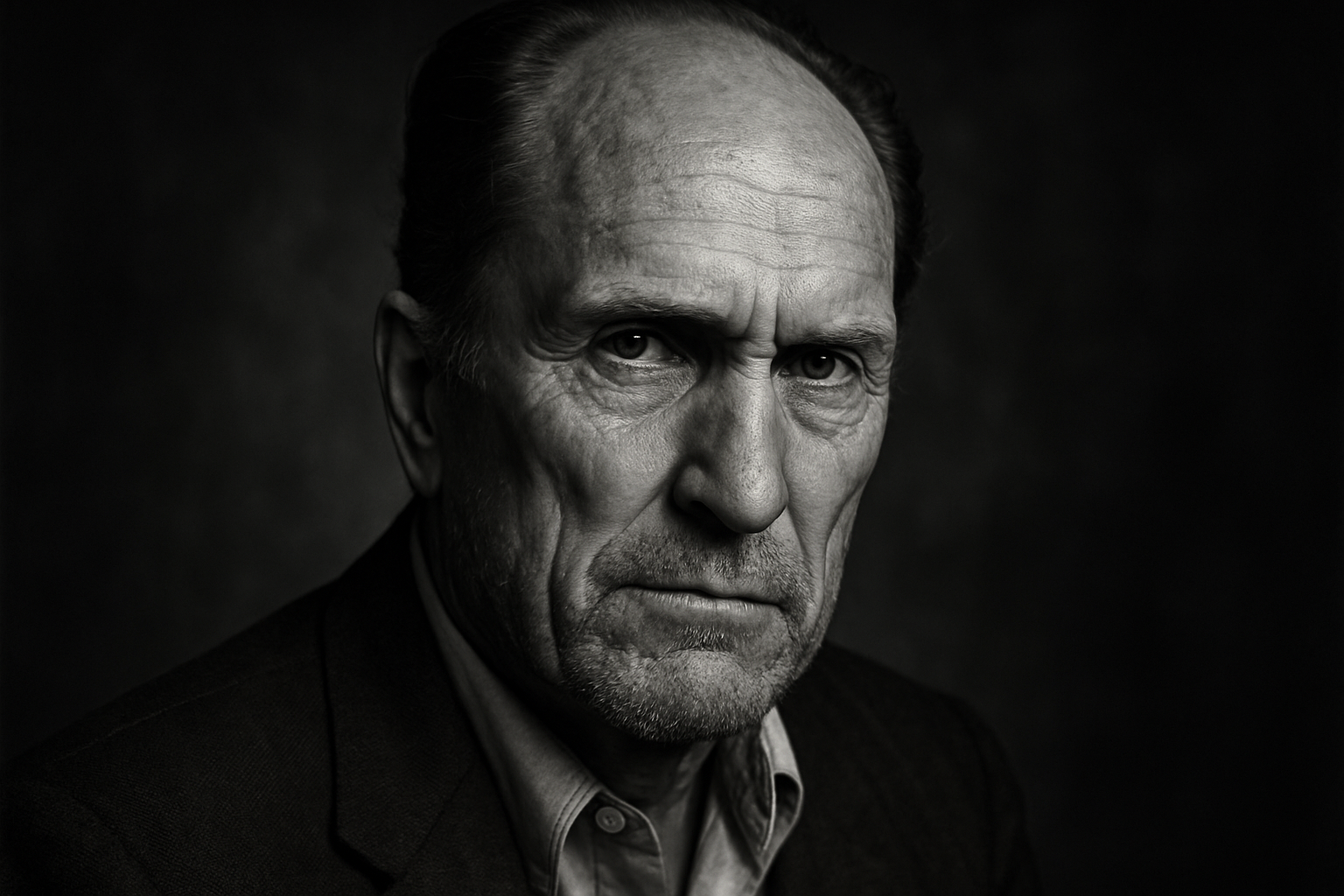
Robert Duvall, the acclaimed American actor whose unforgettable performances in "The Godfather" and "Apocalypse Now" helped define the New Hollywood movement, died peacefully at his home on Sunday, February 15, 2026, at age 95.
The death of the legendary character actor was confirmed by international media sources, with French publication Le Monde reporting that Duvall, known for his roles in Francis Ford Coppola's cinematic masterpieces, passed away after a remarkable career spanning over seven decades. His wife, Argentine actress Luciana Pedraza Duvall, had previously confirmed in February that her husband died peacefully at their Middleburg, Virginia home, surrounded by love and comfort.
A Career That Defined Character Acting
Born on January 5, 1931, in San Diego, California, Robert Selden Duvall became one of cinema's most respected character actors, earning seven Academy Award nominations throughout his illustrious career. He won the Oscar for Best Actor in 1984 for his portrayal of Mac Sledge in "Tender Mercies," a performance that showcased his ability to disappear completely into his roles.
Duvall's breakthrough came with his chilling portrayal of Boo Radley in the 1962 adaptation of "To Kill a Mockingbird," but it was his role as Tom Hagen, the calm and calculating lawyer in "The Godfather" (1972), that established him as a force in Hollywood. His smooth, understated performance as the Corleone family's consigliere became one of cinema's most memorable supporting characters.
"I've always believed that the best actors are the ones who can disappear into their roles completely, and Bob was the master of that art."
— Francis Ford Coppola, Director
The Apocalypse Now Legacy
Perhaps no role exemplified Duvall's commanding screen presence more than Lieutenant Colonel Bill Kilgore in Coppola's "Apocalypse Now" (1979). His portrayal of the surfing-obsessed, napalm-loving military officer delivered one of cinema's most quoted lines: "I love the smell of napalm in the morning." The performance, though featuring limited screen time, became iconic and demonstrated Duvall's ability to create unforgettable characters with psychological complexity.
The collaboration with Coppola proved to be one of the most fruitful director-actor relationships of the New Hollywood era, with Duvall also appearing in "The Conversation" (1974) and earning critical acclaim for his methodical approach to character preparation.
Beyond the Spotlight
Despite his Hollywood success, Duvall maintained a relatively private lifestyle, dividing his time between his Virginia farm and Argentina, where he developed a passion for tango dancing and horse riding. He married Luciana Pedraza in 2004, and the couple's relationship represented his commitment to both his craft and personal fulfillment away from the entertainment industry's spotlight.
Duvall's dedication to artistic integrity over commercial success became a hallmark of his career choices. He consistently selected character-driven projects that allowed him to explore the psychological depths of his roles, often turning down more lucrative mainstream offerings in favor of challenging material.
A New Hollywood Pioneer
As a key figure in the New Hollywood movement of the 1970s, Duvall helped bridge the gap between classical Hollywood and modern cinema. His influence extended far beyond his own performances, as he inspired generations of character actors through his commitment to thorough preparation and artistic authenticity.
His extensive filmography included standout performances in "The Great Santini," "Lonesome Dove" (the acclaimed television miniseries), and "The Apostle" (1997), which he also wrote and directed, earning another Academy Award nomination. His final notable appearances included "Lucky" (2017) and "Widows" (2018), demonstrating his enduring talent well into his eighties.
International Recognition and Global Impact
The global response to Duvall's death reflected his worldwide influence on cinema. International media coverage spanned from Bolivia to Cyprus, from France to the Philippines, highlighting his status as a truly global cinematic icon. Critics and colleagues praised his "grit and humility" and "restrained intensity," with many describing him as representing "Hollywood history" itself.
The breadth of international coverage demonstrated how Duvall's work transcended cultural boundaries, resonating with audiences worldwide who appreciated his authentic portrayals of complex American characters.
The End of an Era
Duvall's death marks the end of a significant chapter in American cinema history. As one of the last surviving major figures from the New Hollywood movement, his passing represents the conclusion of an era that revolutionized filmmaking and established many of the artistic standards that continue to influence contemporary cinema.
His legacy extends beyond individual performances to encompass a philosophy of acting that prioritized psychological truth over commercial appeal. This approach influenced countless actors and filmmakers, establishing a standard for character work that remains the gold standard in the industry.
While funeral arrangements have not been announced, the entertainment industry and film lovers worldwide continue to celebrate the extraordinary life and career of Robert Duvall, whose contributions to cinema will endure for generations to come. His seven-decade journey from a young character actor to a Hollywood legend serves as a testament to the power of dedication, authenticity, and artistic integrity in an industry often driven by commercial considerations.