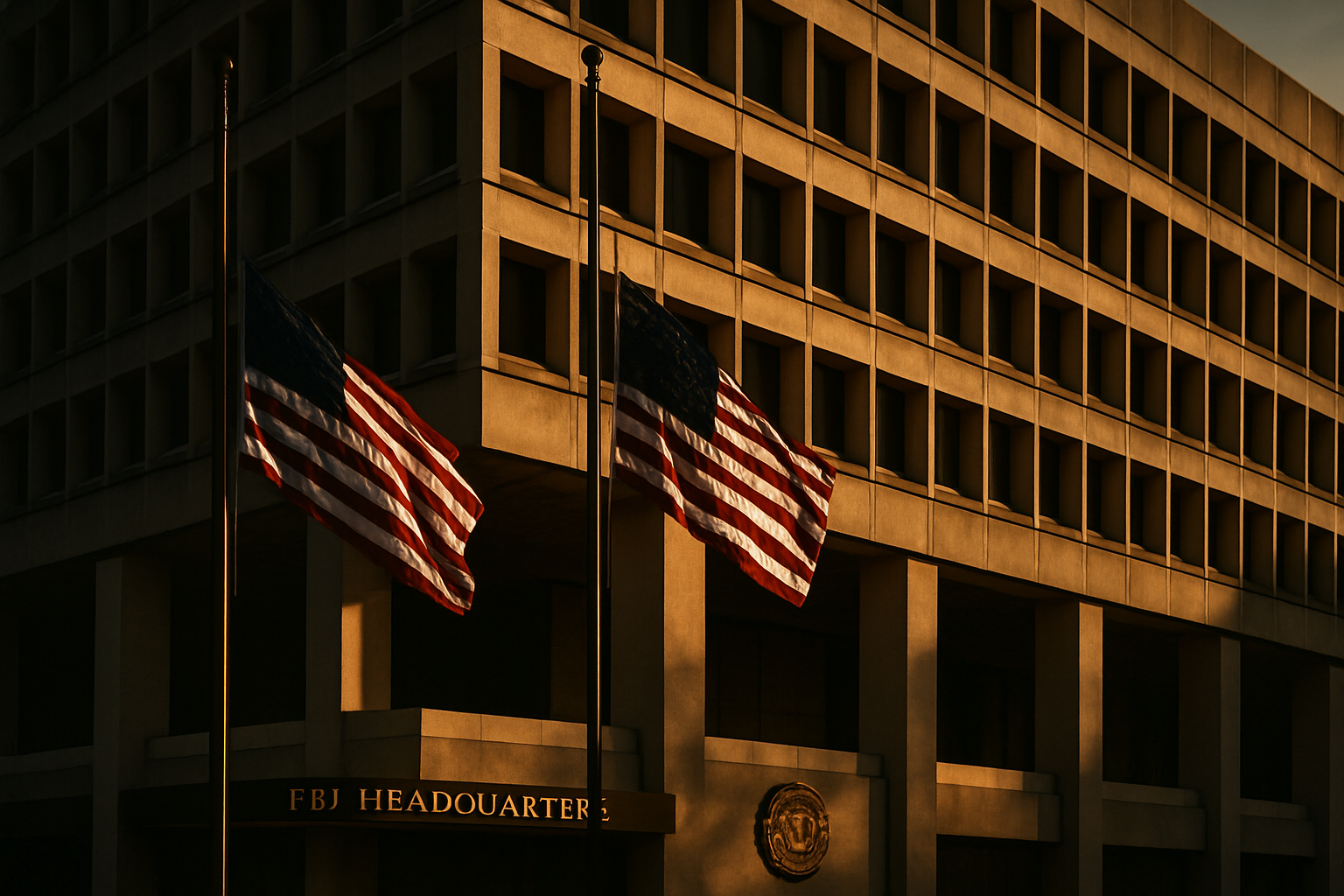
Robert S. Mueller III, the former FBI director who transformed America's premier law enforcement agency after the September 11 attacks and later served as special counsel investigating Russian interference in the 2016 presidential election, died Friday night at age 81.
"With deep sadness, we are sharing the news that Bob passed away" on Friday night, his family said in a statement Saturday. "His family asks that their privacy be respected." No cause of death was immediately provided, though Mueller's family had disclosed in August 2025 that he had been diagnosed with Parkinson's disease several years earlier.
Mueller's death marks the end of a distinguished career that spanned decades of public service, from his early days as a prosecutor to his leadership of the FBI during one of the most challenging periods in American history, and finally to his role as special counsel investigating one of the most politically charged investigations in modern times.
Transforming the FBI After 9/11
Mueller's most significant and lasting impact came during his 12-year tenure as FBI Director from 2001 to 2013, a period that began just days before the September 11 terrorist attacks. When he took office on September 4, 2001 — exactly one week before the attacks — the FBI was primarily focused on traditional law enforcement. The attacks fundamentally changed that mission.
Under Mueller's leadership, the FBI was transformed from a reactive law enforcement agency into a proactive terrorism-fighting force. He oversaw the bureau's most comprehensive reorganization in its history, shifting resources and priorities to focus on preventing terrorist attacks rather than simply investigating crimes after they occurred.
"Mueller set about almost immediately overhauling the bureau's priorities and structure," according to multiple news reports covering his tenure. The transformation included enhanced intelligence capabilities, improved information sharing with other agencies, and a fundamental shift in the FBI's culture from a crime-fighting organization to one focused on national security.
The Russia Investigation
Mueller returned to public prominence in 2017 when Deputy Attorney General Rod Rosenstein appointed him as special counsel to investigate Russian interference in the 2016 U.S. election and potential coordination between Russian operatives and Donald Trump's presidential campaign.
The investigation, which lasted 22 months, resulted in charges against 34 individuals and three organizations. Mueller's team secured convictions of several Trump associates, including campaign chairman Paul Manafort, personal lawyer Michael Cohen, and national security adviser Michael Flynn. The investigation also detailed extensive Russian efforts to interfere in the 2016 election through social media manipulation and hacking of Democratic Party emails.
Mueller's final report, released in March 2019, documented systematic Russian efforts to influence the election but concluded that the evidence did not establish that members of the Trump campaign criminally conspired with Russia. However, the report did not exonerate Trump on obstruction of justice charges, stating that "while this report does not conclude that the President committed a crime, it also does not exonerate him."
The investigation became a defining political issue of Trump's presidency, with the former president frequently attacking Mueller and his team as conducting a "witch hunt." Despite the political pressure, Mueller maintained his characteristic stoicism and adherence to Justice Department protocols throughout the investigation.
Early Career and Military Service
Born in New York City in 1944, Mueller grew up in a prominent family and attended Princeton University, where he excelled academically and athletically as a lacrosse player. After graduation, he enlisted in the Marine Corps and served as an officer in Vietnam, where he was decorated for his service, including receiving the Bronze Star, Purple Heart, and Navy Commendation Medal.
Following his military service, Mueller attended the University of Virginia School of Law, after which he began his career as a prosecutor. He served in various Justice Department positions throughout his career, including as U.S. Attorney for the Northern District of California and later as head of the department's Criminal Division.
Congressional Testimony and Later Years
In recent years, Mueller had largely retreated from public life, though his name appeared in various congressional investigations. According to congressional records, Mueller was among several former FBI directors subpoenaed by the House Oversight Committee in connection with investigations into the handling of the Jeffrey Epstein case, reflecting the continued scrutiny of various federal law enforcement decisions spanning multiple administrations.
Despite his Parkinson's diagnosis, Mueller continued to make occasional public appearances, though his family had requested privacy regarding his health condition. His battle with the progressive neurological disorder was kept largely private until the family's disclosure in 2025.
Political Reactions
Trump, who frequently clashed with Mueller during the special counsel investigation, offered a pointed response to news of Mueller's death. "I'm glad he's dead," Trump stated according to multiple international news sources, a comment that drew criticism even from some of his supporters for its lack of decorum regarding the death of a public servant and decorated veteran.
In contrast, many current and former government officials from both parties praised Mueller's service to the country. His reputation for integrity and adherence to the rule of law earned him respect across the political spectrum, even as his investigations created controversy.
Legacy of Public Service
Mueller's career embodied a commitment to public service that spanned military combat, federal prosecution, and law enforcement leadership. His transformation of the FBI after 9/11 is widely credited with helping prevent major terrorist attacks on U.S. soil in the years following September 11.
"Mueller is credited with transforming the country's premier law enforcement agency into a terrorism-fighting force after the September 11, 2001 attacks," noted coverage of his career. This transformation required not only structural changes but also a cultural shift within the bureau, as agents and analysts had to learn new skills and adopt new priorities.
His approach to the Russia investigation, characterized by careful adherence to Justice Department protocols and a reluctance to engage in political rhetoric, reflected his lifelong commitment to the principle that law enforcement should operate independently of political considerations.
A Career Defined by Duty
Throughout his career, Mueller was known for his methodical approach, attention to detail, and unwillingness to be swayed by political pressure. Colleagues and even critics acknowledged his integrity and dedication to the institutions he served.
His military service in Vietnam, where he earned multiple decorations for valor, set the tone for a career characterized by duty and service above personal interest. This ethos carried through his decades of work in federal law enforcement, where he consistently prioritized institutional integrity over political expedience.
The timing of Mueller's death comes as American democratic institutions continue to face various challenges and scrutiny. His career serves as a reminder of the importance of dedicated public servants who prioritize institutional integrity and the rule of law above partisan political considerations.
Mueller leaves behind his wife of more than 50 years, Ann, and their two daughters. Funeral arrangements have not yet been announced, with the family requesting privacy during this difficult time. He will be remembered as a figure who, regardless of political controversies, dedicated his life to serving his country in times of war and peace, and who worked to strengthen American institutions during some of their most challenging moments.