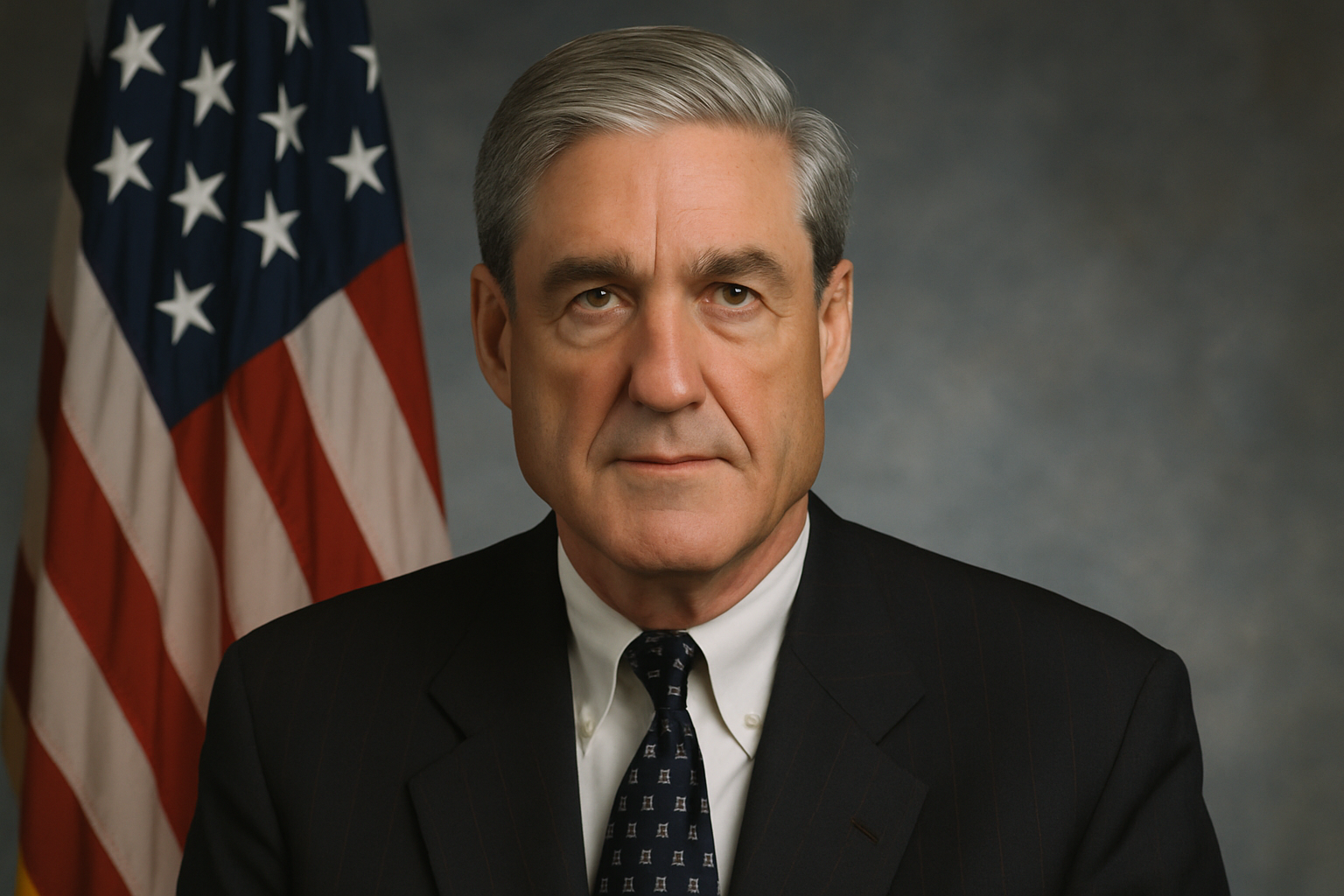
Robert S. Mueller III, the FBI director who transformed America's premier law enforcement agency into a terrorism-fighting force after September 11 and later became special counsel investigating ties between Russia and Donald Trump's 2016 presidential campaign, has died at age 81.
"With deep sadness, we are sharing the news that Bob passed away" on Friday night, his family said in a statement released Saturday. "His family asks that their privacy be respected."
The decorated Vietnam veteran's death drew a sharply divisive response from President Trump, who said he was "glad he's dead" in a social media post, adding that Mueller "can no longer hurt innocent people." The comment represents an unprecedented attack on a deceased law enforcement official by a sitting president.
A Life of Public Service
Mueller's career spanned military combat to federal prosecution to law enforcement leadership. Born in 1944, he served in Vietnam where he earned the Bronze Star, Purple Heart, and Navy Commendation Medal for his courageous service as a Marine officer.
After graduating from the University of Virginia Law School, Mueller worked as a federal prosecutor in various positions, including as U.S. Attorney for the Northern District of California. His methodical approach and attention to detail became his hallmarks throughout his career.
FBI Director During America's Most Challenging Period
Mueller served as FBI Director from 2001 to 2013, fundamentally reorganizing the bureau from a reactive law enforcement agency to a proactive national security organization following the 9/11 attacks. He shifted resources from traditional crime fighting to terrorism prevention and created enhanced intelligence capabilities that improved inter-agency information sharing.
This cultural transformation is widely credited with preventing major domestic terrorist attacks in the post-9/11 era. Under Mueller's leadership, the FBI developed sophisticated counterterrorism capabilities while maintaining its traditional law enforcement mission.
The Special Counsel Investigation
Mueller's most high-profile role came when he was appointed special counsel in 2017 to investigate Russian interference in the 2016 election and potential connections to the Trump campaign. The 22-month investigation became a defining political issue of Trump's presidency.
The investigation resulted in 34 indictments, including charges against Trump associates Paul Manafort, Michael Cohen, and Michael Flynn. Mueller's team documented extensive Russian election interference but concluded that no criminal conspiracy between the Trump campaign and Russia could be established. The report did not exonerate Trump on obstruction of justice charges.
"The investigation was conducted with integrity and thoroughness, adhering to the highest standards of our justice system."
— Former Deputy Attorney General Rod Rosenstein
International Reaction and Bipartisan Praise
International media coverage reflected the global significance of Mueller's passing. French, German, British, and other European outlets emphasized his role in the Russia investigation and his broader impact on American law enforcement.
Despite Trump's inflammatory comments, Mueller received bipartisan praise from government officials for his integrity, commitment to the rule of law, and decades of institutional service above political considerations. Many emphasized his decorated military service and lifetime dedication to public service.
Health Struggles in Final Years
The New York Times reported last year that Mueller had been diagnosed with Parkinson's disease several years earlier. The family disclosed his condition in August 2025, noting that he had largely retreated from public life while maintaining privacy regarding his health.
Mueller maintained his characteristic privacy and dignity throughout his battle with the progressive neurological disorder, continuing to prioritize his family's privacy even as his condition became public.
A Legacy of Institutional Integrity
Mueller's death comes during a period of significant challenges to democratic institutions. His career exemplified dedicated public service that prioritized the rule of law over partisan politics. The transformation of the FBI post-9/11 is widely credited with preventing major domestic terrorist attacks.
The Russia investigation established important precedents for special counsel independence despite intense political pressure. Mueller's methodical approach and resistance to political interference became a model for maintaining institutional integrity in a highly polarized environment.
Personal Life and Family
Mueller was married to his wife Ann for over 50 years and had two daughters. Those who knew him described a man of few words but strong convictions, known for his early morning runs and disciplined approach to both work and life.
He was recognized for prioritizing institutional integrity over personal advancement, often making decisions that put the mission of his agencies ahead of his own career interests.
Historical Significance
Robert Mueller's death marks the end of an era for American law enforcement. His legacy encompasses the fundamental restructuring of the FBI's mission after 9/11, the preservation of investigative independence under extreme political pressure, and a lifetime commitment to the principles of justice and the rule of law.
As American democratic institutions face continued challenges, Mueller's example of placing duty and integrity above political considerations remains a powerful reminder of the values that have traditionally guided American public service.
The sharp contrast between bipartisan respect for Mueller's service and the president's harsh comments reflects the deep political divisions that characterized much of his later career, even as his commitment to justice remained unwavering until the end.