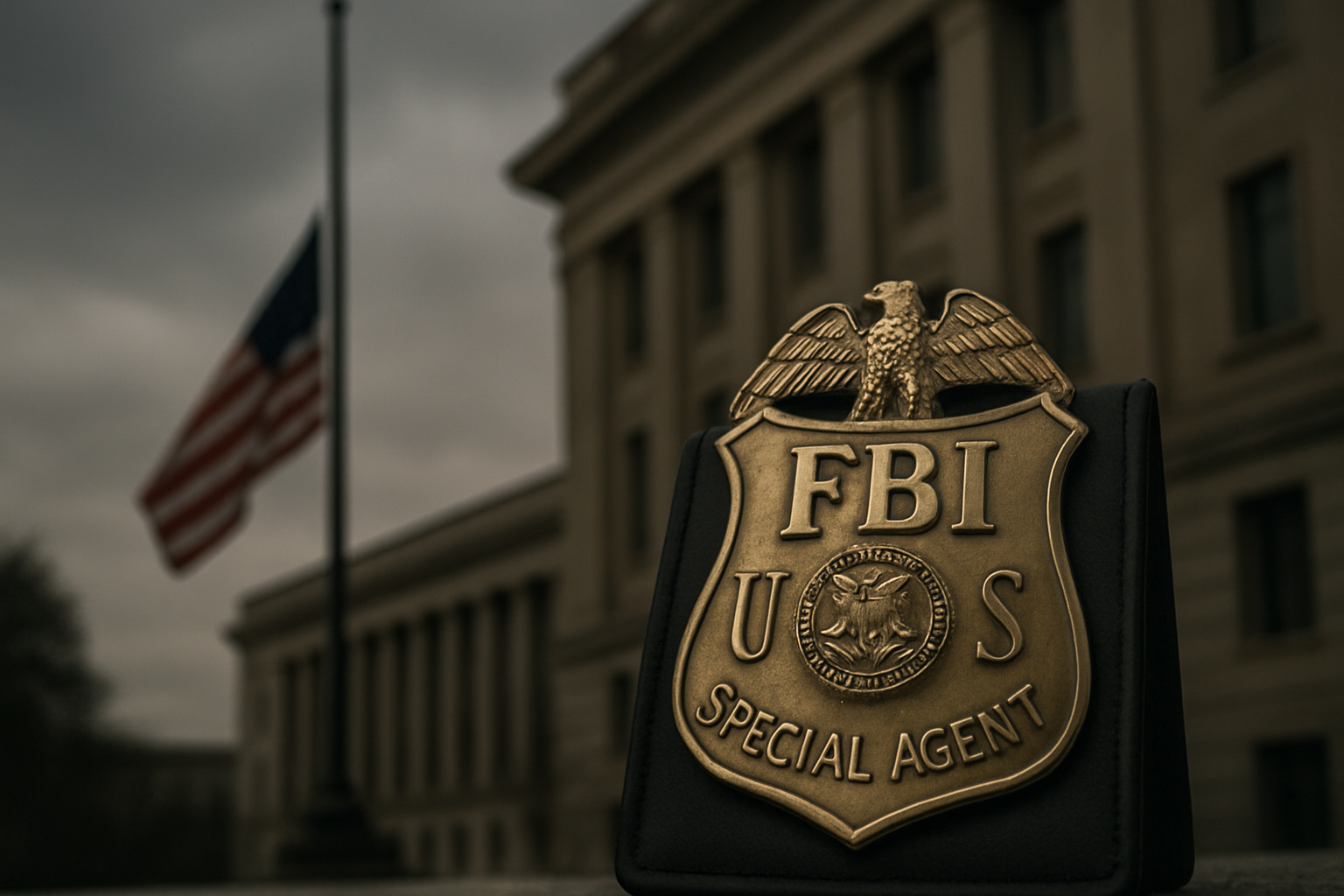
Robert Swan Mueller III, the former FBI Director who led the bureau's transformation after 9/11 and later served as Special Counsel investigating Russian interference in the 2016 presidential election, died Friday night at age 81 after a battle with Parkinson's disease.
Mueller's death was confirmed Saturday by his former law firm WilmerHale, where he worked until his retirement in 2021. "Bob was an extraordinary leader and public servant and a person of the greatest integrity," the firm said in a statement. The family has requested privacy and has not released details about the cause of death, though The New York Times reported last year that Mueller had been diagnosed with Parkinson's disease.
A Career Defined by Service
Mueller's five-decade career in public service spanned from the jungles of Vietnam to the highest echelons of federal law enforcement. Born in New York City in 1944, he served as a Marine Corps officer in Vietnam, where he earned the Bronze Star, Purple Heart, and Navy Commendation Medal for his courage under fire. This early experience in combat would shape his methodical, disciplined approach to leadership throughout his career.
After earning his law degree from the University of Virginia, Mueller spent years as a federal prosecutor, eventually serving as U.S. Attorney for the Northern District of California. His reputation for integrity and meticulous attention to detail made him a natural choice for increasingly important roles in federal law enforcement.
Transforming the FBI After 9/11
Mueller's most consequential role began just days before the September 11, 2001 terrorist attacks, when he was sworn in as FBI Director. The timing of his appointment would prove fateful, as Mueller found himself tasked with fundamentally reorganizing the bureau to meet the challenges of a post-9/11 world.
Under Mueller's leadership from 2001 to 2013, the FBI transformed from a primarily reactive law enforcement agency into a proactive national security organization. He shifted resources from traditional crime fighting to terrorism prevention, created enhanced intelligence capabilities, and improved inter-agency information sharing. This transformation is widely credited with preventing major domestic terrorist attacks during his tenure and beyond.
"Mueller fundamentally reorganized the FBI from reactive law enforcement to proactive national security agency, creating a cultural transformation that prevented major terrorist attacks post-9/11."
— Security Expert Assessment
His 12-year tenure as FBI Director, which required a special extension by Congress beyond the standard 10-year term, was marked by his resistance to political pressure and unwavering commitment to the rule of law. Even as administrations changed, Mueller maintained the bureau's independence and focus on its mission.
The Russia Investigation
Mueller returned to public prominence in 2017 when Deputy Attorney General Rod Rosenstein appointed him as Special Counsel to investigate Russian interference in the 2016 presidential election and potential connections to Donald Trump's campaign. The appointment came amid growing concerns about Russian meddling and questions about the Trump administration's ties to Moscow.
Over 22 months, Mueller's investigation documented extensive Russian election interference operations and resulted in 34 indictments, including several Trump associates such as Paul Manafort, Michael Cohen, and Michael Flynn. The investigation's findings, detailed in the Mueller Report, concluded that while Russia conducted a systematic campaign to interfere in the 2016 election, Mueller's team did not establish sufficient evidence of a criminal conspiracy between the Trump campaign and Russia.
However, the report did not exonerate Trump on charges of obstruction of justice, instead presenting evidence for Congress to consider. The investigation became a defining political issue of Trump's presidency, with the president repeatedly denouncing it as a "witch hunt" while Mueller maintained his characteristic silence and focus on the facts.
Political Reactions to Mueller's Death
News of Mueller's death drew sharply divided reactions along political lines. President Trump, who frequently criticized Mueller during and after the investigation, sparked controversy with his response. According to French media reports, Trump stated, "I'm glad he's dead. He can no longer harm innocents," comments that drew immediate criticism from both parties for their lack of decorum regarding a decorated veteran's death.
In contrast, bipartisan praise emerged from other government officials who emphasized Mueller's integrity, commitment to the rule of law, and dedication to institutional service above political considerations. Many lawmakers from both parties acknowledged his decades of service to the country, even while disagreeing with aspects of his investigations.
Legacy and Recent Challenges
Mueller's later years were marked by continued scrutiny of federal law enforcement decisions across multiple administrations. In recent years, he was among several former FBI directors who faced subpoenas from the House Oversight Committee regarding various cases, including questions about the handling of the Jeffrey Epstein investigation, reflecting ongoing congressional oversight of federal law enforcement decisions.
Despite health challenges, Mueller largely retreated from public life after retiring from WilmerHale in 2021. His family disclosed in August 2025 that he had been diagnosed with Parkinson's disease several years earlier, maintaining privacy about his condition until the family's announcement.
A Personal Legacy
Beyond his professional achievements, those who knew Mueller described him as a man of unwavering principle and quiet dignity. Married to his wife Ann for over 50 years, Mueller was known for his methodical approach to complex problems, his resistance to political pressure, and his prioritization of institutional integrity over personal advancement.
Mueller's career exemplified dedicated public service that prioritized the rule of law over partisan politics. His work transforming the FBI post-9/11 established new standards for national security operations, while his role as Special Counsel demonstrated the importance of independent investigations in maintaining democratic accountability.
Historical Significance
Mueller's death comes during a period of ongoing challenges to democratic institutions, making his legacy of institutional independence and integrity particularly significant. His career spanning military combat, federal prosecution, and law enforcement leadership represents a model of public service that transcended political divides.
The Russia investigation, while controversial, established important precedents for special counsel independence despite intense political pressure. His methodical approach and commitment to following facts wherever they led became a defining characteristic of his work and a reminder of the importance of institutional norms in democratic governance.
As the country mourns the loss of this distinguished public servant, Mueller's legacy serves as a reminder that democratic institutions depend on individuals willing to serve with integrity, regardless of personal cost or political pressure. His transformation of the FBI and his approach to the Russia investigation will likely be studied and debated for generations as examples of how institutional leaders navigate complex political and security challenges while maintaining their commitment to the law.