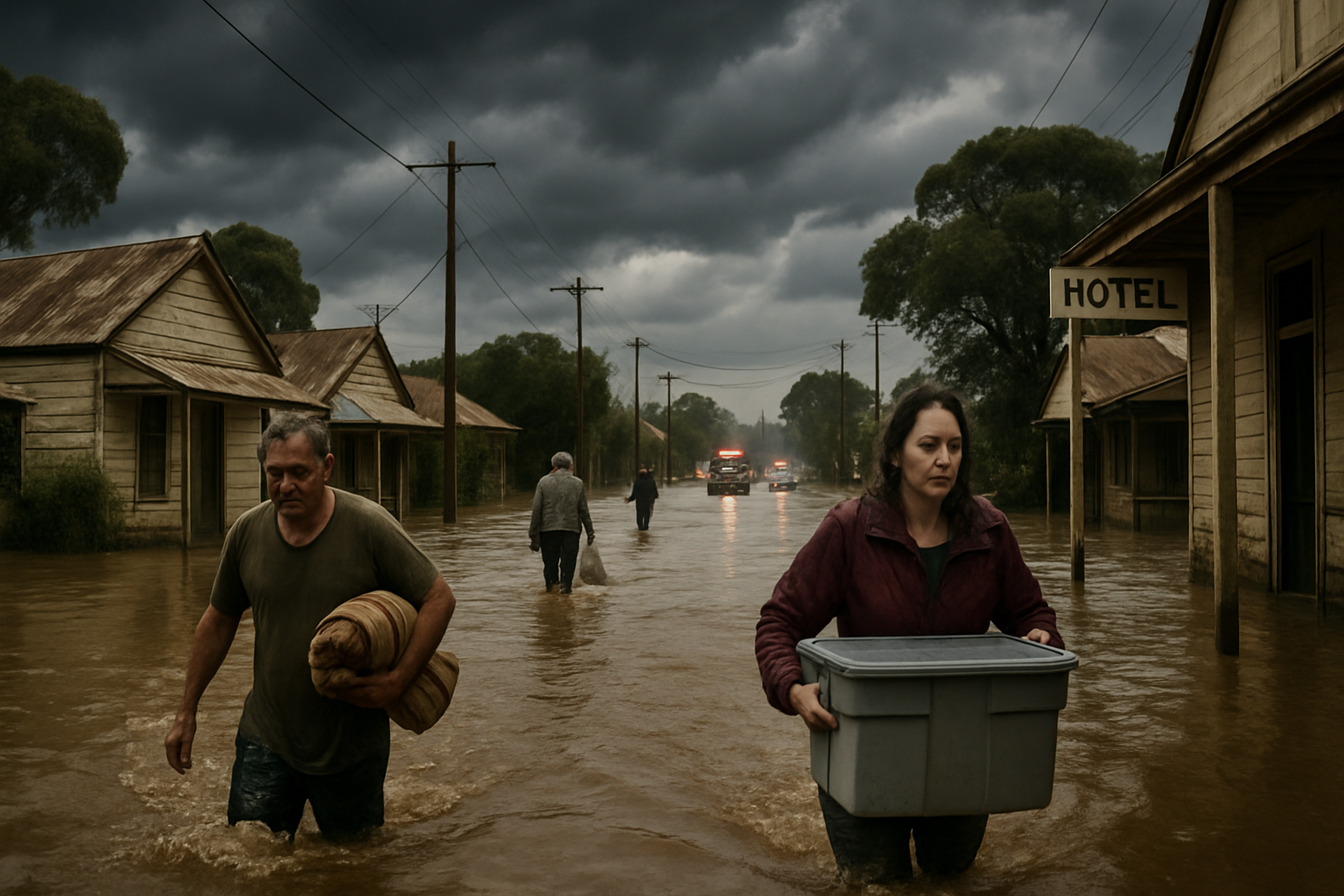
In the small town of Rochester, Victoria, Brian Mulcahy was never the same after floodwaters destroyed his home. For many of his fellow residents, his battle with dementia has become an all-too-familiar story, emblematic of a broader crisis facing Australian coastal communities as climate change reshapes the nation's relationship with water, weather, and wellbeing.
Rochester's experience reflects a devastating pattern emerging across Australian coastal towns, where extreme weather events are leaving lasting psychological and physical scars on communities that have called these places home for generations. The town's struggle with climate-induced trauma comes as Australia faces its most challenging environmental period in recorded history, with March 2026 marking the 21st consecutive month of global temperatures exceeding 1.5°C above pre-industrial levels.
The Human Cost of Climate Change
The story of Brian Mulcahy and Rochester represents more than just another flood recovery tale. It illustrates how climate change is fundamentally altering the mental health landscape of Australian communities. Environmental psychologists have documented a direct correlation between extreme weather events and increased rates of depression, anxiety, and cognitive decline among elderly residents who lose their homes and sense of place.
Rochester residents describe a community transformed by the psychological aftermath of repeated flooding. Neighbors who once gathered for weekly card games now struggle with confusion and disorientation. The social fabric that held the community together for decades has been strained by the cognitive impacts of trauma, creating what researchers term "climate dementia" – a phenomenon where extreme weather events trigger or accelerate memory-related conditions.
"When the water came through Brian's house, it didn't just take his possessions – it took his sense of home, his routine, his identity. That's when we started noticing the confusion, the forgetting. It's happening to too many of our older residents."
— Local Rochester resident, speaking anonymously
Coastal Queensland's Relentless Weather Battle
Rochester's story unfolds against the backdrop of unprecedented weather volatility across Australia. Queensland has experienced what meteorologists describe as "apocalyptic rain" followed immediately by extreme heat, creating compound disaster scenarios that emergency services struggle to manage. The Burnett River approached the critical 7-meter flood threshold at Bundaberg, threatening to cut the city in half, while simultaneously, fire warnings remained in effect due to rapidly drying vegetation.
This "climate whiplash" – extreme swings between flooding and drought conditions within weeks – represents a fundamental shift in Australia's weather patterns. Traditional seasonal forecasting, which guided agricultural planning and community preparedness for over a century, has become unreliable as climate change overrides natural weather cycles.
Emergency management experts describe the evolution from sequential disasters to "compound disasters," where communities must simultaneously prepare for flooding while maintaining fire readiness. The Australian Fire and Emergency Services Authority (AFAC) reports that traditional mutual aid mechanisms, designed for one crisis at a time, are failing as multiple regions face simultaneous emergencies.
Infrastructure Under Unprecedented Pressure
Australia's coastal infrastructure, designed for historical climate patterns, repeatedly fails under current conditions. Katherine Hospital in the Northern Territory was evacuated due to the worst flooding in decades, while major highways and bridges across Queensland close regularly as rivers exceed design thresholds.
Transportation networks, power grids, and communication systems operate beyond their original parameters. Recovery timelines have shifted from weeks to months or years, fundamentally changing disaster response approaches. The concept of "building back better" has evolved from an optional enhancement to an essential survival strategy for Australian communities.

The Economic Ripple Effects
The economic devastation extends far beyond immediate cleanup costs. Agricultural sectors face mounting losses as extreme weather destroys crops during critical growing seasons. Tourism industries suffer extended cancellations and infrastructure damage during peak revenue periods. Small businesses in towns like Rochester face extinction threats as repeated disasters exhaust insurance coverage and community spending power.
Families are losing generational properties, unable to afford repeated repairs or find insurance coverage for increasingly risky locations. The social infrastructure that supported communities for decades – local shops, community centers, sporting clubs – struggles to maintain operations as membership declines due to climate-induced displacement.
Mental health services report increased demand as residents cope with "climate anxiety" and repeated trauma. The economic cost of providing extended psychological support compounds the direct financial impacts of property damage and business losses.
Innovative Community Responses Emerge
Despite overwhelming challenges, Australian communities are developing innovative responses to permanent climate volatility. The "Bargara Facebookers" social media network has become essential for emergency communication when traditional systems fail. Community members use technology platforms to coordinate evacuations, share resources, and maintain social connections during isolation periods.
Integration of Indigenous fire management practices with modern meteorological forecasting has shown remarkable success in reducing both fire and flood risks. Traditional ecological knowledge, developed over thousands of years, provides crucial insights for adapting to rapidly changing environmental conditions.
Advanced monitoring systems combine satellite imagery, environmental DNA sampling, and artificial intelligence with community-based observation networks. This hybrid approach enables rapid threat response while building local capacity for long-term adaptation.
Global Context of Australian Climate Crisis
Australia's climate challenges reflect broader global environmental trends accelerating beyond previous scientific projections. The 21st consecutive month of elevated global temperatures represents the longest sustained warming streak in recorded human history, with human-induced climate change completely overriding natural cooling mechanisms.
The World Meteorological Organization indicates a 50-60% probability of El Niño conditions developing between July and September 2026, potentially driving unprecedented temperatures through the combination of baseline warming and natural cycle amplification. This "climate volatility paradox" enables simultaneous global heat records and devastating regional extremes through disrupted atmospheric circulation patterns.
International cooperation mechanisms designed for sequential disasters prove inadequate when multiple continents face simultaneous environmental emergencies. Australia's experience provides crucial lessons for other nations preparing for similar challenges, demonstrating both the vulnerabilities of systems designed for historical patterns and the potential for innovative adaptation responses.
The Path Forward: Adaptation Imperatives
March 2026 represents a critical juncture between reactive crisis management and transformative infrastructure adaptation for Australian communities. Current conditions provide a preview of routine circumstances expected throughout the 2030s without comprehensive climate adaptation investment.
Success requires unprecedented coordination combining advanced technology with traditional knowledge systems, community engagement with expert planning, and local initiatives with national policy frameworks. The window for effective climate action continues to narrow as ecological systems approach critical thresholds that could trigger irreversible changes affecting global food security, climate stability, and human settlements.
For communities like Rochester, adaptation means more than rebuilding infrastructure – it requires reimagining how Australian society relates to environmental risk and community resilience. The challenge of supporting residents like Brian Mulcahy through climate-induced trauma becomes part of a broader transformation toward climate-ready communities.
"We're not just rebuilding houses anymore – we're rebuilding our entire relationship with this land. The old patterns don't work. We need new ways of living that accept the water will come, the fires will come, but our community can still thrive."
— Emergency Management Coordinator, Queensland Regional Council
The story of Rochester and Australia's coastal communities illustrates both the profound human costs of climate change and the extraordinary capacity for adaptation when communities, governments, and organizations work together. As Australia faces its most challenging environmental period in recorded history, the lessons learned in small towns like Rochester may prove essential for global climate resilience strategies affecting generations to come.
The question is no longer whether transformative climate action is necessary, but whether humanity can organize and implement solutions rapidly enough to maintain planetary habitability during Earth's most environmentally challenging era. Australia's experience suggests that while the challenges are unprecedented, so too is human capacity for innovation, cooperation, and resilience in the face of environmental change.