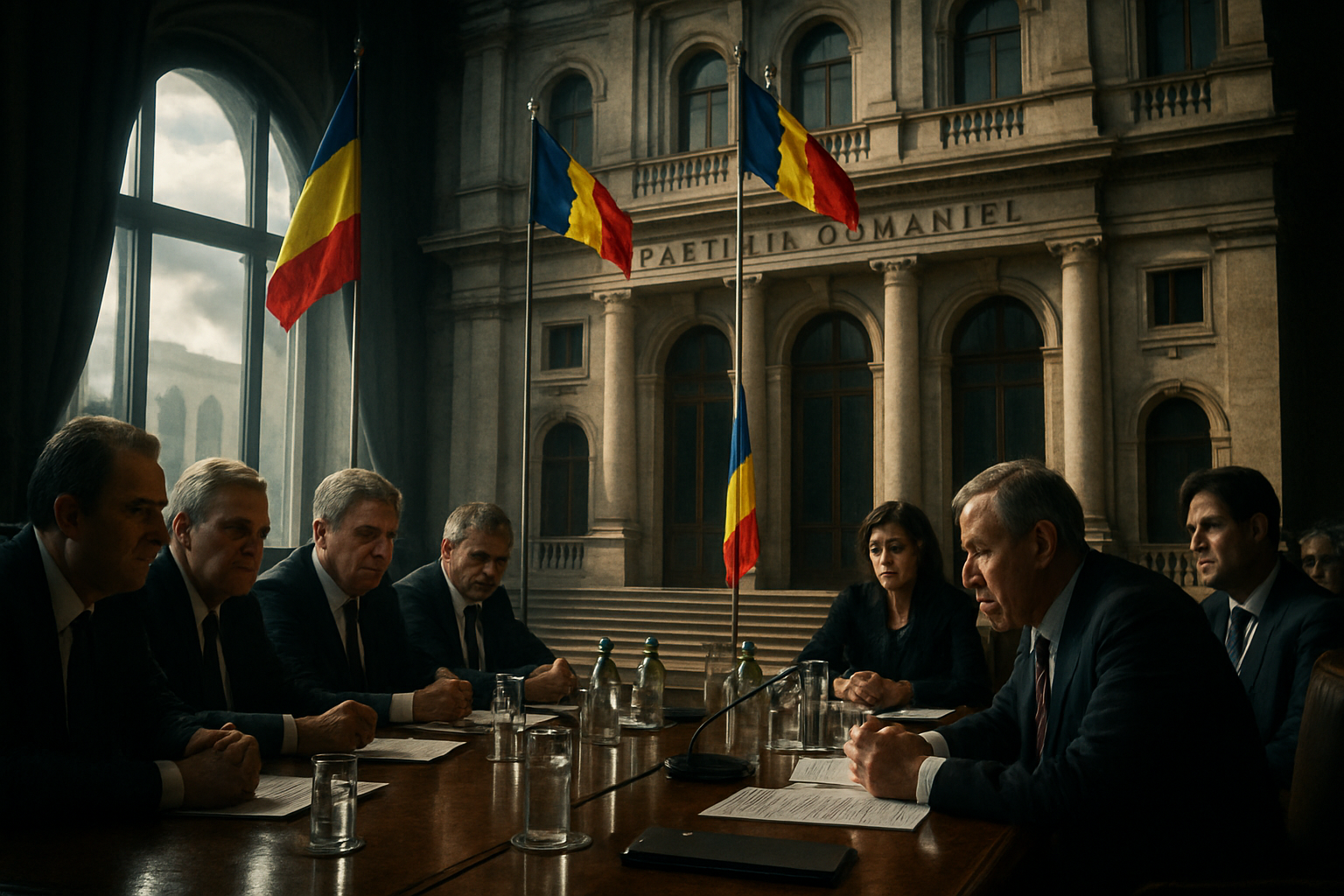
Romania's governing coalition faces its most serious crisis since formation, as Liberal Party (PNL) leadership convenes an emergency meeting in Sibiu while Social Democratic Party (PSD) leader Sorin Grindeanu threatens to withdraw from government if social measures are not approved in the national budget.
The National Political Bureau of PNL is gathering this weekend in Sibiu to evaluate the coalition's future and assess government objectives, according to party sources. The meeting comes amid escalating tensions with coalition partner PSD over fundamental disagreements about fiscal priorities and budget allocation.
PSD Ultimatum Threatens Government Stability
Speaking to Parliament on Monday, PSD leader Sorin Grindeanu delivered a stark ultimatum that has shaken the foundations of Romania's governing coalition. If social measures supported by PSD are not approved in the budget, Grindeanu warned that his party could decide "either to leave government, which means we'll reach early elections, or to remain in the coalition, but under certain conditions."
The threat represents the most explicit challenge to the coalition's survival since its formation, with Grindeanu's statements marking a significant escalation from previous budget disagreements. The PSD leader's reference to "certain conditions" suggests his party may demand substantial concessions or ministerial changes to remain in government.
"PSD can decide that we transition to opposition and we're finished, and it's plausible that we reach early elections, or PSD decides to remain in the coalition, but under certain conditions."
— Sorin Grindeanu, PSD Leader
Historical Context of Coalition Tensions
The current crisis represents the culmination of months of growing tensions within Romania's complex governing arrangement. According to intelligence gathered from recent political developments, the PSD-PNL-USR-UDMR coalition has faced mounting pressure over budget negotiations, with particular friction between PSD and Prime Minister Ilie Bolojan over deficit reduction measures.
Grindeanu previously criticized PM Bolojan's approach, characterizing it as a "feldsher attitude - first cut, then measure," while demanding a 4 billion lei social protection package in the 2026 budget. This demand reflects deeper ideological divisions within the coalition about the balance between fiscal responsibility and social spending.
The crisis occurs against a backdrop of broader European political instability, with Romania's situation reflecting continent-wide challenges in coalition governance. Similar tensions have emerged across Europe, where traditional coalition mathematics are breaking down amid changing voter preferences and external economic pressures.
Critical Sibiu Meeting Agenda
The PNL leadership gathering in Sibiu carries extraordinary weight for Romania's political future. The extended leadership must decide the party's direction following budget adoption and after facing sustained attacks from PSD leaders, particularly criticism directed at Prime Minister Bolojan.
Party sources indicate the meeting will focus on coalition dynamics and evaluate whether the current governmental arrangement remains viable. The timing is particularly significant, coming after PSD leaders "constantly attacked" Premier Bolojan and demanded leadership changes within the government structure.
The Sibiu meeting represents a potential inflection point where PNL could choose to solidarize with the Prime Minister or seek accommodation with PSD demands, each path carrying significant political risks and implications for governmental stability.
Early Elections Specter
The threat of early elections looms large over Romanian politics as the coalition crisis deepens. Should PSD withdraw from government, the remaining parties would likely lack sufficient parliamentary support to maintain stable governance, potentially triggering constitutional mechanisms leading to early polls.
Such a scenario would represent a significant setback for Romania's political stability and could impact the country's European integration commitments. The timing would be particularly challenging given ongoing regional security concerns and the need for consistent policy implementation.
Early elections would also test whether Romanian voters prefer the current coalition arrangement or alternative political configurations, potentially reshaping the country's political landscape for years to come.
Broader European Context
Romania's coalition crisis unfolds within the broader context of European democratic challenges, where traditional political arrangements face unprecedented pressure. Recent intelligence indicates that 89% of Europeans demand greater EU unity, yet political reality shows increasing fragmentation and institutional friction across member states.
The Romanian situation mirrors challenges faced across Europe, where coalition governments struggle to balance domestic pressures with international obligations. Success or failure in resolving these tensions could establish important precedents for how European democracies manage multi-party governance in the 21st century.
The crisis also occurs amid Romania's ongoing efforts to strengthen democratic institutions while managing economic recovery and maintaining European integration momentum, adding layers of complexity to the current political calculations.
Implications for Governance
The resolution of Romania's coalition crisis will have far-reaching implications for the country's governance capacity and policy implementation. Key areas likely to be affected include:
- Budget approval and fiscal policy direction
- Administrative reform implementation
- Economic recovery measures and EU fund utilization
- Regional security cooperation and NATO commitments
- Judicial system reforms and rule of law initiatives
The crisis tests whether diverse political parties can maintain effective collaboration on fundamental reforms while managing competing ideological visions and electoral pressures.
Path Forward
As PNL leaders deliberate in Sibiu and PSD maintains its ultimatum, Romania faces a critical juncture in its democratic development. The coming days will reveal whether the coalition partners can find compromise solutions that address both fiscal responsibility concerns and social protection demands.
The resolution will likely require significant political concessions from multiple parties and may reshape the coalition's power dynamics. Success in navigating this crisis could strengthen Romania's democratic institutions by demonstrating their capacity to manage serious political disagreements through constitutional means.
However, failure to reach accommodation may not only trigger early elections but also raise broader questions about the viability of complex multi-party coalitions in contemporary European democracy. The stakes extend beyond Romanian domestic politics to influence regional stability and European integration processes.
The outcome will serve as a test case for democratic resilience in Eastern Europe and could establish important precedents for coalition governance across the continent during an era of increasing political fragmentation and external pressures.