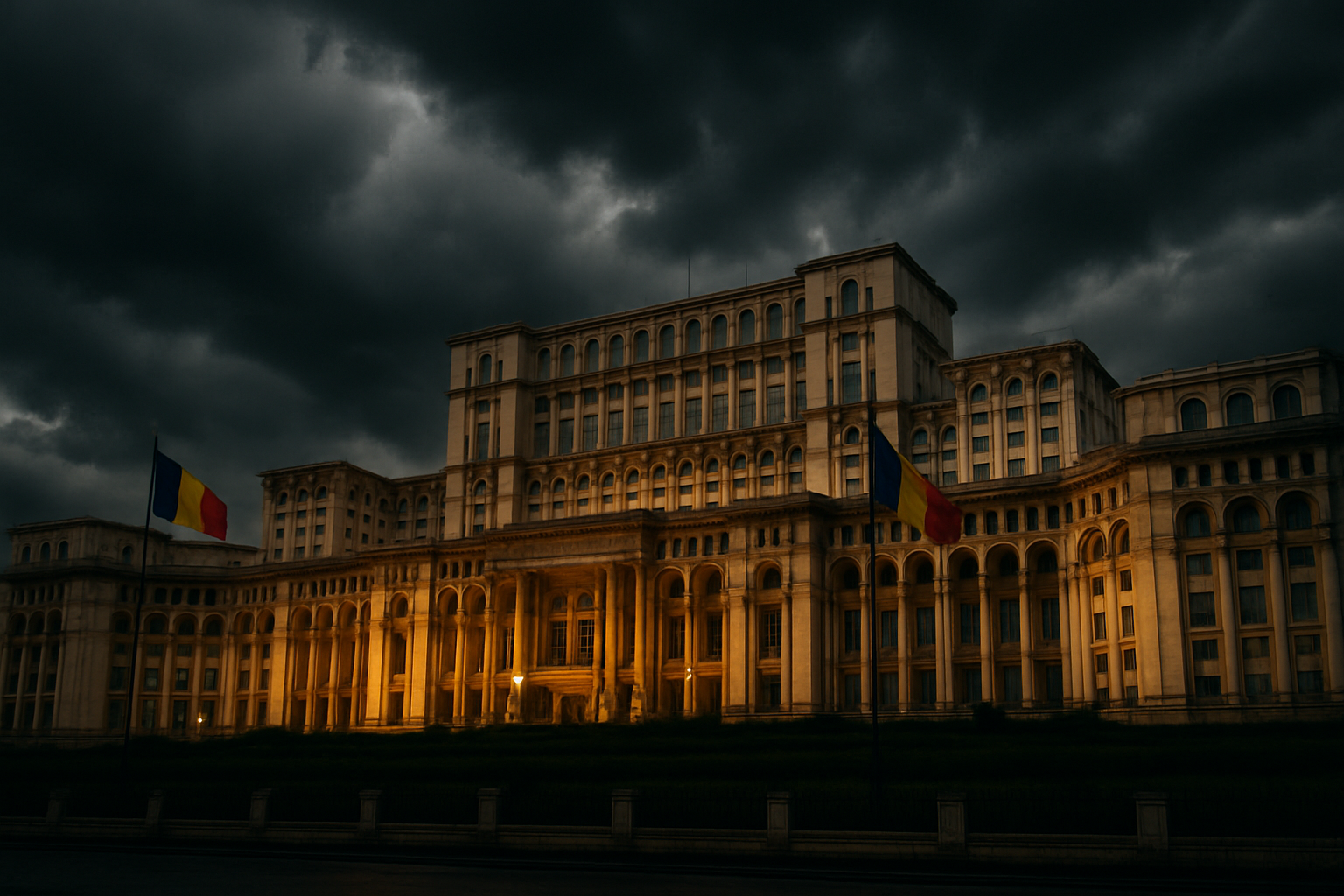
Romania's largest parliamentary party, the Social Democrats (PSD), announced a historic alliance with the far-right Alliance for Uniting Romanians (AUR) to topple Prime Minister Ilie Bolojan's pro-European coalition government through a no-confidence motion, creating the country's most serious political crisis in years and threatening access to over €10 billion in crucial EU funding.
The unprecedented partnership between the leftist PSD and extremist AUR represents a dramatic escalation of the political tensions that have gripped Romania since PSD withdrew from the governing coalition earlier this month. PSD President Sorin Grindeanu confirmed Monday that party leadership unanimously approved the joint motion of censure, demanding immediate resignations of all PSD-appointed prefects and state secretaries from government positions.
"We have a clear mandate from our leadership to proceed with this motion," Grindeanu declared at a press conference, emphasizing that the collaboration with AUR would be strictly limited to removing Bolojan from office. "There is no political agreement between PSD and AUR for post-motion governance. This is purely a tactical decision necessary to change the current direction."
Coalition Mathematics Point to Government Fall
The alliance creates sufficient parliamentary arithmetic to successfully bring down Bolojan's minority government, which lost its majority when PSD ministers resigned en masse last week over fundamental disagreements on budget priorities and EU fiscal requirements. The combined PSD-AUR votes, along with expected abstentions from other opposition parties, appear certain to exceed the threshold needed for the motion's passage.
Daniel Zamfir, leader of PSD senators, characterized the partnership as a "pragmatic, punctual collaboration" designed solely to remove the current prime minister. "AUR's objective is triggering early elections, while the Social Democratic Party seeks to continue governance with current coalition parties, but without Ilie Bolojan," he explained to media.
The crisis stems from irreconcilable differences over Romania's 2026 budget implementation and the pace of structural reforms required to access European Union pandemic recovery funds worth over €10 billion. Bolojan has refused to resign despite losing parliamentary support, declaring his government has "vital reforms to implement" before the EU's August deadline for fund absorption.
Far-Right Gains Institutional Foothold
AUR's participation in the motion represents the extremist party's most significant institutional breakthrough since entering parliament in 2020. Dan Dungaciu, the party's deputy leader, openly declared willingness to enter government "if necessary for triggering early elections," marking a potential normalization of far-right participation in Romanian governance.
"The fall of Bolojan's government is a tactical decision. We are considering governance participation solely from the perspective of achieving early elections."
— Dan Dungaciu, AUR Deputy Leader
The collaboration has drawn sharp criticism from pro-European parties and civil society organizations, who warn that legitimizing AUR through parliamentary cooperation could accelerate democratic backsliding. The extremist party has previously promoted anti-European Union positions and challenged Romania's NATO commitments, raising concerns about the country's Western orientation.
European Integration at Stake
The political crisis threatens Romania's access to crucial European funding at a critical moment for the country's post-pandemic recovery. The National Recovery and Resilience Plan (PNRR) requires successful implementation of structural reforms, many of which were coordinated by ministries previously controlled by PSD appointees.
Minister Dragoș Pîslaru has warned that over half of critical PNRR reforms were managed by PSD portfolios, with potential losses exceeding €8 billion if implementation fails to meet EU deadlines. The European Commission has already expressed concerns about Romania's reform timeline and may suspend funding disbursements pending political resolution.
Reform-minded Bolojan has maintained his refusal to step down, arguing that the government must complete essential anti-corruption measures, special pension cuts, and municipal spending reductions to meet European requirements. His administration achieved significant milestones, including securing 24 of 25 required OECD membership approvals, positioning Romania for enhanced international economic cooperation.
Historical Context of Romanian Political Instability
The current crisis represents the culmination of months of escalating tensions within Romania's multi-party coalition. Previous disputes centered on PSD demands for a €4 billion social protection package in the national budget, with party leaders criticizing Bolojan's "austerity-first" approach to fiscal policy.
Grindeanu had repeatedly threatened coalition withdrawal if social spending measures were not included in budget planning, describing the prime minister's methodology as a "paramedic attitude - first cut, then measure." The criticism reflects broader tensions between domestic political pressures and European Union fiscal discipline requirements.
The crisis occurs during what observers describe as the most challenging period for European democracy since World War II, with similar coalition breakdowns affecting multiple EU member states. Romania's situation is particularly concerning given the country's strategic position on NATO's eastern flank and its role in regional security architecture.
Opposition Strategy and Electoral Implications
While PSD leadership insists the collaboration with AUR remains limited to the no-confidence motion, the partnership raises questions about Romania's political trajectory and the normalization of extremist parties in mainstream governance. AUR has gained significant electoral ground since 2020, capitalizing on anti-establishment sentiment and EU skepticism among certain voter segments.
The extremist party's strategy appears focused on forcing early parliamentary elections, where recent polling suggests they could increase their representation significantly. AUR leaders have framed the crisis as an opportunity to "restore Romanian sovereignty" and challenge what they characterize as excessive European Union influence over domestic policy-making.
President Nicușor Dan faces crucial decisions about potential early elections or attempts to form alternative government arrangements. The constitutional framework allows for limited options, with most scenarios requiring either a new coalition agreement or dissolution of parliament for fresh elections.
International Monitoring and Implications
International allies are closely monitoring Romania's political development, given the country's importance to NATO's eastern defense architecture and European Union cohesion. The potential normalization of far-right participation in governance decisions could influence similar political movements across Eastern Europe.
European Union officials have privately expressed concerns about Romania's political stability affecting regional cooperation and security arrangements. The country serves as a crucial transit point for European aid to Ukraine and hosts significant military infrastructure supporting alliance defense commitments.
The crisis resolution will establish important precedents for how European democracies manage political transitions during periods of international tension and economic uncertainty. Success in maintaining pro-European orientation could strengthen regional stability, while political fragmentation might encourage similar challenges to democratic institutions elsewhere.
As Romania faces this unprecedented political crossroads, the coming days will determine whether democratic institutions can navigate the crisis while preserving the country's European integration trajectory and NATO alliance commitments that have defined its post-communist development path.