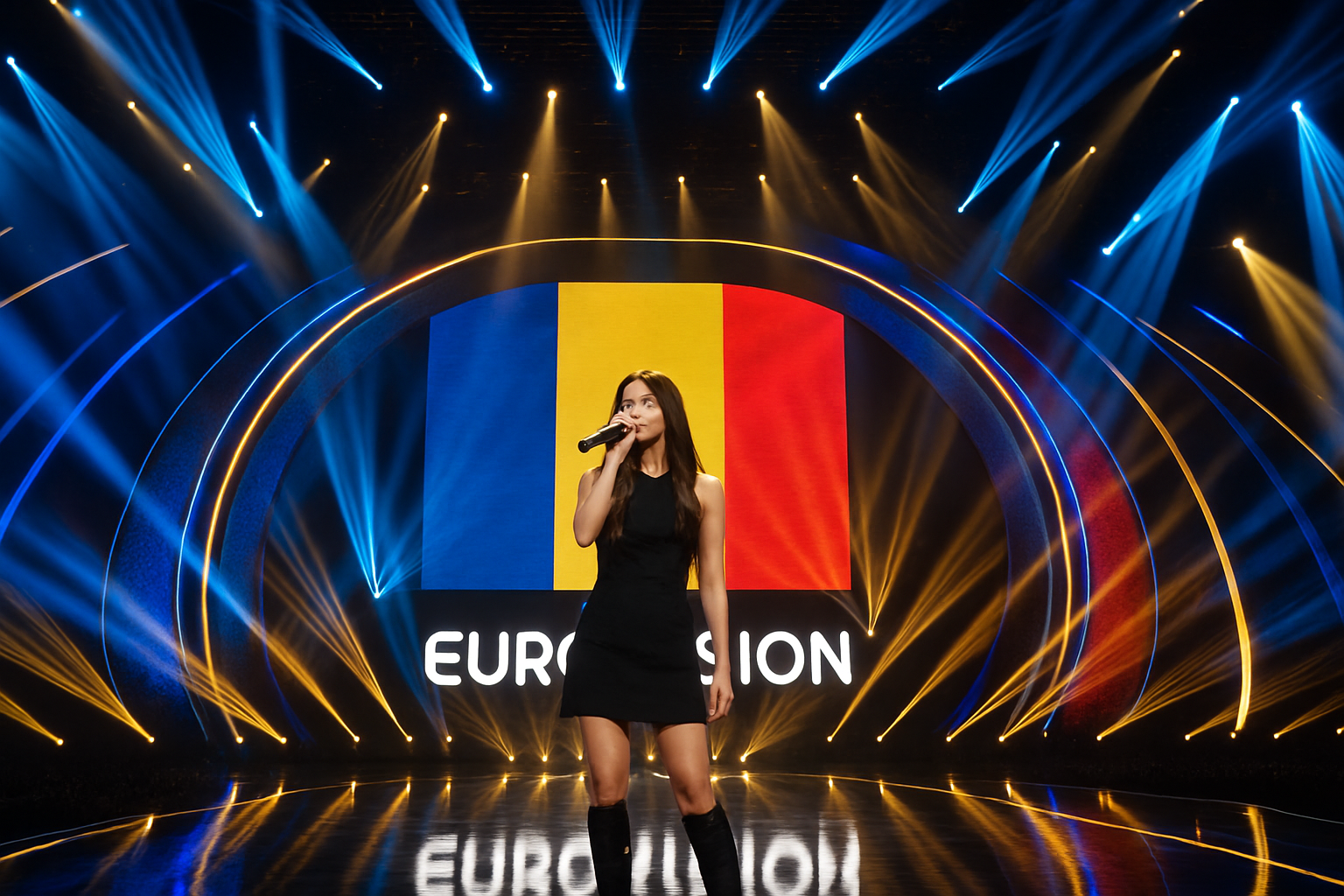
Romania has selected Alexandra Căpitănescu to represent the country at Eurovision 2026 in Vienna with her powerful pop-rock anthem "Choke Me," following a national selection broadcast live on TVR Wednesday evening.
The young artist from Galați emerged victorious from Romania's Selecția Națională, marking another significant milestone in the country's Eurovision journey. Căpitănescu, known for winning the eleventh season of a major television talent competition, brings both vocal prowess and stage charisma to Romania's Eurovision campaign.
A Bold Musical Choice
"Choke Me" represents a striking departure from recent Eurovision trends, embracing a pop-rock sound that showcases Căpitănescu's powerful vocal range and dynamic stage presence. The song's genre choice aligns with the broader evolution of Eurovision 2026, where countries are increasingly embracing authentic cultural expression over manufactured Eurovision pop.
Speaking after her selection, an emotional Căpitănescu declared, "I want my music to reach people." This sentiment reflects the artist's genuine desire to connect with audiences across Europe through authentic musical expression rather than strategic Eurovision calculation.
Eurovision 2026: A Cultural Renaissance
Romania's selection comes during what experts have termed the "February 2026 Cultural Renaissance," a period of unprecedented international cultural activity and cooperation. Eurovision 2026, returning to Vienna after the city's successful 2015 hosting, has evolved beyond mere entertainment into a comprehensive cultural diplomacy platform.
The contest's transformation is evident in the diverse range of national selections completed across Europe. Nordic countries have maintained their Eurovision excellence through sophisticated production capabilities, while Serbia has embraced metal with Lavina's "Kraj mene," and Bulgaria has incorporated traditional kukeri folklore elements with Dara's "Bangaranga."
"Eurovision has evolved into a cultural diplomacy platform beyond entertainment, showcasing national identity and international cooperation."
— Eurovision Cultural Affairs Analysis, 2026
Romania's Eurovision Heritage
Romania's Eurovision participation has been marked by memorable performances and competitive results since joining the contest. The country has consistently delivered quality entries that balance international appeal with authentic Romanian musical identity. Căpitănescu's selection continues this tradition while embracing contemporary rock influences.
The selection process involved rigorous evaluation, with TVR's live broadcast allowing Romanian audiences to witness the decision-making process. This transparency reflects the democratic nature of Eurovision participation, where national broadcasters balance artistic merit with potential European appeal.
Preparing for Vienna
Vienna's preparation for Eurovision 2026 builds on the city's successful 2015 hosting experience, with enhanced venues and cultural programming planned. The contest returns to Austria during a period of significant European cultural momentum, with festivals and events demonstrating renewed appreciation for artistic authenticity.
For Căpitănescu, the coming months will involve intensive preparation including vocal coaching, staging development, and promotional activities across European media. The artist faces the challenge of adapting "Choke Me" for the Eurovision stage while maintaining its authentic rock energy.
The Broader Contest Landscape
Eurovision 2026 reflects broader trends in European cultural expression. Countries are increasingly selecting artists who represent genuine cultural identity rather than generic Eurovision formulas. Norway's Jonas Lovv victory over Eurovision veteran Alexander Rybak demonstrated audience appetite for fresh talent and authentic expression.
Finland's Linda Lampeniuksen and Pete Parkkosen have created compelling violin-infused performances positioning them as top contenders, while Germany selected Sarah Engels despite critics noting areas for improvement. The diversity of approaches demonstrates Eurovision's maturation as a platform celebrating European musical variety.
Cultural Diplomacy Through Song
Romania's participation in Eurovision 2026 extends beyond musical competition into cultural diplomacy. The contest provides opportunities for countries to showcase their contemporary creativity while honoring traditional cultural foundations. Căpitănescu's rock anthem represents Romania's dynamic musical evolution and willingness to embrace bold artistic choices.
The selection also demonstrates Romania's confidence in supporting young talent on the international stage. Căpitănescu's television competition background provides performance experience crucial for Eurovision success, while her age represents the contest's appeal to younger audiences across Europe.
Looking Toward May
As Eurovision 2026 approaches in May, Romania enters the competition with renewed optimism and artistic authenticity. "Choke Me" offers the potential for memorable staging incorporating rock concert elements within Eurovision's sophisticated production framework.
The contest's return to Vienna promises enhanced cultural programming beyond the competition itself, positioning Eurovision as a comprehensive celebration of European creativity and cooperation. Romania's participation with Căpitănescu and "Choke Me" contributes to this broader cultural dialogue while pursuing competitive success.
For Alexandra Căpitănescu, Eurovision 2026 represents the culmination of years of artistic development and the beginning of international recognition. Her journey from Galați to Vienna exemplifies the opportunities Eurovision provides for emerging artists to reach global audiences through authentic musical expression.