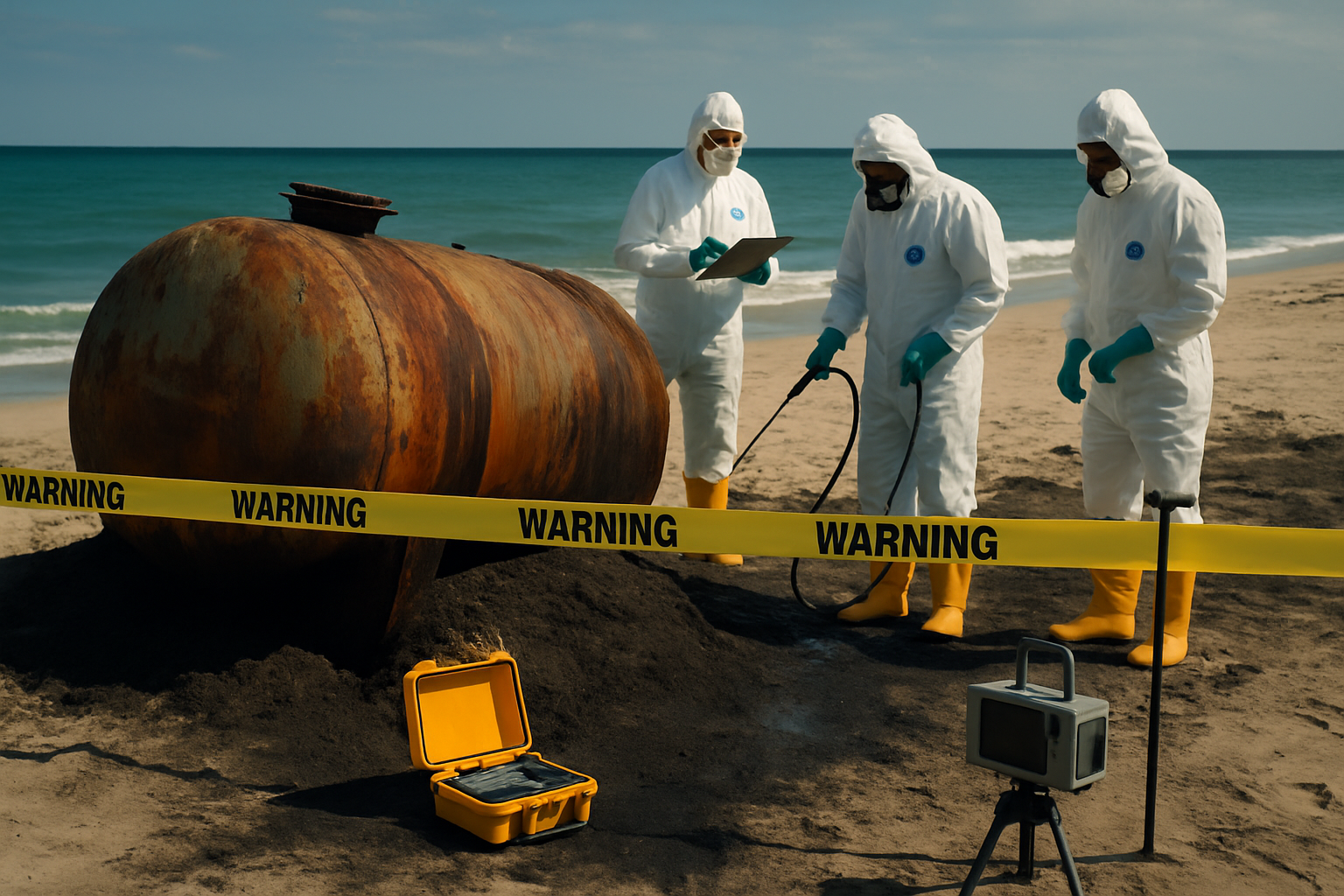
Romanian Environment Minister Diana Buzoianu announced Monday the discovery of an illegally buried gas tank on the protected beaches of Năvodari, describing the incident as "a huge irresponsibility" that poses major risks to thousands of Romanians and the Black Sea coastal ecosystem.
The discovery was made during routine coastal monitoring operations, with police immediately conducting on-site investigations and collecting evidence for criminal proceedings to establish all responsibilities. The incident occurs at a time when Romania has emerged as a leader in environmental protection initiatives across Eastern Europe.
Criminal Investigation Launched
According to reports from multiple Romanian sources, authorities have opened a criminal case to investigate what appears to be a deliberate environmental crime. The gas tank's burial on protected coastal lands violates multiple environmental regulations and poses significant threats to both marine ecosystems and public safety.
Minister Buzoianu characterized the incident as representing massive environmental irresponsibility, noting that the contamination risk extends beyond immediate coastal areas to affect broader regional ecosystem health. The Năvodari coastline represents one of Romania's most important Black Sea tourism and conservation areas.
Regional Environmental Context
This discovery comes amid a period of unprecedented environmental action across Eastern Europe. Romania has recently demonstrated significant environmental leadership through multiple initiatives, including rapid response to water contamination incidents and aggressive enforcement of coastal development regulations.
"This represents a fundamental test of our environmental protection systems and our commitment to preserving Romania's natural heritage for future generations."
— Diana Buzoianu, Environment Minister
The incident occurs during what environmental experts are calling a "conservation renaissance" across the region, with Romania positioning itself as a leader in proactive ecosystem service management rather than reactive crisis response.
Black Sea Coastal Protection Initiatives
Romania has intensified coastal protection efforts in recent months, with authorities identifying nearly 4,000 potentially illegal constructions along the Black Sea coast between the shoreline and cliffs. The Environment Ministry and Apele Române (National Water Administration) have been pursuing aggressive legal action against unauthorized coastal development.
This enforcement surge represents a massive challenge reflecting broader European patterns of uncontrolled coastal development amid climate change and sea-level rise pressures. The illegal gas tank discovery demonstrates that environmental crimes extend beyond unauthorized construction to include hazardous material disposal.
Climate Change Amplifying Risks
The environmental threat posed by the illegal tank burial is amplified by ongoing climate change impacts. January 2026 marked the hottest month in recorded history, extending an unprecedented 19-month streak of global temperatures exceeding 1.5°C above pre-industrial levels.
These sustained temperature elevations, combined with changing precipitation patterns and increased storm intensity, create conditions where buried contaminants can more readily leach into groundwater systems and coastal waters. Environmental scientists warn that climate change is fundamentally altering the behavior of pollutants in natural systems.
Technological Detection and Response
The discovery demonstrates the effectiveness of Romania's enhanced environmental monitoring systems, which combine advanced satellite tracking with traditional ground-based inspections. This technological integration has proven essential for detecting environmental crimes that might otherwise remain hidden until causing widespread damage.
Romanian authorities have invested heavily in environmental DNA sampling, real-time water quality monitoring, and sophisticated enforcement protocols that enable rapid response to environmental threats. The quick detection and immediate criminal investigation represent a model for other nations facing similar challenges.
Economic and Tourism Implications
The Năvodari coastline represents a critical economic asset for Romania, supporting tourism worth hundreds of millions of euros annually and serving as a foundation for sustainable coastal development. Environmental contamination in such areas carries massive economic risks that extend far beyond immediate cleanup costs.
Romania's proactive environmental stance has positioned the country to attract increasing sustainable investment and eco-tourism. The rapid response to this incident demonstrates the government's commitment to protecting these economic assets through environmental stewardship.
International Environmental Cooperation
Romania's environmental initiatives occur within a broader context of international cooperation on environmental protection. The country has been actively participating in European Union environmental frameworks while developing innovative approaches that serve as templates for other nations.
The Black Sea region faces particular environmental challenges that require coordinated responses among coastal nations. Romania's enforcement actions contribute to broader regional efforts to protect marine ecosystems that transcend national boundaries.
Looking Forward: Preventive Measures
Beyond addressing the immediate contamination threat, Romanian authorities are using this incident to strengthen preventive measures against future environmental crimes. Enhanced monitoring systems, stricter penalties, and improved inter-agency coordination aim to deter similar incidents.
The case represents a critical test of Romania's evolving environmental protection framework, which emphasizes proactive prevention rather than reactive cleanup. Success in prosecuting those responsible while preventing similar incidents will influence environmental policy across the region.
As climate change continues to intensify environmental pressures, Romania's response to this incident may serve as a model for other nations facing similar challenges in protecting critical coastal ecosystems while maintaining economic development.