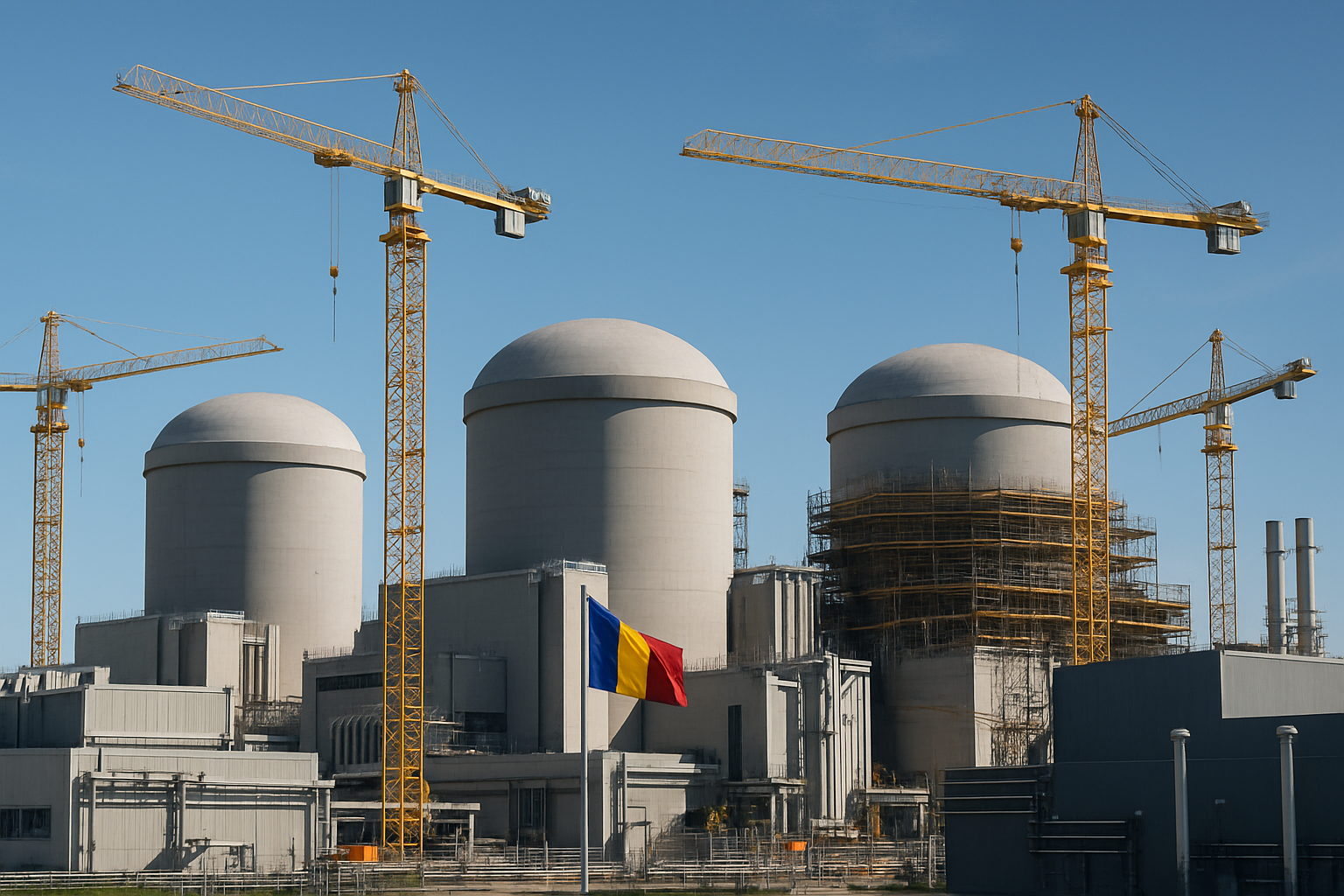
Romania is positioning itself at the forefront of Europe's nuclear renaissance, spearheading the development of next-generation nuclear technology through an ambitious small modular reactor (SMR) project that could transform the continent's approach to clean energy independence.
The centerpiece of Romania's nuclear strategy is the construction of a groundbreaking nuclear power plant in Deutschești, built around innovative small modular reactors that represent a fundamental shift from traditional large-scale nuclear facilities. This development places Romania among the most progressive European nations in adopting advanced nuclear technology amid growing concerns over energy security and climate change.
Small Modular Reactors: The Future of Nuclear Power
Small modular reactors represent a revolutionary approach to nuclear energy generation, offering enhanced safety features, reduced construction costs, and greater flexibility compared to conventional nuclear plants. The Deutschești facility will showcase these advanced systems, which can be manufactured in factories and deployed more quickly than traditional reactors.
The SMR technology being implemented in Romania incorporates cutting-edge safety systems including digital monitoring, automated control mechanisms, and inherent safety features that make reactor meltdowns virtually impossible. These systems operate on the principle of passive safety, meaning they can shut down safely without external power or human intervention.
European Context and Energy Security Imperative
Romania's nuclear leadership comes at a critical time for European energy security. The continent faces unprecedented challenges including supply chain vulnerabilities, particularly regarding critical materials where China controls 60% of global production and 90% of refining capacity for essential elements like lithium, cobalt, and rare earth minerals needed for renewable energy infrastructure.
"Nuclear energy provides a pathway to carbon-neutral electricity without dependence on weather-dependent renewables or vulnerable international supply chains."
— Energy Policy Expert
The timing of Romania's nuclear expansion reflects broader European trends. Hungary has launched the €39.1 billion Paks II nuclear construction project with IAEA backing, while Japan restarted the world's largest nuclear facility at Kashiwazaki-Kariwa, signaling a global nuclear renaissance driven by climate commitments and energy independence goals.
Regional Nuclear Momentum Building
Romania's nuclear initiative is part of a wider European movement toward advanced atomic energy. Estonia operates continental Europe's largest battery storage facility serving 90,000 households, while maintaining 88% renewable electricity generation. However, the intermittency challenges of renewables are driving renewed interest in nuclear baseload power.
The French government, as the world's second-largest nuclear producer after the United States, has updated its energy strategy to prioritize nuclear power as the cornerstone for meeting electric vehicle, heat pump, and industrial electrification demands. This policy shift emphasizes nuclear reliability over weather-dependent renewable sources.
Technological Innovation and International Cooperation
The Deutschești SMR project demonstrates Romania's commitment to technological innovation in the nuclear sector. The facility will incorporate the latest in reactor design, including advanced materials, improved fuel cycles, and enhanced waste management systems that address traditional concerns about nuclear power.
International cooperation plays a crucial role in Romania's nuclear development. The project benefits from knowledge sharing with other nuclear-advanced nations and aligns with the US-EU-Japan Critical Minerals Partnership, which involves 55 countries working to diversify supply chains and reduce dependency on Chinese-controlled materials.
Economic and Strategic Benefits
The nuclear expansion offers significant economic advantages for Romania. The project will create thousands of specialized, high-paying jobs throughout the construction phase and decades of operational employment. Nuclear facilities typically provide stable electricity pricing, reducing energy cost volatility that affects both households and businesses.
From a strategic perspective, nuclear energy enhances Romania's position as a regional energy hub. The reliable baseload power generation can support neighboring countries' energy security while strengthening Romania's geopolitical influence in Eastern Europe.
Addressing Global Energy Transition Challenges
Romania's nuclear strategy addresses several critical challenges facing the global energy transition. While renewable energy sources like wind and solar are essential for decarbonization, they face limitations including intermittency, storage requirements, and land use constraints. Nuclear power provides carbon-free electricity on demand, complementing renewables to create a comprehensive clean energy system.
The SMR approach also addresses traditional nuclear power concerns including high capital costs, long construction times, and safety worries. The modular design allows for phased construction and commissioning, reducing financial risks while maintaining the highest safety standards.
Climate and Environmental Impact
The environmental benefits of Romania's nuclear expansion are substantial. Nuclear power generates virtually no greenhouse gas emissions during operation, making it a crucial technology for meeting climate commitments. The Deutschești facility will contribute significantly to Romania's carbon neutrality goals while providing reliable electricity for decades.
Modern nuclear technology also addresses waste management concerns through advanced fuel cycles and waste reduction techniques. The SMR design minimizes waste production while maximizing fuel efficiency, representing a significant improvement over earlier nuclear technologies.
Future Implications and Global Significance
Romania's leadership in SMR development positions the country as a potential technology exporter and nuclear expertise hub. Success in implementing this advanced technology could lead to additional nuclear projects domestically and consulting opportunities internationally.
The global implications extend beyond Europe. As countries worldwide grapple with energy security and climate challenges, Romania's SMR experience could provide a template for nuclear deployment in other regions facing similar pressures.
"Romania's nuclear renaissance demonstrates how countries can achieve energy independence while meeting climate commitments through technological innovation and strategic planning."
— International Energy Analyst
The success of Romania's nuclear program could accelerate the global adoption of small modular reactor technology, contributing to international efforts to combat climate change while ensuring energy security in an increasingly volatile geopolitical environment.
Looking Ahead: Europe's Nuclear Future
Romania's nuclear leadership reflects a fundamental shift in European energy policy toward pragmatic climate solutions that balance environmental goals with economic and security realities. The country's SMR development represents investment in next-generation technology that could define Europe's energy landscape for the coming decades.
As the international community faces mounting pressure to reduce carbon emissions while maintaining economic growth and energy security, Romania's nuclear innovations offer a compelling pathway forward. The Deutschești project stands as a testament to how forward-thinking energy policy can position nations as leaders in the global transition to clean, reliable, and secure energy systems.