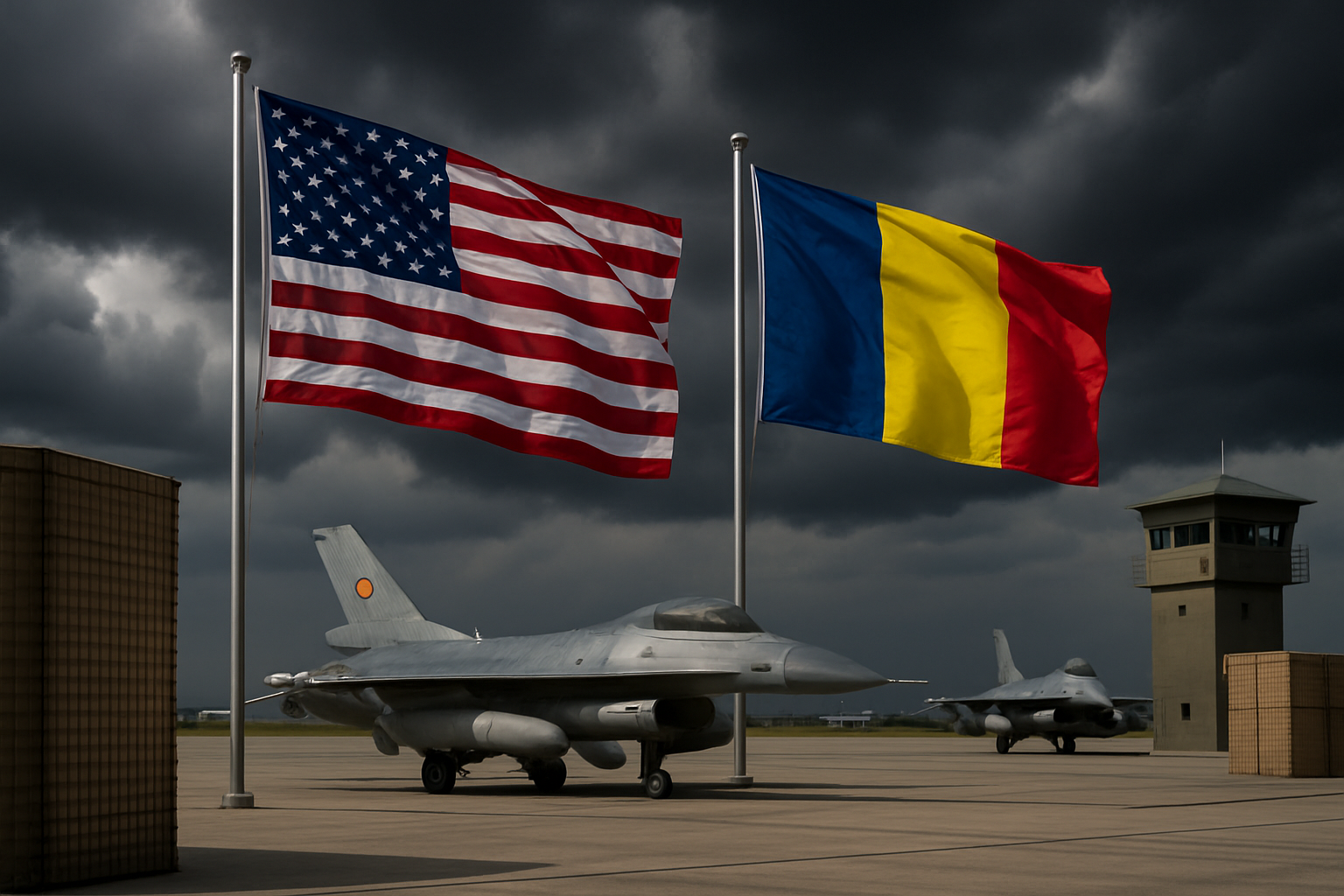
Romania finds itself at the center of escalating security concerns as former President Traian Băsescu issued stark warnings about potential Iranian attacks on American military installations, while the strategically important Mihail Kogălniceanu Airport announced the suspension of civil air traffic.
In a Facebook post that has reverberated through Romanian political circles, Băsescu declared it "possible that Iran might try to strike American equipment deployed at the Kogălniceanu and Turda bases." The warning comes as Romania hosts significant U.S. military assets as part of NATO's eastern flank deterrence strategy, making the country a potential target in the ongoing Middle East crisis.
Critical Infrastructure Under Threat
The timing of Băsescu's warning coincides with an official aviation notice announcing the suspension of civil air traffic at Mihail Kogălniceanu Airport between March 20 at 11:00 AM and March 21 at 7:30 PM. The airport, located in Constanța County, serves as both a civilian facility and houses Romanian and NATO military operations, including significant American assets.
According to official notifications published in the international aviation information system, the suspension affects all civilian flight operations during the specified timeframe. While no official explanation was provided, the timing suggests potential security concerns or military exercises requiring exclusive use of the airspace.
"It is possible that Iran might try to strike American equipment deployed at the Kogălniceanu and Turda bases. Another category of risks are terrorist attacks carried out by radicalized Islamists or cyber attacks."
— Traian Băsescu, Former Romanian President
Historical Context of Escalating Tensions
Băsescu's warnings must be understood within the broader context of the ongoing Iran-U.S. crisis that has reached unprecedented levels. Since February 2026, tensions have escalated dramatically following the collapse of nuclear negotiations in Geneva, despite achieving what was described as "broad agreement on guiding principles" – the most significant diplomatic progress since the 2018 JCPOA collapse.
The crisis intensified when Iran's Ambassador to the UN, Amir Saeid Iravani, formally warned that all U.S. military bases in the Middle East would become "legitimate targets" if America attacks Iran. This direct threat against American installations across the region has created a ripple effect, with allies like Romania reassessing their security posture.
Romania's Strategic Importance
Romania's position on NATO's eastern flank makes it a crucial component of the alliance's deterrence strategy. The Mihail Kogălniceanu Air Base hosts not only Romanian forces but also significant American military assets, including advanced defense systems and personnel. Similarly, the Turda military installation mentioned by Băsescu serves as another key point in Romania's defense infrastructure.
The former president's warnings extend beyond conventional military threats to encompass "terrorist attacks carried out by radicalized Islamists" and cyber attacks, reflecting the multi-dimensional nature of modern security challenges.
Government Response and Preparedness
Băsescu has called on Romanian authorities to "urgently take preventive measures to inform the population" about potential risks. His statement, while described as a "personal opinion generated by the fact that developments in the Middle East are very serious," carries significant weight given his experience as a former head of state and his continued involvement in security matters.
The suspension of civilian flights at Kogălniceanu Airport represents a tangible manifestation of these security concerns. While official sources have not explicitly linked the flight suspension to the Middle East crisis, the timing suggests a precautionary approach to potential threats.
Regional and International Implications
Romania's security concerns reflect broader challenges facing NATO allies as the Iran crisis continues to escalate. The country's strategic location on the Black Sea and its hosting of American military assets make it a potential flashpoint in any broader conflict.
The Iranian threat matrix has expanded significantly since the nuclear negotiations collapsed. Iran has maintained uranium enrichment at 60% purity, approaching the 90% weapons-grade threshold, while possessing sufficient material for multiple weapons if weaponized. This nuclear capability, combined with Iran's declared policy of treating all U.S. bases as "legitimate targets," creates a complex security environment for NATO allies.
Aviation Security Measures
The suspension of civil air traffic at Kogălniceanu Airport follows a pattern of increased security measures across Europe and the Middle East. The aviation industry has faced unprecedented disruptions, with over 18,000 flights cancelled worldwide during the peak of the Iran crisis – the most extensive disruption since COVID-19.
Eight Middle Eastern countries have maintained simultaneous airspace closures, affecting critical Europe-Asia aviation corridors. The precautionary measures at Romanian facilities suggest authorities are taking no chances with civilian safety amid the volatile regional situation.
NATO's Eastern Flank Strategy
Romania's role in NATO's eastern flank defense has taken on increased importance since Russia's invasion of Ukraine. The country hosts significant American military assets as part of the alliance's deterrence strategy, making it a valuable target for adversaries seeking to disrupt NATO operations.
The presence of advanced U.S. military equipment at Romanian bases, specifically mentioned by Băsescu, represents both a defensive asset and a potential liability. While these systems contribute to regional security and deterrence, they also create additional risk factors that must be carefully managed.
Cyber and Asymmetric Threats
Băsescu's warning about potential cyber attacks reflects the evolving nature of modern warfare. Iran has demonstrated sophisticated cyber capabilities in recent years, targeting critical infrastructure, government systems, and military networks across multiple countries.
The multi-dimensional threat environment requires comprehensive preparedness measures, including public awareness campaigns, infrastructure protection, and coordination between civilian and military authorities. Romania's position as a NATO ally hosting American assets makes it an attractive target for both conventional and asymmetric attacks.
Looking Ahead: Preparing for Multiple Scenarios
As the Middle East crisis continues to evolve, Romanian authorities face the challenge of maintaining readiness against multiple threat vectors while preserving normal civilian activities. The temporary suspension of flights at Kogălniceanu Airport demonstrates the delicate balance between security and functionality.
Băsescu's call for increased public awareness and government preparedness reflects the reality that modern conflicts can have global implications, affecting countries far from the primary theaters of operation. Romania's experience illustrates how NATO allies must adapt their security postures to address evolving threats in an increasingly interconnected world.
The coming days and weeks will test Romania's preparedness and resilience as the Iran crisis continues to unfold. The country's response to these challenges will likely serve as a template for other NATO allies facing similar security dilemmas in an era of great power competition and regional conflicts with global implications.