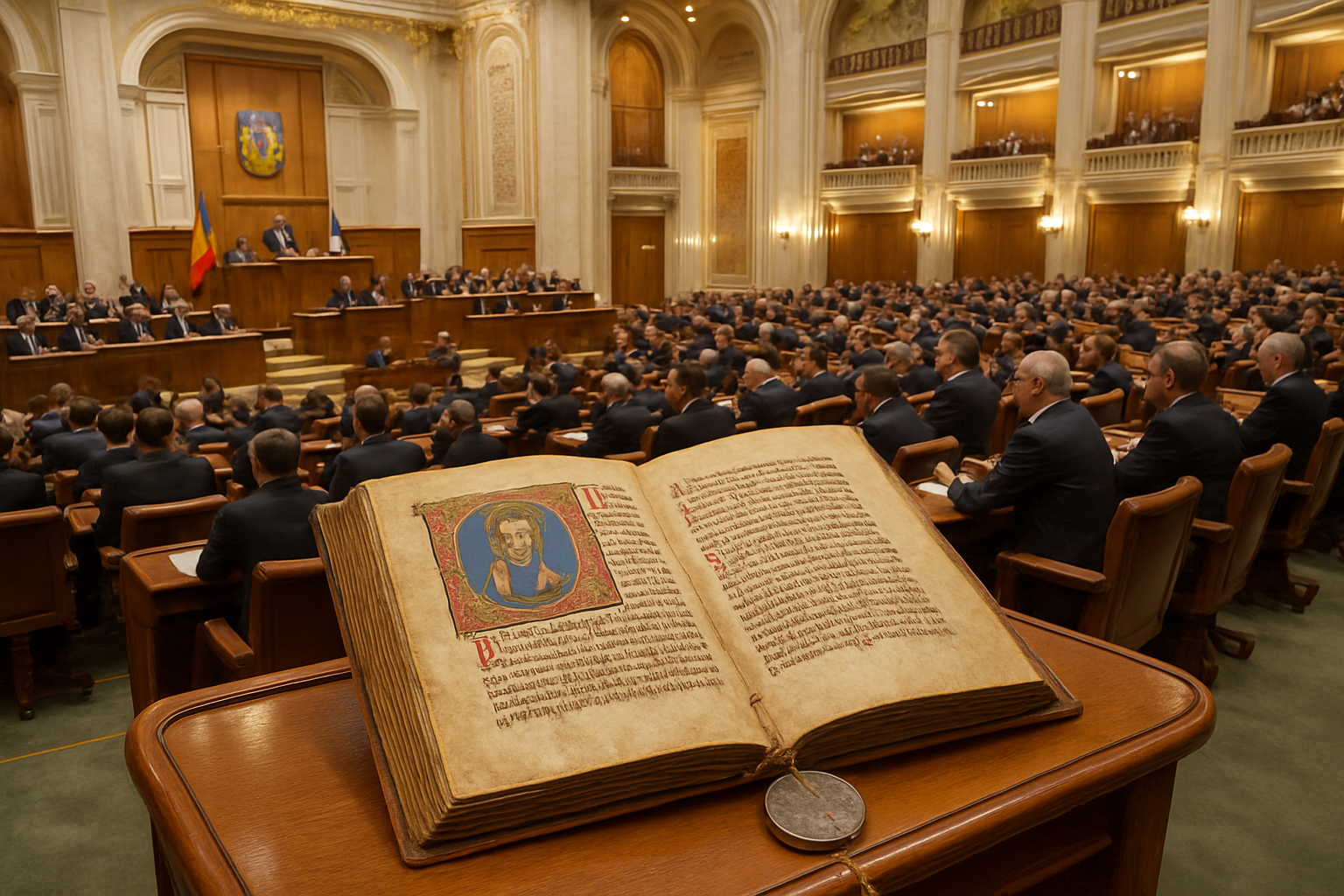
The Romanian Senate is set to debate a motion of disapproval against Culture Minister Andras Istvan Demeter on Monday, while revelations from a new book shed unprecedented light on the papal conclave that elected Pope Leo XIV, including the near-election of Hungarian Archbishop Péter Erdő.
The political drama in Bucharest and religious revelations from Vatican City highlight the complex intersection of contemporary governance challenges and institutional transparency within both secular and ecclesiastical spheres across Europe.
Senate Confronts Culture Ministry Leadership
Opposition senators in Romania have prepared a scathing motion against Culture Minister Andras Istvan Demeter, expressing their "disapproval" of how he manages "an essential domain for the Romanian people." The motion, titled "The Guild Wants You Out, Mr. Minister. You Are an Insult," signals deep frustration within Romania's cultural and artistic communities.
The parliamentary debate, scheduled for Monday in the Senate plenary, comes amid broader questions about the government's cultural policies and the minister's relationship with Romania's creative sector. The motion represents a formal challenge to Demeter's leadership at a time when cultural institutions across Europe face mounting pressures from economic constraints and political interference.
Sources familiar with the motion indicate that opposition senators have gathered substantial evidence of what they characterize as mismanagement and disconnect from Romania's cultural needs. The timing of the debate, during a period of heightened political sensitivity across Europe, underscores the growing importance of cultural policy in national governance.
Vatican Secrets Revealed in New Publication
Simultaneously, the Catholic world is processing remarkable revelations from a newly published volume that provides unprecedented insights into the May 2025 conclave that elected Pope Leo XIV as the first American-born pontiff in the Church's 2,000-year history.
The book, authored by Vatican correspondents Gerard O'Connell and Elisabetta Piqué, both highly respected journalists with extensive Vatican access, reveals that Hungarian Archbishop Péter Erdő, the Archbishop of Budapest, came remarkably close to papal election. These revelations offer the most detailed account to date of the historic conclave proceedings.
According to the authors' meticulous reporting, the selection process was far more complex than initially understood, with Cardinal Erdő emerging as a serious contender who commanded significant support among the College of Cardinals. The Hungarian prelate's near-election would have represented a different kind of historic first - the selection of an Eastern European pope with deep understanding of Church-state relations in formerly communist territories.
Historical Significance of Papal Selection
The conclave revelations take on particular significance given Pope Leo XIV's subsequent diplomatic initiatives, including his unprecedented commitment to global outreach. As documented in previous reporting, the Pope has announced ambitious travel plans, including a historic April 2026 tour of Africa that will include the first papal visit to Algeria in modern history.
The book's insights into Cardinal Erdő's candidacy illuminate the complex dynamics within the College of Cardinals during a period of global uncertainty. Erdő, known for his theological expertise and administrative competence, represents the Church's continued engagement with European political and social challenges.
"The conclave proceedings revealed deep discussions about the Church's future direction, with Cardinal Erdő's candidacy representing continuity with European Christian traditions while embracing global perspectives."
— Gerard O'Connell, Vatican Correspondent
Broader European Political Context
Both developments occur within a broader European context marked by institutional challenges and demands for greater transparency. The Romanian Senate motion reflects growing expectations for ministerial accountability, while the Vatican revelations demonstrate evolving attitudes toward ecclesiastical transparency.
Romania's cultural sector has experienced significant pressures in recent years, including funding constraints and debates over national cultural priorities. Minister Demeter's leadership has become a focal point for broader discussions about how democratic governments should support and regulate cultural institutions.
The opposition's formal motion represents more than simple political maneuvering; it reflects genuine concerns about cultural policy effectiveness and the government's responsiveness to artistic communities. These debates have particular resonance in Romania, where cultural expression played a crucial role in the transition from communist rule.
Religious Diplomacy and Democratic Accountability
The parallel developments in Bucharest and Vatican City illustrate contemporary challenges facing both democratic and ecclesiastical institutions. While the Romanian Senate exercises its constitutional oversight function, the Vatican grapples with balancing traditional secrecy with modern demands for institutional transparency.
Pope Leo XIV's election marked a watershed moment for Catholic governance, with his American background bringing different perspectives to Vatican diplomacy. The revelation of Cardinal Erdő's strong candidacy adds complexity to understanding how the Church navigates regional representation and global leadership requirements.
The timing of these revelations, as the Pope prepares for major diplomatic initiatives including the historic Algeria visit, provides context for understanding the deliberative process that shaped current Vatican policies. Cardinal Erdő's continued influence within Church hierarchy suggests ongoing Hungarian and Eastern European engagement with papal decision-making.
Parliamentary Democracy in Action
Monday's Senate debate will test Romania's democratic institutions' capacity for constructive oversight without destabilizing governance. The culture ministry motion represents parliamentary democracy functioning as designed, with opposition parties exercising their constitutional role in holding government officials accountable.
The outcome of the Senate vote will have implications beyond Minister Demeter's personal position. It will signal how Romania's political system balances governmental stability with responsive leadership, particularly in sectors like culture that directly affect citizens' daily lives and national identity.
European observers are likely monitoring both developments as indicators of institutional health in democratic and ecclesiastical governance. The Romanian debate demonstrates parliamentary oversight mechanisms, while the Vatican revelations show evolving approaches to institutional transparency.
Cultural Policy Stakes
At stake in the Romanian Senate debate are fundamental questions about cultural policy direction and governmental responsiveness to artistic communities. Opposition senators appear confident that they have documented sufficient evidence of ministerial shortcomings to justify formal disapproval.
The cultural sector's concerns extend beyond individual ministerial performance to broader questions about how democratic governments should support creative expression, preserve cultural heritage, and foster artistic innovation. These debates have particular relevance as European nations grapple with cultural identity questions amid globalization pressures.
Minister Demeter's response to the opposition motion will be closely watched as an indicator of governmental accountability and willingness to engage with legitimate criticism. The culture ministry's handling of this challenge may influence broader perceptions of the government's democratic responsiveness.
Future Implications
Both the Romanian political debate and Vatican revelations suggest evolving expectations for institutional transparency and democratic accountability. The Senate motion demonstrates parliamentary oversight in action, while the papal conclave book reflects changing attitudes toward ecclesiastical openness.
The developments occur as European institutions face multiple challenges requiring adaptive responses while maintaining institutional integrity. Success in both contexts depends on balancing traditional governance approaches with contemporary demands for transparency and accountability.
As Romania's Senate prepares for Monday's debate and the Catholic world processes new insights into papal selection, both developments illustrate the ongoing evolution of democratic and ecclesiastical governance in contemporary Europe. The outcomes will contribute to broader discussions about institutional reform and public accountability across diverse governance structures.