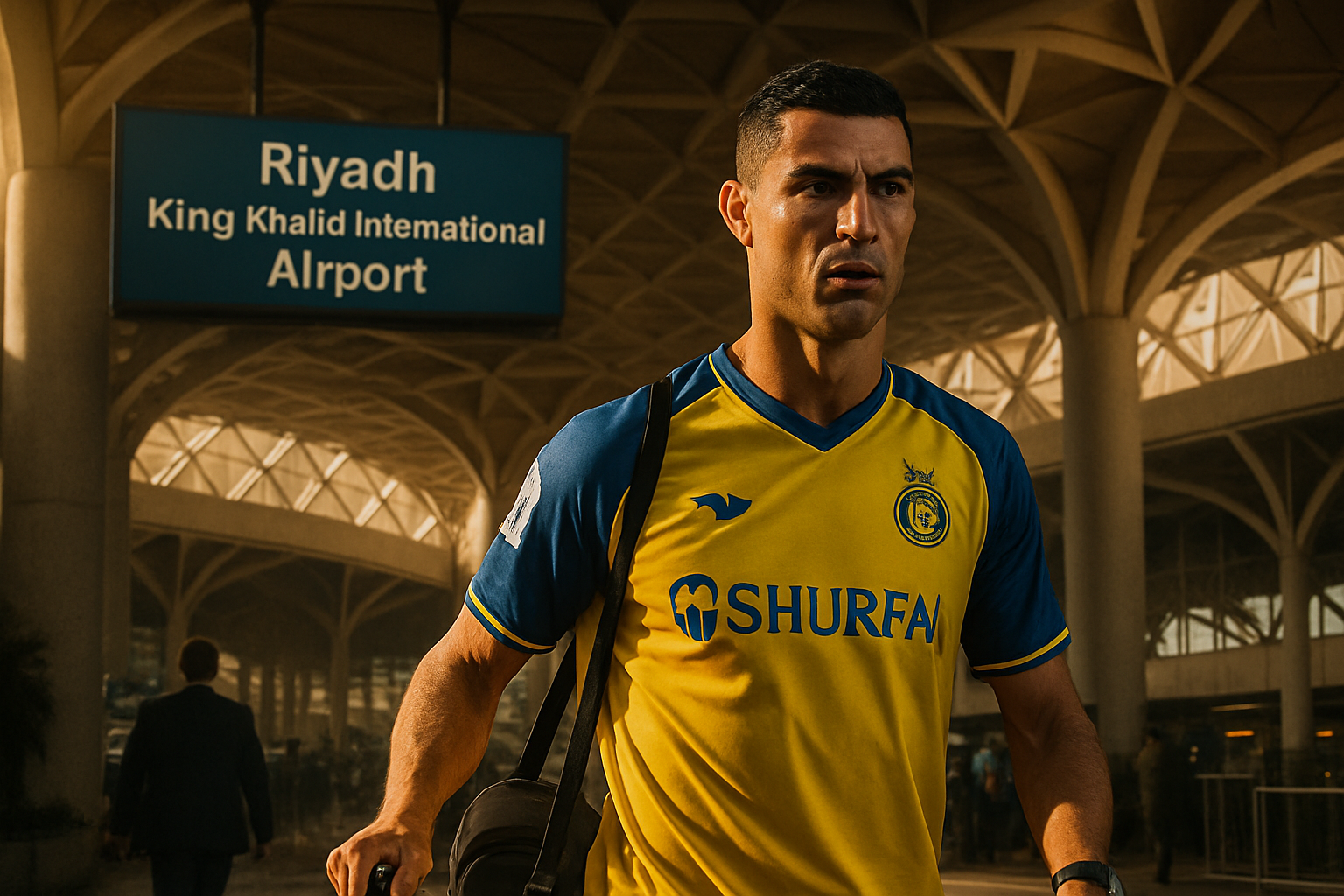
Football superstar Cristiano Ronaldo departed Riyadh for Madrid on Monday night as the Asian Football Confederation suspended multiple matches across the Gulf region due to escalating tensions linked to the Iran crisis, underscoring how military conflicts increasingly disrupt international sports.
The Al Nassr forward's departure from King Khalid International Airport came amid unprecedented regional instability that has seen the collapse of months-intensive US-Iran nuclear negotiations and escalation to military confrontation, creating ripple effects throughout the sporting world.
AFC Suspends Gulf Region Football
The Asian Football Confederation's decision to suspend several matches in the Gulf represents an extraordinary intervention in regional football operations. The move comes as the broader Middle East crisis has reached critical levels, with multiple nations closing airspace and implementing emergency protocols.
According to AzerNEWS reports, Ronaldo's departure was directly linked to these safety measures, as international sports organizations grapple with how to maintain competitions amid growing security concerns across the region.
Regional Security Crisis Impact
The current crisis stems from the complete breakdown of US-Iran nuclear negotiations that had achieved "broad agreement on guiding principles" - the most significant diplomatic progress since the JCPOA collapse in 2018. However, fundamental scope disagreements over ballistic missiles and regional proxies proved insurmountable.
Iran maintains uranium enrichment at 60% purity approaching weapons-grade levels, while the US deployed an unprecedented dual-carrier strike force (USS Gerald R. Ford and Abraham Lincoln) representing the largest Middle East naval presence since 2003. This military escalation has created an atmosphere of uncertainty affecting all sectors, including international sports.
Football's International Reach Affected
Ronaldo's presence in Saudi Arabia as part of Al Nassr represented a significant milestone in the kingdom's ambitious sports diversification strategy under Vision 2030. His departure highlights how even major international sporting investments become vulnerable during periods of regional instability.
The Portuguese striker's move to Al Nassr in December 2022 was valued at over €200 million annually, making him one of the highest-paid athletes globally and symbolizing Saudi Arabia's push to become a major sporting destination.
"The safety and security of our international players and staff remains our absolute priority during these challenging times."
— Al Nassr Club Statement
Broader Aviation and Travel Disruptions
Ronaldo's departure coincides with massive aviation disruptions across the region. Iran, Iraq, Israel, UAE, and Qatar have closed airspace to civilian traffic, with major carriers including Emirates, Air France-KLM, Wizz Air, and Bulgarian Air suspending Middle East operations.
Over 18,000 flights have been cancelled globally due to the crisis, affecting hundreds of thousands of passengers and demonstrating the far-reaching consequences of regional conflicts on international connectivity.
Sports Diplomacy Challenges
The incident underscores the vulnerability of sports diplomacy initiatives during times of political crisis. Saudi Arabia has invested heavily in attracting international sporting events and talent as part of its broader strategy to diversify away from oil dependency and enhance its global reputation.
Major sporting events scheduled in the region now face uncertainty, with organizers forced to implement contingency plans or consider relocations. The situation mirrors previous disruptions during Middle Eastern conflicts, where sporting events became collateral damage in broader geopolitical tensions.
Economic Implications for Gulf Sports
The Persian Gulf handles 40% of global oil transit, and the current tensions have already caused oil prices to rise by over $1 per barrel. This economic volatility affects the substantial investments Gulf nations have made in sports infrastructure and talent acquisition.
Qatar's successful hosting of the 2022 FIFA World Cup and ongoing preparations for the 2030 Asian Games in Riyadh could face complications if regional tensions persist or escalate further.
International Player Safety Protocols
Football clubs and leagues worldwide are now reviewing their international player safety protocols. The situation highlights the need for robust contingency planning when deploying valuable sporting assets in regions with potential security risks.
Other international athletes and teams in the region are reportedly assessing their situations, with some considering temporary relocations until stability returns.
Historical Context of Sports and Conflict
This incident recalls previous instances where sporting events and athletes became affected by regional conflicts. The 1980 Moscow Olympics boycott, disruptions during various Middle Eastern conflicts, and more recently, the impact of the Ukraine conflict on international sports demonstrate how athletic competitions cannot remain isolated from geopolitical realities.
The interconnected nature of modern sports, with international leagues, global broadcasting, and multinational player transfers, means that regional conflicts can have immediate worldwide ramifications.
Looking Forward
As diplomatic efforts continue to resolve the Iran crisis, sporting organizations across the region face difficult decisions about balancing safety concerns with maintaining international competitions and commitments.
The situation remains fluid, with multiple international governments issuing evacuation warnings for the region. Sweden and Serbia have ordered immediate citizen evacuations from Iran, while the US has authorized non-essential embassy personnel departures from Israel.
Ronaldo's departure, while precautionary, symbolizes how quickly international sporting arrangements can be affected by broader geopolitical developments, serving as a reminder of the complex relationship between sports and global politics in an increasingly interconnected world.