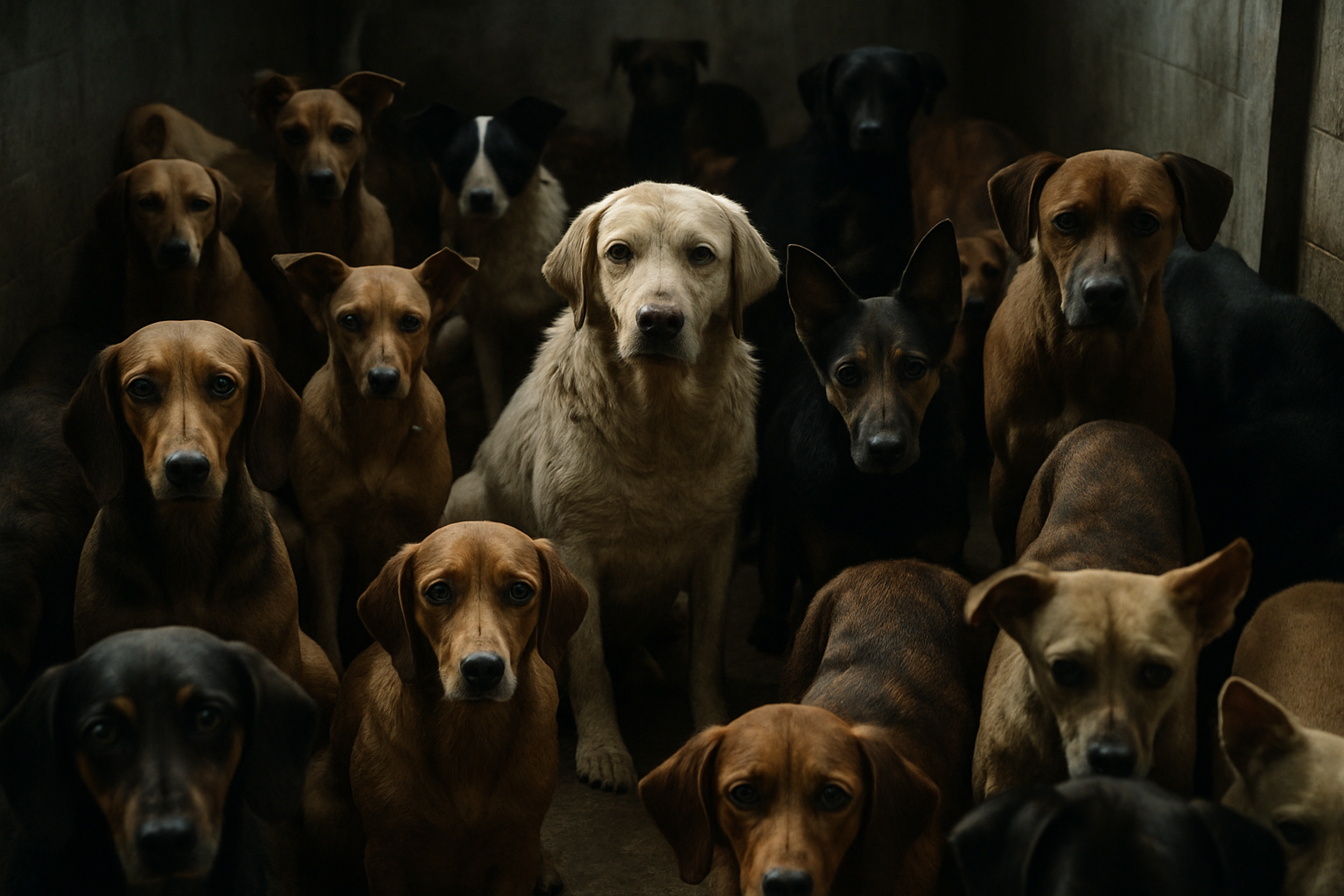
The Royal Society for the Prevention of Cruelty to Animals (RSPCA) has uncovered one of the most shocking animal welfare cases in recent British history, discovering more than 250 dogs crammed into appalling conditions at a single property in an undisclosed UK location.
The disturbing scenes were so overwhelming that the animal welfare charity found itself in the unprecedented position of having to publicly deny that the images documenting the rescue were artificially generated, after social media users questioned the authenticity of photographs showing dozens of dogs packed into a single living room space.
Scale of the Operation
The RSPCA has confirmed it took responsibility for 87 dogs from the property, while the Dogs Trust, another prominent animal welfare charity, handled the remainder of the rescued animals. The coordinated effort between the two organizations demonstrates the massive scale of intervention required to address this case of apparent large-scale animal hoarding.
"The scenes were so shocking that we understand why some people questioned whether the images could be real," an RSPCA spokesperson stated, addressing the unusual situation of having to authenticate their own documentation of animal suffering.
Conditions and Welfare Concerns
Initial reports describe deplorable living conditions with multiple dogs of various breeds confined in severely overcrowded spaces. The cramped conditions raise serious concerns about the animals' access to adequate food, water, veterinary care, and basic hygiene facilities. Such extreme overcrowding typically results in increased aggression among animals, the rapid spread of diseases, and severe psychological trauma.
Animal welfare experts note that cases of this magnitude often involve complex underlying issues including mental health problems, social isolation, and a phenomenon known as "animal hoarding disorder," where individuals compulsively acquire animals beyond their capacity to provide proper care.
Historical Context of Animal Welfare Cases
This rescue operation occurs against a backdrop of increasing global awareness of animal welfare issues. Recent months have seen significant developments in animal protection across multiple jurisdictions, with China's Justice Ministry survey attracting 4.2 million votes showing 96% support for stronger animal protection measures, demonstrating mainstream acceptance of animal welfare concerns.
The UK has long been considered a leader in animal welfare legislation, with the Animal Welfare Act 2006 establishing clear obligations for animal care and significant penalties for neglect or cruelty. However, cases of this magnitude highlight the ongoing challenges in enforcement and the need for community vigilance.
Rescue and Rehabilitation Challenges
The logistics of caring for 250 dogs simultaneously presents enormous challenges for animal welfare organizations. Each animal requires individual health assessments, behavioral evaluations, medical treatment, and potentially lengthy rehabilitation periods before being considered suitable for rehoming.
The Dogs Trust and RSPCA will need to coordinate extensive veterinary care, including vaccinations, parasite treatments, spaying and neutering procedures, and addressing any injuries or illnesses resulting from the poor living conditions. Many animals may require behavioral rehabilitation to overcome trauma and socialization issues.
Legal and Investigative Proceedings
While details of any potential criminal charges remain confidential due to ongoing investigations, cases of this severity typically result in prosecution under the Animal Welfare Act. Penalties can include substantial fines, imprisonment, and lifetime bans on keeping animals.
The investigation will likely examine how such a large number of animals could accumulate without detection, raising questions about local authority oversight and community reporting mechanisms. Animal welfare organizations regularly emphasize the importance of public vigilance in identifying and reporting suspected cases of animal neglect.
Broader Implications for Animal Welfare
This case highlights several critical issues within animal welfare frameworks. The scale suggests systematic failures in both prevention and early intervention systems. It also underscores the capacity constraints facing animal welfare organizations, which must balance immediate rescue operations with long-term rehabilitation and rehoming efforts.
Recent research has shown that animal hoarding cases have increased during periods of social isolation and economic stress. Mental health support services for both animals and their owners are increasingly recognized as essential components of comprehensive animal welfare strategies.
International Perspective on Animal Protection
Globally, 2026 has seen remarkable advances in animal welfare coordination. Recent successful conservation efforts have included Thailand's marine mammal protection programs, Ecuador's giant tortoise reintroduction initiatives, and widespread implementation of technology-enhanced animal monitoring systems.
The integration of traditional animal care knowledge with modern veterinary science has proven essential for addressing complex welfare cases. International cooperation frameworks are increasingly important as animal welfare challenges transcend national boundaries through illegal trafficking and inadequate cross-border enforcement.
Technology and Animal Welfare Documentation
The unusual situation of the RSPCA having to defend the authenticity of their documentation reflects broader contemporary challenges around digital verification and public trust. The charity's need to explicitly state "it's not AI, it's real" demonstrates how advances in artificial intelligence have complicated public perception of authentic documentation.
This incident highlights the importance of transparent documentation procedures and the potential need for animal welfare organizations to adapt their communication strategies in an era of increased digital skepticism.
Community Prevention and Support Systems
Preventing cases of this magnitude requires comprehensive community support systems that can identify at-risk situations before they escalate. Animal welfare experts emphasize the importance of accessible mental health services, financial assistance programs for pet care, and community education about responsible animal ownership.
Early intervention programs that provide support to struggling animal owners have proven more effective and cost-efficient than large-scale rescue operations. These initiatives require coordination between social services, veterinary professionals, and animal welfare organizations.
Long-term Rehabilitation and Rehoming
The 250 dogs rescued in this operation face uncertain futures requiring extensive rehabilitation efforts. Many animals from hoarding situations develop behavioral issues including fear-based aggression, difficulty with house training, and challenges forming healthy relationships with humans.
Successful rehabilitation typically requires months of specialized care, including behavioral modification programs, medical treatment, and gradual socialization processes. The economic cost of providing this care across 250 animals represents a significant burden for charitable organizations already facing increased demand for their services.
Future Prevention Strategies
This case will likely prompt reviews of existing animal welfare monitoring systems and enforcement mechanisms. Animal welfare organizations are increasingly advocating for proactive approaches that identify and address problematic situations before they reach crisis levels.
Improved coordination between local authorities, veterinary professionals, and animal welfare charities could help prevent similar situations from developing undetected. Technology solutions, including databases for tracking animal ownership and automated alert systems, may play increasingly important roles in prevention strategies.
The RSPCA's response to this unprecedented case demonstrates both the critical importance of animal welfare organizations and the enormous challenges they face in protecting vulnerable animals. As investigations continue, this case will likely become a significant reference point for discussions about animal welfare law enforcement, prevention strategies, and the resources required to address complex animal welfare emergencies in modern Britain.