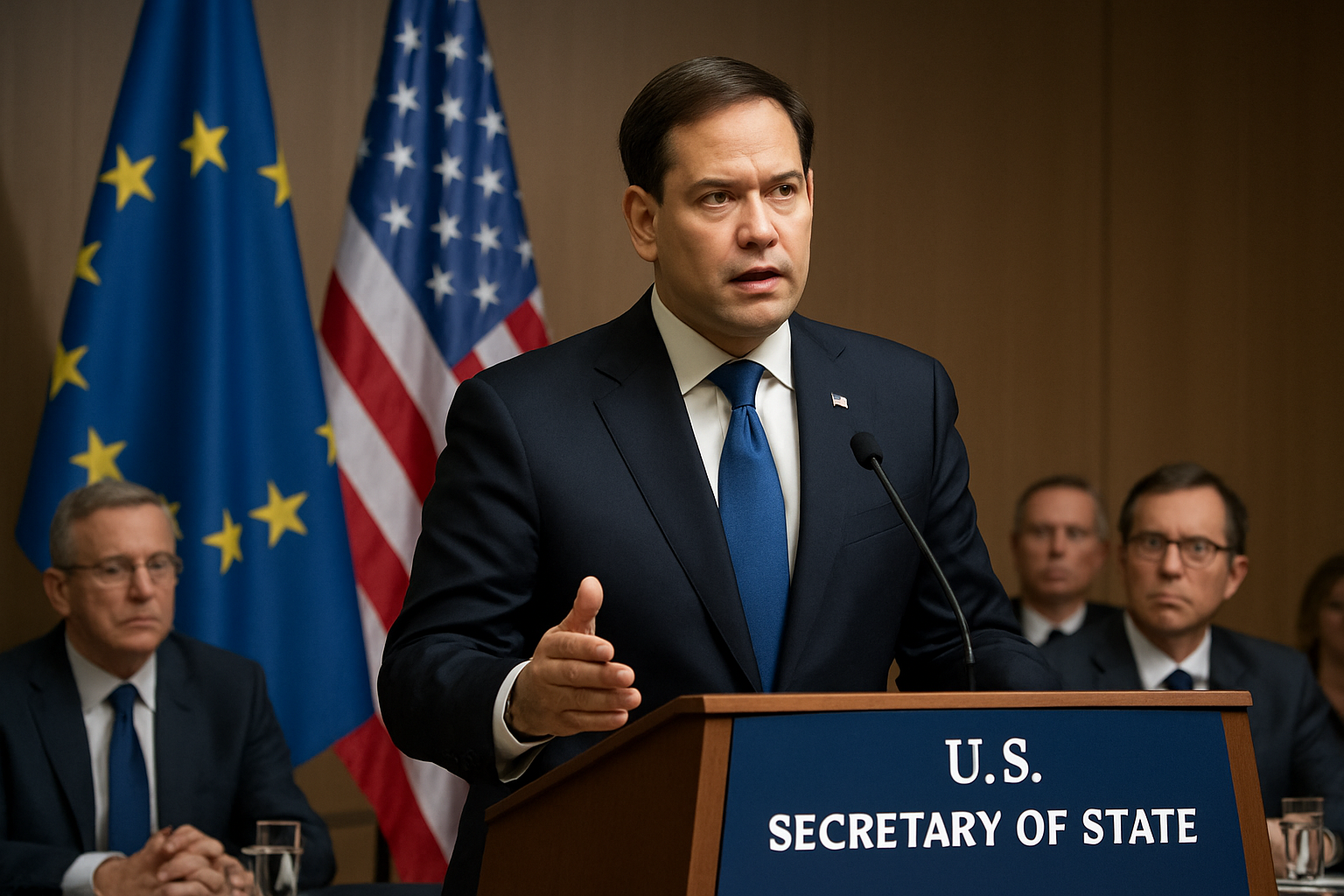
US Secretary of State Marco Rubio concluded a significant European diplomatic tour this weekend, addressing NATO partners and regional allies in a carefully orchestrated effort to reinforce American commitments while managing growing transatlantic tensions.
The diplomatic mission, spanning multiple European capitals and climaxing with a high-profile appearance at the Munich Security Conference, represents the Trump administration's most comprehensive attempt to recalibrate US-European relations following last year's controversial remarks by Vice President JD Vance that severely strained alliance relationships.
Munich Security Conference: A Diplomatic Reset Attempt
At the 62nd Munich Security Conference, Rubio delivered what observers characterized as a diplomatic reset speech, declaring that America and Europe were "made to be together" and casting America as a "child of Europe." The address, themed around transatlantic partnership, received a standing ovation from European leaders present at the Hotel Bayerischer Hof.
However, the diplomatic charm offensive faced immediate challenges. Despite his conciliatory tone, Rubio notably missed a critical meeting with Ukraine supporters including German, French, and Polish leaders, citing scheduling conflicts. European officials interpreted this absence as indicative of declining American interest in European-led initiatives.
"The US remains committed to our long-standing partnership, but we're not looking to abandon the transatlantic alliance,"
— Marco Rubio, US Secretary of State
Eastern Europe Outreach: Slovakia and Hungary
Following the Munich conference, Rubio extended his European tour to Slovakia and Hungary, meeting with leaders whose conservative governments maintain particularly close ties with President Trump despite tensions with other EU partners. In Bratislava, Rubio held extensive discussions with Slovak Prime Minister Robert Fico before proceeding to Budapest for meetings with Hungarian officials, including Prime Minister Viktor Orbán.
During his Bratislava press conference, Rubio emphasized American support for European strategic autonomy, stating: "We don't want Europe to depend on us. We're not asking Europe to be a vassal of the United States." This message aimed to address European concerns about American expectations while reinforcing the alliance framework.
NATO Commitments and Burden Sharing
A central theme throughout Rubio's European tour was the reaffirmation of US commitment to NATO while emphasizing the importance of burden-sharing. The Secretary of State confirmed that the United States has no plans to leave NATO, addressing persistent European concerns about American alliance reliability.
This reassurance comes as European allies have significantly increased their defense commitments and capabilities. The tour coincided with the launch of NATO's Arctic Sentry mission, a European-led initiative that saw the UK doubling its Norway troop presence to 2,000 over three years, with additional contributions from Sweden, Finland, and other Nordic partners.
Addressing Serbia and Regional Partnerships
Rubio's diplomatic outreach extended beyond NATO members to include regional partners like Serbia. The Secretary of State congratulated Serbian citizens on their national day and expressed expectations for continued deepening of bilateral cooperation, describing the relationship as characterized by "friendship and mutual respect."
This engagement reflects the broader Trump administration strategy of strengthening bilateral relationships across Europe, even with nations that maintain complex relationships with both the US and Russia.
Context of European Strategic Autonomy
Rubio's visit occurred against the backdrop of unprecedented European discussions about strategic autonomy. For the first time since the Cold War's end, European leaders are seriously considering nuclear deterrence arrangements that don't depend primarily on American guarantees.
German Chancellor Friedrich Merz has confirmed direct talks with French President Emmanuel Macron about nuclear cooperation, with Germany, Poland, and Finland engaging in preliminary conversations about extended deterrence arrangements. These discussions reflect concerns about US security guarantee reliability following previous controversial American statements.
Ukraine Context and Support
The European tour takes place amid critical developments in Ukraine peace negotiations. Recent diplomatic breakthroughs, including a 314-prisoner exchange and the restoration of US-Russia military communications after a four-year suspension, have created new momentum for peace talks.
However, Russian territorial gains continue to accelerate, with 481 square kilometers captured in January compared to 260 in December 2025. The EU has approved a historic €90 billion loan package for Ukraine - the largest ever for a single nation - demonstrating European commitment to Ukrainian sovereignty despite varying levels of individual member state participation.
Managing Alliance Tensions
Rubio's diplomatic mission aimed to address the deepest transatlantic strain since the Cold War. The Munich Security Conference theme, "Era of Disruptive Politics: Challenges to International Order," reflected the most sobering assessment in the conference's 62-year history.
European leaders have chosen strategic autonomy over traditional American deference while maintaining alliance relationships. This shift represents a fundamental reassessment of Western alliance structures that have underpinned international order since World War II.
Nuclear Governance and Security Challenges
The diplomatic tour occurred during a critical period for nuclear governance. The New START treaty expired on February 5, 2026, creating the first nuclear arms control void between the US and Russia in over 50 years. UN Secretary-General António Guterres has warned of a "grave turning point" with nuclear risks at their highest levels in decades.
This nuclear governance crisis has provided additional impetus for European discussions about alternative deterrence arrangements, as the sole remaining diplomatic channel between nuclear superpowers is the recently restored military communications framework.
Future Implications and Challenges
The success of Rubio's European tour will be measured by its ability to restore transatlantic trust while adapting to new geopolitical realities. European officials remain skeptical about long-term American commitments, particularly given the cyclical nature of American politics and policy shifts.
The diplomatic reset attempt faces several ongoing challenges, including European determination to develop independent defense capabilities, concerns about American reliability in crisis situations, and the need to balance alliance solidarity with national sovereignty.
Whether this diplomatic outreach leads to renewed Western unity through institutional adaptation or continued fragmentation amid global power competition remains a pivotal question for international relations. The stakes extend beyond bilateral relationships to fundamental questions about democratic values, international law foundations, and global governance mechanisms in the 21st century.
As European leaders continue to assert strategic autonomy while maintaining alliance relationships, the coming months will prove crucial for determining whether traditional frameworks can adapt to contemporary challenges or whether new cooperation models must emerge to preserve democratic solidarity and territorial sovereignty principles.