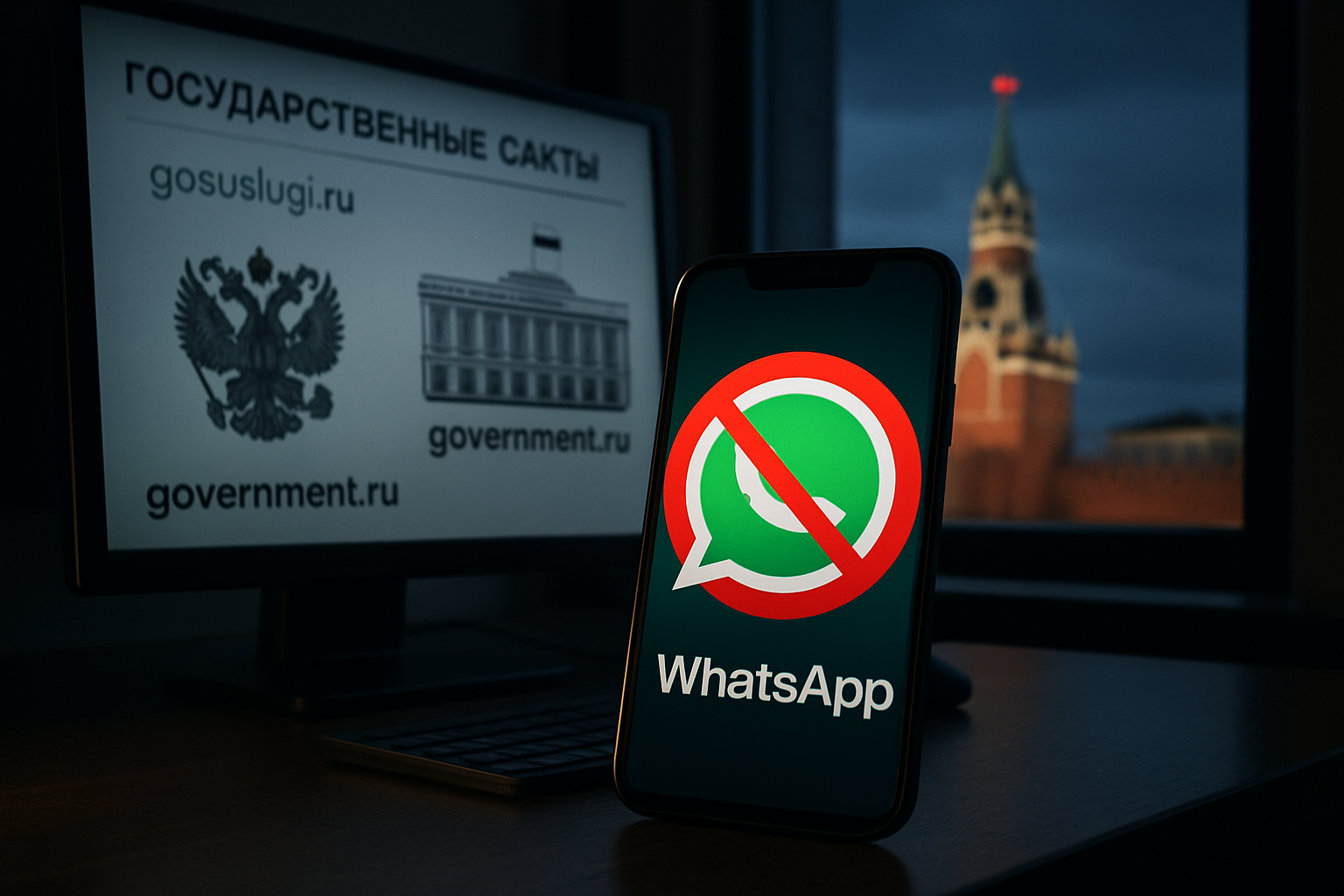
Russia has officially blocked the popular messaging service WhatsApp over its failure to comply with local legislation, the Kremlin confirmed Thursday, urging the platform's 100 million Russian users to switch to a state-backed domestic alternative.
Kremlin spokesperson Dmitry Peskov told journalists that the decision had been "made and implemented," explaining that the action was taken due to WhatsApp's "refusal to comply with the provisions of Russian law and its regulations." The move affects one of the most widely used communication platforms in Russia, owned by Meta Platforms Inc.
WhatsApp responded on Wednesday with a statement claiming that the Russian government had taken actions to "fully block" the messaging service as part of efforts to encourage the use of a new, state-backed application. The American tech company described the restrictions as part of an effort to force Russians to switch to the state-controlled app MAX.
State-Backed Alternative Promoted
Russian authorities are actively promoting MAX, a domestic messaging service launched in 2025, as a replacement for WhatsApp. Peskov described it as a "national messenger service" that Russians should adopt instead of the blocked international platform.
However, critics have raised significant concerns about MAX's capabilities and intent. Unlike WhatsApp, which features end-to-end encryption, MAX lacks this security feature and has been characterized by activists as a potential surveillance tool. The domestic platform has also experienced capacity limitations during user migration attempts, highlighting technical challenges in handling large-scale adoption.
The promotion of MAX aligns with Russia's broader "sovereign internet" strategy, aimed at creating digital infrastructure less dependent on Western technology. This campaign has systematically targeted multiple international platforms since 2022 under various pretexts including extremist content violations and data protection failures.
Technical Implementation and Enforcement
Russia has employed what experts describe as a sophisticated "degradation strategy" rather than implementing complete blocking immediately. This approach includes increased response times, intermittent connectivity issues, and selective regional disruptions, particularly affecting remote areas dependent on satellite and undersea cable infrastructure.
The strategy allows for plausible deniability while achieving practical usage restrictions, avoiding traditional circumvention triggers that typically generate widespread workarounds and international attention. This represents an evolution in digital censorship tactics that could influence similar efforts globally.
Technical enforcement has been coordinated through Roskomnadzor, Russia's telecommunications regulator, which has systematically removed technical internet records linking platforms like WhatsApp, YouTube, and Facebook to their core IP addresses.
Broader Digital Control Campaign
The WhatsApp blocking represents the latest escalation in Russia's comprehensive digital sovereignty campaign. Recent months have seen similar restrictions applied to Telegram, with the platform experiencing systematic throttling and connectivity issues as part of what authorities describe as enforcement of legal violations.
This systematic approach extends beyond messaging platforms to encompass broader media control and civil society restrictions. The campaign represents an information isolation strategy that limits independent communication channels and restricts access to alternative information sources for Russian citizens.
International observers note that the enforcement challenges of complete blocking without disrupting broader economic internet services remain substantial. Many users have already adopted VPN circumvention technologies, requiring deep packet inspection capabilities and extensive infrastructure investment across regulatory bodies.
International and Economic Implications
The blocking has generated significant international attention, with European officials expressing concern about the precedent this sets for other nations considering similar approaches to platform control. The model demonstrates how authoritarian governments can exert control over global communication platforms while maintaining economic connectivity.
VK Group, the Russian tech company behind several domestic platforms, saw its shares rise 5% on the Moscow Exchange following news of WhatsApp restrictions, highlighting the economic beneficiaries of platform nationalism.
The move affects global digital commerce patterns, as Russia represents a major market for international messaging applications. The success or failure of this digital isolation strategy will likely influence how other nations approach tensions between globalized platforms and assertions of digital sovereignty.
User Impact and Circumvention
The approximately 100 million WhatsApp users in Russia face significant disruption to their communication patterns and business operations. Many users have already begun exploring circumvention technologies, though the sophisticated nature of Russia's implementation makes complete blocking technically complex.
Remote regions, particularly areas like Nenets, Magadan, and Sakhalin with limited infrastructure redundancy, are experiencing more severe impacts due to their dependence on satellite and undersea cable connections. This creates uneven enforcement effects across Russia's vast territory.
For international businesses and organizations operating in Russia, the blocking creates additional operational challenges in maintaining communication with local partners and customers, potentially accelerating the economic isolation effects of existing sanctions regimes.
Global Digital Rights Context
The Russian action occurs within a broader global debate over platform regulation and digital sovereignty. While European approaches focus on content moderation and child safety through democratic processes, Russia's model emphasizes state control over information flows and communication channels.
Digital rights advocates warn that the sophisticated nature of Russia's approach could provide a template for other authoritarian governments seeking to control online communication while avoiding the international backlash typically associated with complete internet shutdowns.
The enforcement represents a critical test case for the balance between national sovereignty claims and international communication rights in the 21st century, with implications extending far beyond Russia's borders to fundamental principles of digital freedom and global connectivity.