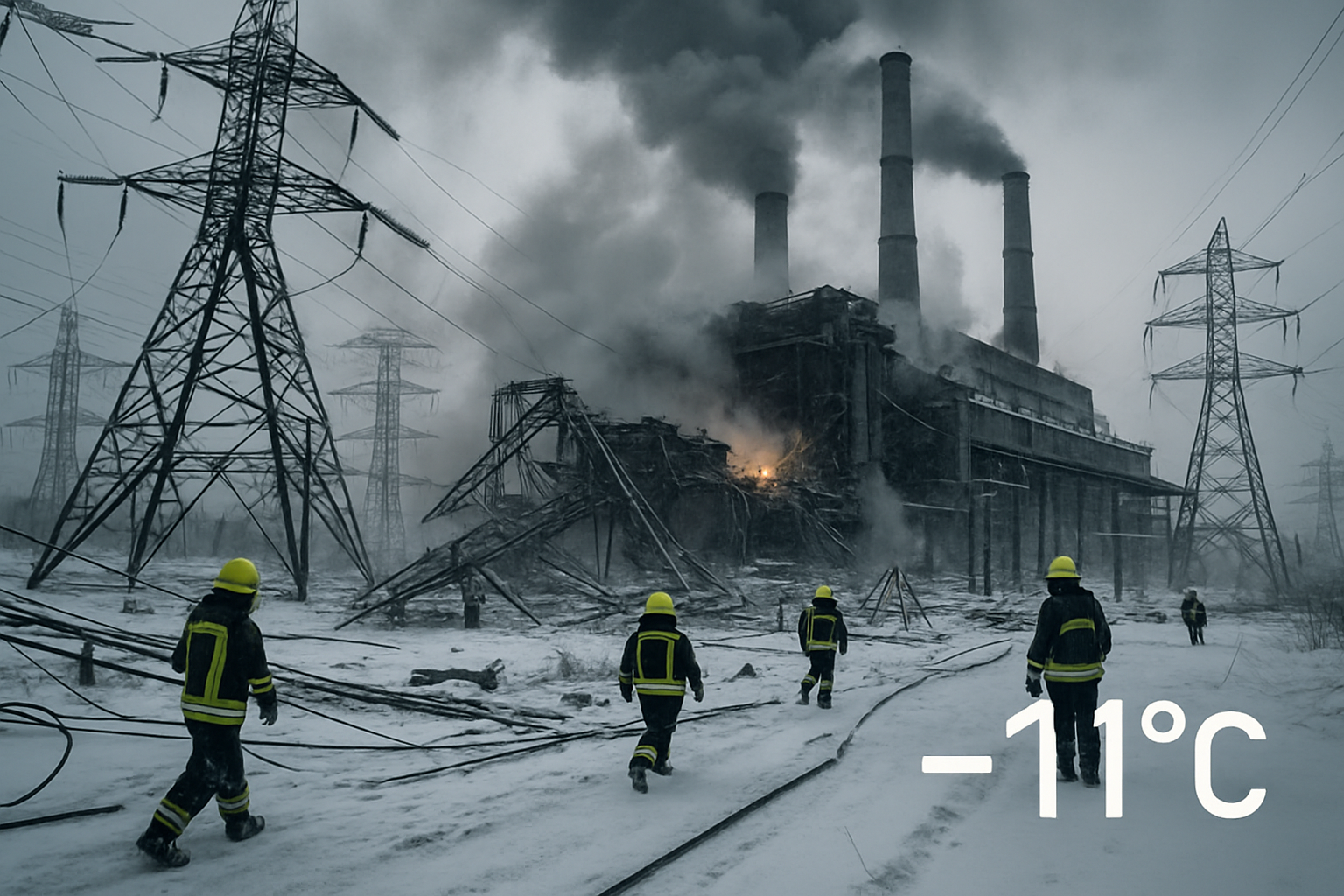
Russia conducted its most devastating attack of 2026 on Ukrainian energy infrastructure on Monday night, deploying hundreds of drones and a record 32 ballistic missiles that left thousands of Ukrainian families without heat as temperatures plunged to minus-30°C across the war-torn nation.
The overnight bombardment, which President Volodymyr Zelenskyy condemned as breaking Russia's commitment to halt energy infrastructure strikes, came just days before critical trilateral peace talks scheduled for February 5-6 in Abu Dhabi. The attack wounded at least 10 people and dealt what Ukrainian energy company DTEK described as "the most powerful blow" to the power grid of 2026.
Energy Infrastructure Under Siege
The coordinated assault specifically targeted Ukraine's power generation facilities, transmission networks, and distribution systems across eight oblasts. In Kyiv, over 1,170 buildings lost heating connections, with the Darnytska CHP-4 thermal power plant temporarily shut down. Emergency power cuts were implemented on the left bank of the capital, while the Darnytskyi and Dniprovskyi districts were left completely without heat.
"Life in Kyiv has been reduced to ensuring enough daily heat and food during a record winter and repeated power outages," according to Ukrainian media reports. The attack comes as the country experiences the coldest winter temperatures in years, with some northern regions expecting temperatures to drop as low as minus-30°C.
"This is terror and escalation by Moscow. The world sees what Russia is doing—deliberately targeting civilians and energy infrastructure during the coldest winter in years."
— President Volodymyr Zelenskyy
In Kharkiv, Ukraine's second-largest city, residents endured a three-hour intensive bombardment that forced 820 buildings to drain their heating systems to prevent pipe bursts. The regional thermal power plant was shut down, leaving hundreds of thousands without reliable electricity and heating.
Diplomatic Timing and Strategic Calculations
The timing of the assault appears strategically calculated, occurring just 72 hours before representatives from Ukraine, Russia, and the United States are scheduled to meet in Abu Dhabi for the second round of trilateral peace negotiations. US Special Envoy Steve Witkoff is expected to participate in what diplomats describe as the most significant diplomatic engagement since the conflict began nearly four years ago.
German media reports suggest the talks represent a crucial moment, though Ukrainian citizens view the negotiations with considerable skepticism. "In Ukraine itself, people look at the negotiations with great skepticism. For many, frustration prevails," reported Tagesschau, noting the disconnect between diplomatic optimism and civilian suffering.
NATO Secretary General Mark Rutte made an unscheduled visit to Kyiv on Tuesday, addressing the Ukrainian Parliament and condemning the attacks as sending a "bad signal" before the diplomatic talks. The visit underscored Western concern that Russia's escalation could derail the peace process before it gains momentum.
Civilian Impact and Humanitarian Crisis
The human toll extends far beyond infrastructure damage. In Zaporizhzhia, Russian drone strikes killed at least two people and wounded eleven others, while Sumy region saw educational facilities and residential areas damaged in the city of Konotop. The attacks represent part of what Ukrainian officials describe as Russia's ongoing campaign to deny civilians basic necessities during the harsh winter months.
Ukrainian Energy Minister Herman Halushchenko described the situation in Kiev as "critical," with power generation facilities, transmission networks, and distribution systems all sustaining significant damage. Emergency warming centers have been activated across affected regions as authorities scramble to provide relief to thousands of families left without heat.
The assault comes after Ukraine announced that 17.8 million citizens have accessed government winter support programs, highlighting the massive scale of the humanitarian challenge facing the nation during this exceptionally harsh winter.
International Response and Military Developments
Poland responded to the escalation by deploying fighter jets preemptively, while international partners announced new aid packages. Sweden and Denmark revealed plans for a €246 million air defense package that includes advanced Tridon Mk2 systems specifically designed to counter drone attacks.
The attacks break an informal agreement between Russian President Vladimir Putin and US President Donald Trump to avoid targeting energy infrastructure in the lead-up to peace negotiations. Turkish media reported that Trump had praised "good talks" between the parties, but the Monday night assault represents a clear escalation of the conflict's humanitarian dimension.
Meanwhile, technological developments continue to shape the battlefield. SpaceX, led by Elon Musk, successfully blocked unauthorized Russian use of Starlink satellite internet for controlling attack drones, with Ukrainian Defense Minister Rustem Umerov praising the company as "a true friend of the Ukrainian people."
Regional Escalation and Broader Context
The latest attacks occur against a backdrop of Russian territorial gains, with forces capturing 481 square kilometers in January alone—nearly double December's advances according to the Institute for the Study of War. This acceleration in battlefield momentum may be contributing to Russia's confidence in taking a harder line in diplomatic negotiations.
Swedish media reports suggest hope for reduced Russian revenue through decreased Indian oil imports, as the United States has negotiated tariff reductions with India in exchange for commitments to diversify energy sources away from Russian crude oil.
Norwegian officials have also weighed in on the conflict, with Manchester City manager Pep Guardiola calling for action to save lives in conflicts across Sudan, Ukraine, and Palestine, highlighting the global attention focused on resolving ongoing humanitarian crises.
Looking Toward Abu Dhabi
As diplomatic teams prepare for the crucial Abu Dhabi talks, the latest Russian escalation presents a significant challenge to peace efforts. President Zelensky announced that Ukraine would adjust its negotiating strategy in response to the attacks, though specific details remain classified.
The trilateral format represents the most serious diplomatic effort since the conflict began, with the United Arab Emirates serving as a neutral host. However, the Monday night attacks suggest Russia may be using winter humanitarian pressure as leverage to strengthen its bargaining position in the negotiations.
European divisions continue to complicate Western response, with Germany opposing direct talks with Putin while France and Italy advocate for continued engagement. The success of the Abu Dhabi talks may depend on whether negotiators can separate immediate humanitarian concerns from longer-term territorial and security arrangements.
With over 10,000 Russian drones and bombs launched in January 2026 alone, and temperatures continuing to plummet across Ukraine, the window for diplomatic breakthrough appears increasingly narrow. The coming days will test whether the international community can translate military and humanitarian pressure into sustainable peace negotiations, or whether the conflict will continue its devastating trajectory through the harsh winter months.