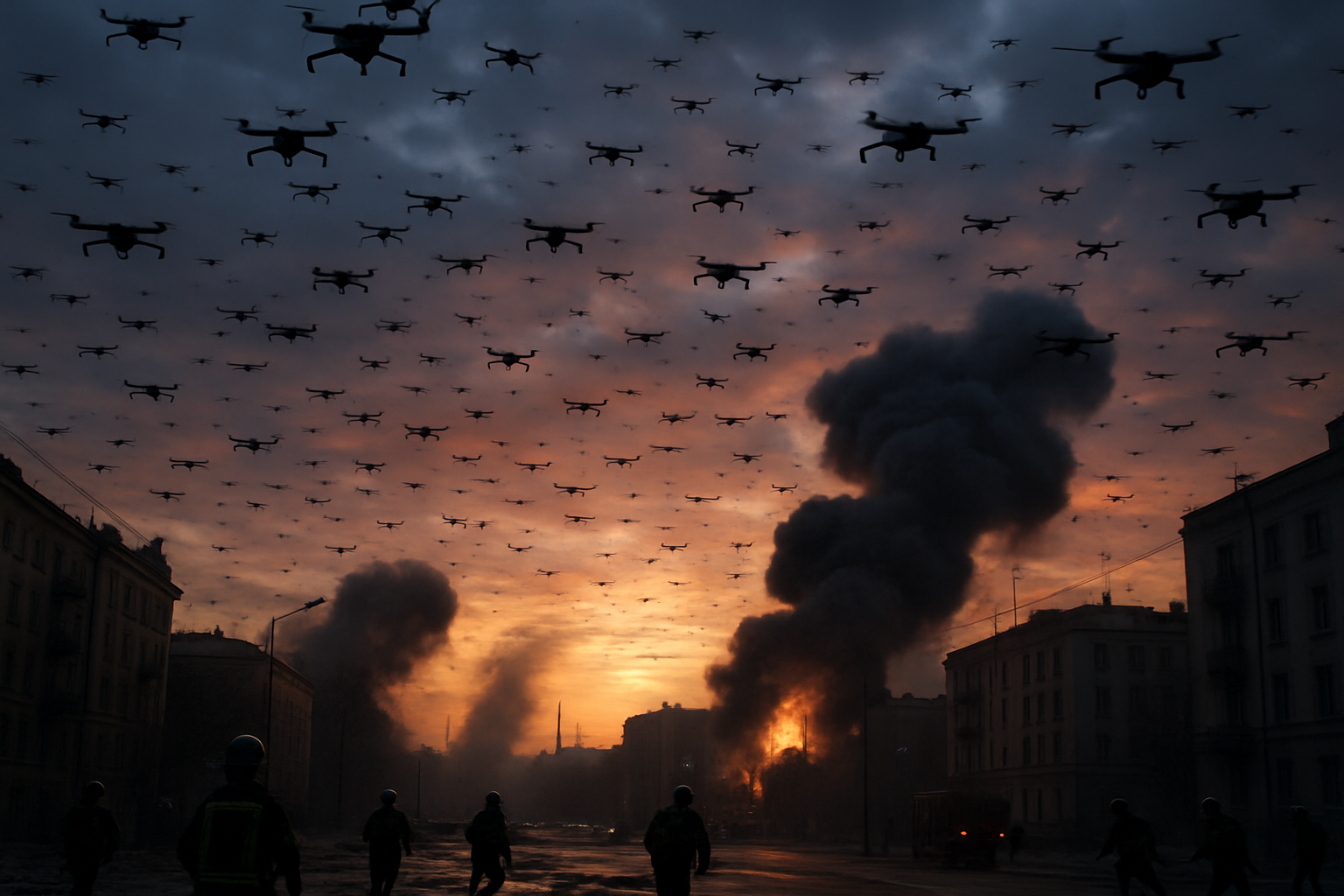
Russia launched one of its largest and most devastating drone attacks on Ukraine in recent months, deploying nearly 1,000 drones over a 24-hour period in what Ukrainian officials called an unprecedented daytime assault that left at least 40 people injured and caused widespread infrastructure damage.
The massive coordinated attack, which saw more than 550 drones launched during daylight hours alone, represents a significant escalation in Russia's drone warfare tactics and comes as diplomatic efforts to end the conflict remain suspended due to the ongoing Iran crisis.
Scale of the Attack
Ukrainian military officials reported that Russian forces launched approximately 948 drones within a single 24-hour period, with over 550 of those deployed in a rare and deadly daytime assault. According to Yuri Ignat, a spokesperson for the Ukrainian air force, the scale of the daytime bombardment was almost unprecedented.
"At such a scale, it's almost a first time. I don't remember there being bombardments in broad daylight with such an important number of drones," Ignat told AFP, noting that 400 drones were recorded between 9:00 AM and 4:00 PM local time.
Ukrainian air defense forces successfully intercepted 367 of the 396 drones launched in the main wave, along with 25 of 29 ballistic missiles, but penetrating strikes caused significant damage across multiple regions.
Casualties and Damage
The attacks resulted in at least 40 people injured across Ukraine, including five children, according to President Volodymyr Zelensky. The western Ukrainian region of Ivano-Frankivsk suffered the most severe losses, with at least two people confirmed dead.
Among the tragic casualties was a National Guard soldier and his 15-year-old daughter, who were visiting his wife at a hospital maternity ward where she had given birth to a son just days prior, according to Ivano-Frankivsk mayor Ruslan Martsinkiv. Four others in the region were injured, including a 6-year-old child.
In Lviv, 26 people injured in the drone attack were hospitalized, while the historic center of the UNESCO heritage site sustained damage. The attacks also reached far from the front lines, demonstrating Russia's capability to strike deep into Ukrainian territory.
Infrastructure Targeting
The drone swarm specifically targeted critical infrastructure across eight Ukrainian regions, continuing Russia's systematic campaign against civilian utilities and energy facilities. The attacks caused power outages affecting hundreds of thousands of residents and damaged transportation networks.
"Russia has no intention of actually ending this war," President Zelensky declared, condemning Moscow's "absolute depravity" in the wake of the massive assault.
— Volodymyr Zelensky, Ukrainian President
The targeting of civilian infrastructure during extreme weather conditions continues what Ukrainian officials have termed "energy terrorism" - a strategy that violates Geneva Conventions protections for civilian populations.
Diplomatic Context and Implications
The massive drone attack comes as diplomatic efforts to resolve the Ukraine conflict remain suspended indefinitely. Peace talks between Ukraine, Russia, and the United States, which had achieved significant progress in February 2026 including a historic 314-prisoner exchange and restoration of US-Russia military communications, have been postponed due to the Iran crisis.
The February diplomatic breakthrough had represented the most significant opportunity for peace since the conflict began, with talks in Abu Dhabi and Geneva achieving concrete humanitarian results. However, the suspension of these negotiations due to competing Middle East priorities has allowed military escalation to continue unchecked.
Evolution of Drone Warfare
The scale and timing of this attack mark a concerning evolution in modern warfare tactics. The use of nearly 1,000 drones in a coordinated daytime assault demonstrates Russia's expanding unmanned warfare capabilities, with plans to field 101,000 drone troops by April 2026 - the largest dedicated drone force in modern warfare history.
Ukrainian officials noted that this represents a new phase in the conflict, where drone technology allows for sustained, large-scale attacks on civilian targets far from traditional battle lines. The systematic nature of the assault suggests sophisticated planning and coordination capabilities.
International Response
The international community continues to provide unprecedented support to Ukraine despite the suspended peace talks. The European Union's historic €90 billion loan package remains the largest single-nation assistance ever provided, while countries like Sweden, Denmark, and Germany continue delivering advanced air defense systems.
However, divisions persist within European ranks, with Slovakia, Czech Republic, and Hungary refusing to participate in EU financing mechanisms, highlighting ongoing challenges in maintaining unified international support.
Regional Security Implications
The massive drone attack has broader implications for regional and global security architecture. Ukraine has been deploying military experts to Middle Eastern countries including the UAE, Qatar, Jordan, Bahrain, and Kuwait to share expertise in combating the same Iranian-supplied Shahed drones that are devastating Ukrainian infrastructure.
This evolution from aid recipient to security provider demonstrates Ukraine's strategic pivot and growing international partnerships, even as the conflict continues to escalate domestically.
Humanitarian Crisis Deepens
The attack exacerbates an already severe humanitarian crisis, with over 17.8 million Ukrainians requiring winter support programs. The systematic targeting of energy infrastructure during harsh weather conditions has left over 1,170 Kyiv buildings without adequate heating.
President Zelensky has previously disclosed that 55,000 Ukrainian soldiers have been officially confirmed killed, with a "large number" missing in action. International estimates suggest actual casualties may be 2-3 times higher than official figures.
Nuclear Governance Concerns
The escalation occurs against the backdrop of an unprecedented nuclear governance crisis. The New START treaty between the US and Russia expired on February 5, 2026, marking the first time in over 50 years without bilateral nuclear constraints between the superpowers who control 80% of the world's nuclear weapons.
UN Secretary-General António Guterres has described this as a "grave turning point," warning that nuclear risks are at their "highest in decades."
Looking Forward
The massive drone attack demonstrates the urgent need for renewed diplomatic engagement while highlighting the devastating human cost of suspended peace negotiations. The framework for talks remains intact, with prisoner exchange mechanisms and military communications protocols that could be reactivated when the Iran crisis permits.
However, fundamental territorial disputes remain unchanged, with Russia demanding recognition of occupied territories while Ukraine maintains its position on territorial integrity. The success or failure of eventual resumed talks carries global implications for 21st-century conflict resolution and territorial sovereignty principles.
As Ukraine enters its fifth year of conflict, the scale and sophistication of attacks like this massive drone assault underscore both the evolving nature of modern warfare and the critical importance of diplomatic solutions to prevent further escalation of what has become Europe's deadliest conflict since World War II.