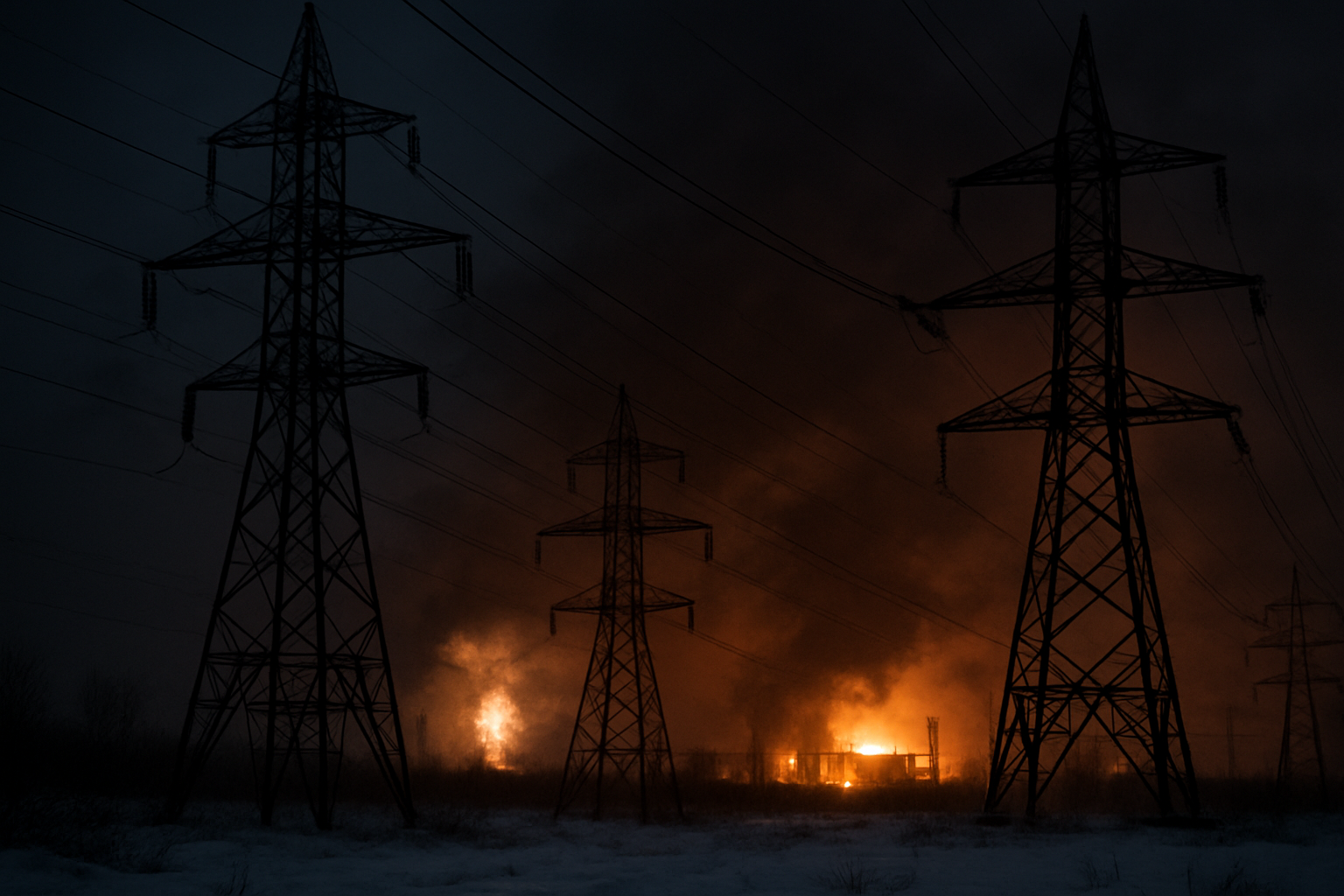
Russia launched a massive coordinated attack on Ukraine's energy infrastructure on Saturday, February 7, 2026, causing widespread power outages across multiple regions in what Ukrainian officials described as one of the most devastating assaults on civilian energy facilities this year.
The large-scale aerial bombardment targeted power generation and distribution facilities across Ukraine, leaving hundreds of thousands of citizens without electricity and heating during harsh winter conditions. Ukrainian Energy Minister Denis Shmyhal confirmed that the attacks specifically targeted both electricity production and distribution systems, marking a significant escalation in Russia's campaign against civilian infrastructure.
Widespread Power Disruptions Across Ukraine
The coordinated strikes resulted in emergency power cuts implemented across most Ukrainian regions as the national grid operator Ukrenergo worked to stabilize the system. The attack caused critical damage to energy facilities, forcing authorities to implement protective shutdowns to prevent cascading failures across the power network.
"The Russian criminals have carried out another massive attack on Ukraine's energy facilities. The attack continues," Energy Minister Shmyhal wrote on Telegram, emphasizing the ongoing nature of the assault. He added that energy workers were ready to begin repair operations as soon as security conditions would allow.
Multiple regions reported significant infrastructure damage, with emergency services working to restore power to affected areas. The Vinnytsia region came under particularly intense bombardment, with explosions reported in the regional center as Russian forces deployed both missiles and attack drones in coordinated waves.
International Response and Regional Security
The attack prompted immediate defensive responses from neighboring countries. Poland scrambled fighter jets in a precautionary measure, while aviation authorities temporarily suspended flights at airports in Lublin and Rzeszow in eastern Poland due to security concerns.
The timing of the assault has drawn particular attention from international observers, coming amid ongoing diplomatic efforts to resolve the conflict. The European Union announced its 20th package of sanctions against Russia, targeting maritime services for Russian oil tankers and expanding restrictions on the shadow fleet used to circumvent existing sanctions.
"Russia is conducting a new massive attack against installations of the Ukrainian electric network,"
— Ukrenergo, Ukraine's state electricity transmission operator
Pattern of Infrastructure Targeting
Saturday's attack represents a continuation of Russia's systematic targeting of Ukraine's energy infrastructure, a strategy that has characterized much of the conflict's recent phases. The assault follows what energy company DTEK previously described as the "most powerful blow" of 2026 against Ukrainian power facilities earlier this month, which left over 1,170 buildings in Kyiv without heating during temperatures as low as minus-30°C.
International analysts have characterized these attacks as part of Russia's "winter weapon" strategy, designed to inflict maximum humanitarian pressure on Ukrainian civilians during the coldest months of the year. The targeting of energy infrastructure during extreme weather conditions has drawn condemnation from NATO officials and human rights organizations as deliberate attacks on civilian infrastructure.
Humanitarian Impact and Emergency Response
The power outages have left hundreds of thousands of Ukrainians without access to electricity, heating, and other essential services. Emergency warming centers have been activated across affected regions to provide shelter for civilians whose homes have lost heating during the continued cold weather.
Ukrainian authorities have mobilized repair crews to begin restoration efforts, though security concerns in active conflict zones have complicated immediate response efforts. The systematic targeting of energy workers has become a particular concern, following recent attacks that killed 15 DTEK energy workers in Dnipropetrovsk region.
Regional Impact Assessment
Beyond the immediate humanitarian consequences, the attack has broader implications for regional energy security. Ukraine's energy grid serves not only domestic consumers but also plays a role in regional electricity markets. The disruption affects:
- Residential heating systems serving millions of Ukrainian families
- Industrial operations critical to the national economy
- Transportation networks dependent on electrical infrastructure
- Healthcare facilities requiring reliable power for critical operations
Diplomatic Context and International Implications
The massive energy attack occurs against a complex diplomatic backdrop, with Ukraine-Russia-US trilateral peace talks recently concluded in Abu Dhabi showing some progress including a historic prisoner exchange of 314 individuals. The timing has raised questions about Russia's commitment to diplomatic solutions while simultaneously escalating military pressure.
NATO Secretary-General Mark Rutte, who recently visited Kyiv, had warned that such attacks during peace negotiations send a "bad signal" to the international community. The continued targeting of civilian infrastructure despite ongoing diplomatic efforts has prompted renewed calls for increased military aid to Ukraine, particularly air defense systems.
Several European nations have announced new support packages in response to the escalation. Sweden and Denmark unveiled a €246 million air defense assistance package, while Poland has maintained heightened military readiness along its eastern border.
Long-term Energy Security Concerns
The systematic targeting of Ukraine's energy infrastructure has created long-term challenges beyond immediate power restoration. Energy experts estimate that repeated attacks on generation facilities and transmission networks will require massive reconstruction efforts that could take years to fully complete.
The World Bank has allocated $40 million specifically for Ukrainian energy system restoration, while the European Union has approved a historic €90 billion loan package for Ukraine's defense and reconstruction needs. However, the scale of damage from repeated attacks suggests that international support will need to be sustained over the long term.
As Ukraine continues to face these infrastructure challenges amid extreme winter conditions, the international community watches closely to see whether diplomatic momentum from recent peace talks can translate into reduced military escalation. The restoration of power to affected regions remains a critical immediate priority, with energy workers risking their lives to maintain essential services for millions of Ukrainian civilians.