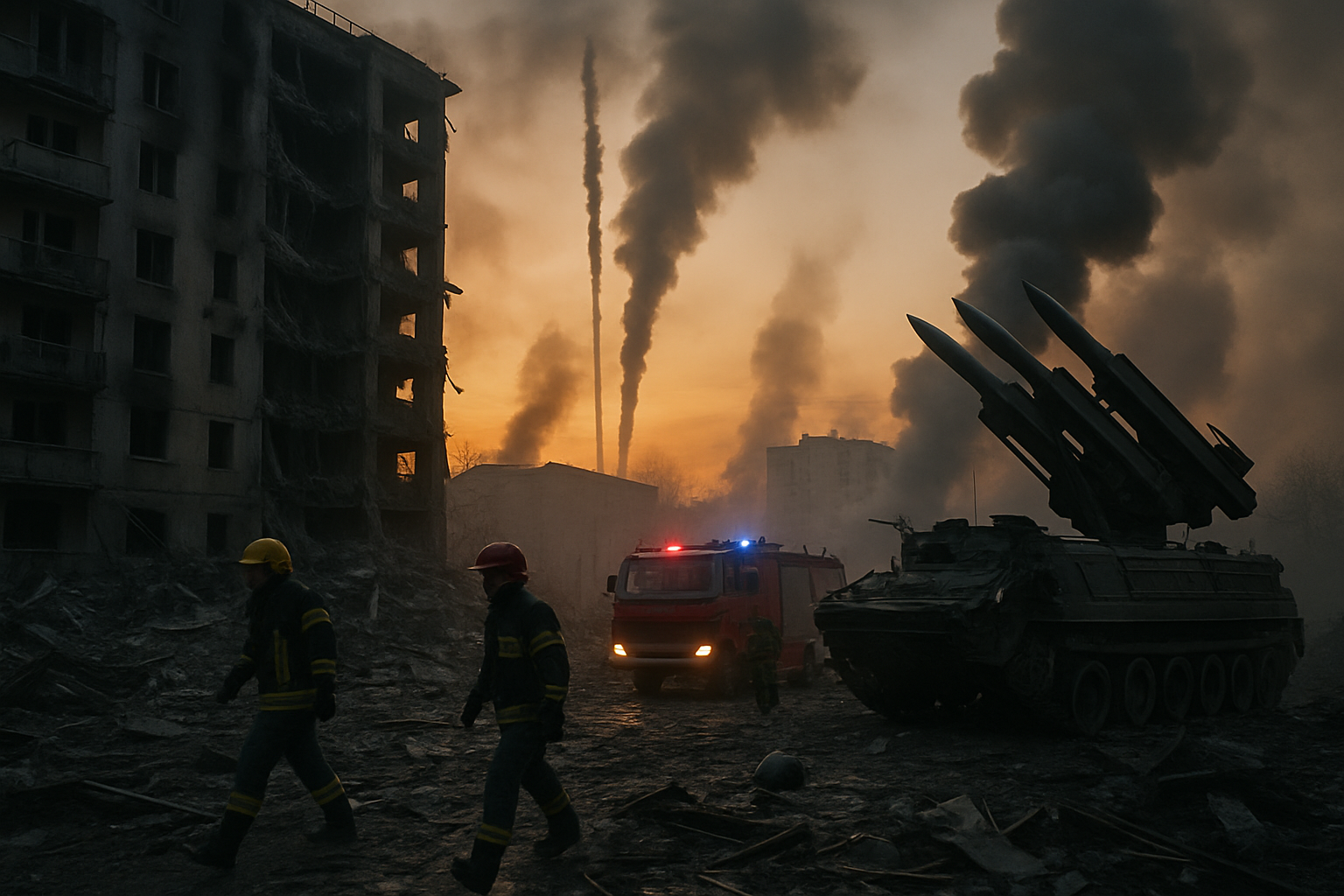
Russia launched its most devastating combined missile and drone assault on Ukraine since early January 2026, firing over 400 projectiles at cities across the nation in an attack that Ukrainian officials described as deliberately calculated to maximize damage to critical infrastructure.
According to Ukrainian Air Force reports, Russian forces deployed 29 ballistic missiles and 396 drones in the overnight attack, targeting energy facilities and civilian areas in what President Volodymyr Zelensky characterized as Moscow's continued campaign of "terror and escalation" against the Ukrainian population.
Scale and Scope of the Attack
The massive barrage represented the largest single assault since early January, with Ukrainian air defenses successfully intercepting 25 missiles and 367 drones according to military officials. Despite the defensive efforts, significant damage was inflicted across multiple regions, particularly in Odesa and central Ukraine.
Russian forces specifically targeted energy infrastructure in what has become known as the "winter weapon" strategy, deliberately attacking power generation and distribution facilities during the coldest months to maximize civilian suffering. The assault comes as Ukraine continues to recover from previous energy attacks that left over 1,170 buildings in Kyiv without heating during minus-30°C temperatures.
"Russian forces carried out a large-scale combined attack deliberately calculated to cause the greatest possible damage to Ukraine's energy infrastructure."
— President Volodymyr Zelensky
Civilian Impact and Casualties
The attack on Odesa proved particularly devastating, with Russian drones and missiles causing multiple civilian injuries and significant infrastructure damage. Emergency services reported that air defense systems intercepted most incoming targets, but debris and successful strikes still caused casualties among the civilian population.
The systematic targeting of civilian infrastructure during extreme winter conditions has drawn widespread international condemnation as a violation of the Geneva Conventions. The pattern of attacks on energy workers and repair personnel has been documented as part of Russia's broader strategy to prevent infrastructure restoration.
Poland responded to the proximity of attacks near its border by deploying fighter aircraft as a precautionary measure, highlighting the regional security implications of the escalating assault.
Strategic Timing Amid Diplomatic Efforts
The timing of this massive attack is particularly significant, occurring just hours before scheduled Geneva peace talks on February 17-18, 2026. The trilateral negotiations between Ukraine, Russia, and the United States represent the most significant diplomatic effort to end the nearly four-year conflict.
This pattern mirrors previous escalations before diplomatic engagements, including the February 7 attack that NATO Secretary-General Mark Rutte condemned as a "bad signal" before negotiations. The systematic timing suggests a coordinated strategy to strengthen Russia's bargaining position through humanitarian pressure.
Energy Infrastructure Under Siege
Ukraine's energy sector has borne the brunt of Russian attacks throughout 2026, with systematic targeting forcing unprecedented measures including the temporary shutdown of nuclear power plants for the first time in the conflict. The IAEA Director General has repeatedly warned about the risks of attacking nuclear-connected infrastructure.
The cumulative effect of these attacks has required massive international support, including World Bank funding for energy restoration and emergency aid from European allies. Over 17.8 million Ukrainians are currently accessing winter support programs due to infrastructure damage.
International Response and Support
The European Union has responded with historic support measures, including a €90 billion loan package - the largest ever provided to a single nation. Sweden and Denmark have contributed €246 million in air defense systems, while Germany has supplied 35 Patriot missiles to bolster Ukrainian defenses.
The attack comes amid a critical period for international diplomacy. The recent Abu Dhabi trilateral talks achieved significant breakthroughs, including a 314-prisoner exchange and the restoration of US-Russia military communications after a four-year suspension.
Military Context and Territorial Dynamics
Russian forces have accelerated territorial gains in 2026, capturing 481 square kilometers in January compared to 260 square kilometers in December 2025. This acceleration occurs alongside the systematic infrastructure attacks, creating a dual pressure strategy combining territorial advances with civilian hardship.
Ukrainian officials report that over 10,000 Russian drones and bombs were launched in January 2026 alone, demonstrating the sustained intensity of the Russian campaign. President Zelensky has disclosed that 55,000 Ukrainian soldiers have been officially confirmed killed since the invasion began, with "a large number" still missing in action.
Nuclear Crisis Backdrop
The attacks occur against the backdrop of unprecedented nuclear uncertainty following the February 5, 2026 expiration of the New START treaty - the first time in over 50 years that the United States and Russia have operated without bilateral nuclear constraints.
UN Secretary-General António Guterres has described this as a "grave turning point" with nuclear risks at their "highest in decades." The restored military communications between US and Russian forces provide the only remaining formal diplomatic channel between the nuclear superpowers.
Diplomatic Paradox
The massive attack exemplifies the complex paradox of the current phase of the conflict, where significant diplomatic breakthroughs occur alongside continued military escalation. The February 5 Abu Dhabi talks produced concrete humanitarian results, yet military operations continue to intensify.
This pattern raises fundamental questions about genuine peace commitment versus the use of humanitarian pressure as a negotiating tactic. The systematic timing of major attacks before diplomatic meetings suggests a calculated approach to strengthen bargaining positions.
Looking Ahead to Geneva
As diplomats prepare for the Geneva talks, the latest massive attack underscores the urgency of finding innovative solutions to territorial disputes that have remained deadlocked for nearly four years. Eastern Ukrainian territories under Russian control remain the fundamental sticking point in all negotiation efforts.
The Trump administration has established a June 2026 deadline for a comprehensive peace agreement, with talks potentially moving to Washington for presidential-level engagement. The success or failure of these diplomatic efforts could determine whether the conflict escalates further or moves toward resolution.
The international community watches closely as the most significant diplomatic opportunity since the conflict began unfolds against the backdrop of continued military pressure and civilian suffering. The stakes extend far beyond Ukraine, affecting European security architecture, international law enforcement, and territorial sovereignty principles for the 21st century.