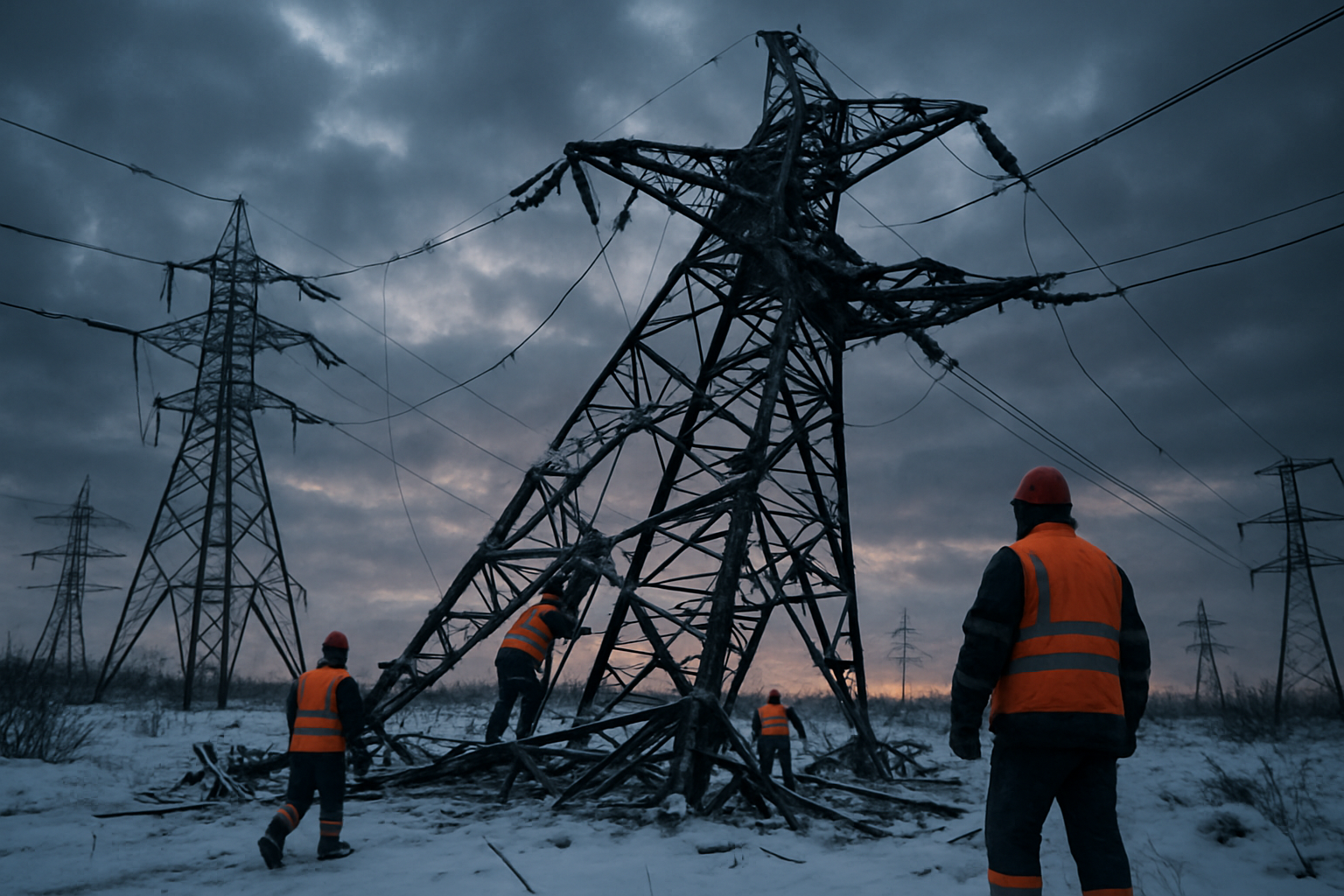
Russia launched what Ukrainian officials called its "most powerful" missile and drone attack of 2026 on Ukraine's energy infrastructure Monday night into Tuesday, leaving hundreds of thousands without heating as temperatures across the country plunged to dangerous sub-zero levels ahead of crucial trilateral peace talks.
The massive bombardment, which NATO Secretary General Mark Rutte described as sending a "bad signal" before negotiations, struck multiple regions including Kyiv, Kharkiv, Zaporizhzhia, and other key population centers. Ukrainian President Volodymyr Zelensky condemned the attacks as "terror and escalation" that would require adjustments to his country's negotiating strategy for the upcoming Abu Dhabi talks.
Devastating Impact Across Multiple Regions
According to Ukrainian officials, over 1,170 buildings in Kyiv alone lost heating systems as temperatures dropped to minus-20°C in the capital, with some northern regions bracing for minus-30°C conditions. The strikes targeted critical energy infrastructure across eight oblasts, creating a humanitarian crisis amid the harshest winter conditions in years.
Kyiv Mayor Vitali Klitschko confirmed that emergency power cuts were implemented on the left bank of the capital, with the Darnytskyi and Dniprovskyi districts particularly affected. The city's Darnytska Combined Heat and Power Plant (CHP-4) temporarily suspended operations following the Russian attack, exacerbating the heating crisis.
"The situation is extremely difficult. We have emergency cuts, and people are left without heating in terrible frost conditions."
— Vitali Klitschko, Kyiv Mayor
In Kharkiv, Ukraine's second-largest city, residents endured a three-hour intensive bombardment that forced authorities to drain heating systems in 820 buildings to prevent pipe damage from freezing. A thermal power plant in the region was forced to shut down completely, leaving hundreds of thousands without adequate heating.
The attack also claimed civilian lives, with one woman killed in Zaporizhzhia during a drone strike on residential buildings, according to regional officials. Multiple civilians were wounded across the affected areas, with emergency medical teams deployed throughout the night.
Breaking the Energy Infrastructure Truce
The attacks represent a significant escalation, effectively ending an informal agreement between Russia and the United States to avoid targeting Ukraine's energy infrastructure. This so-called "energy truce" had been in place as diplomatic efforts intensified ahead of the scheduled February 5-6 trilateral peace talks in Abu Dhabi.
White House Press Secretary Karoline Leavitt revealed that President Donald Trump was informed of the attacks Tuesday morning and was "unsurprised" by Russia's decision to resume large-scale strikes on civilian infrastructure. The timing, just days before the crucial negotiations involving US Special Envoy Steve Witkoff, has raised questions about Russia's commitment to genuine peace efforts.
Ukrainian MP Lisa Yasko, from President Zelensky's Servant of the People party, criticized NATO's response to the escalation, telling France 24 that "NATO could do so much more in terms of security" to protect Ukrainian civilians from such attacks.
International Response and Diplomatic Implications
NATO Secretary General Mark Rutte made an unannounced visit to Kyiv on Tuesday, addressing the Ukrainian Parliament and condemning Russia's overnight attacks as demonstrating Moscow's lack of seriousness about peace negotiations. Rutte's surprise visit was intended to show solidarity with Ukraine ahead of the Abu Dhabi talks.
The attacks prompted immediate international assistance, with Warsaw providing 90 emergency generators to Kyiv to help restore heating to residential buildings. Mayor Klitschko described the aid as "extremely necessary" given the scale of the energy crisis facing the capital.
Republican Senator Lindsey Graham called on President Trump to begin transferring Tomahawk cruise missiles to Ukraine following the massive bombardment, arguing that current pressure on Moscow is proving ineffective. Graham's statement reflects growing congressional pressure for a stronger US response to Russian escalation.
Pattern of Winter Warfare
The latest attacks follow a well-established Russian strategy of targeting Ukraine's energy infrastructure during winter months to maximize civilian suffering and pressure Ukrainian authorities into concessions. Over 10,000 Russian drones and bombs were launched against Ukraine in January 2026 alone, according to Ukrainian military officials.
Energy company DTEK, which operates significant portions of Ukraine's power grid, described Tuesday's bombardment as the "most powerful blow" of 2026, highlighting the unprecedented scale and coordination of the Russian assault.
The attacks occurred despite extreme weather conditions affecting much of Europe, with Poland experiencing temperatures as low as -28°C and widespread heating system failures in cities like Gdansk. The combination of Russian attacks and natural weather extremes has created a perfect storm of humanitarian crisis across the region.
Peace Talks Under Shadow of Escalation
The timing of the attacks, just days before the second round of trilateral negotiations in Abu Dhabi, appears calculated to strengthen Russia's bargaining position through humanitarian pressure. President Zelensky acknowledged that his country's approach to the talks would need to be "adjusted" in light of the renewed bombardment.
The talks, originally scheduled for February 4-5 but now set for February 5-6, represent the most significant diplomatic effort to end the nearly four-year conflict since Russia's invasion began in February 2022. The first round of talks in January made limited progress, with territorial control remaining the primary sticking point.
European diplomatic divisions have complicated the peace process, with Germany maintaining opposition to direct talks with President Vladimir Putin while France and Italy continue to push for diplomatic engagement. The UK and France have pledged troop deployments to enforce any future peace agreement, prompting additional threats from Moscow.
Humanitarian Crisis Deepens
The attacks have created an immediate humanitarian emergency across affected regions. Emergency warming centers have been activated in major cities, while authorities work desperately to restore heating systems before temperatures drop further. Ukrainian officials warn that prolonged power outages during such extreme cold could prove fatal for vulnerable populations, particularly the elderly.
Estonia announced preparations for a new drone and counter-drone package for Ukraine in response to the latest attacks, with defense officials discussing joint weapons production to support Ukrainian air defense capabilities.
As repair crews work around the clock to restore power and heating systems, the international community faces renewed pressure to provide additional support for Ukraine's energy infrastructure and civilian population. The attacks have once again demonstrated the vulnerability of civilian infrastructure to military targeting and the urgent need for enhanced air defense capabilities.
The resumption of large-scale attacks on energy infrastructure marks a dangerous escalation that threatens both immediate humanitarian conditions and the prospects for meaningful peace negotiations. As diplomatic efforts continue in Abu Dhabi, the international community must grapple with Russia's apparent strategy of using winter suffering as a weapon of war.